Joshua Tree Stargazing: Best Spots, Moon Phases And Guided Options
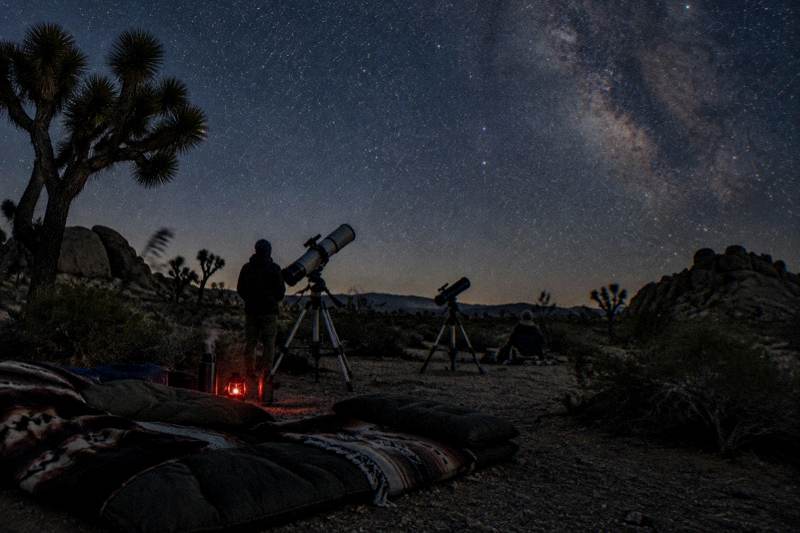
Joshua Tree National Park holds an International Dark Sky Park designation, and the difference between a mediocre night and a jaw-dropping one comes down to where you stand, what the moon is doing, and whether you keep your white flashlight in your pocket.
Short answer
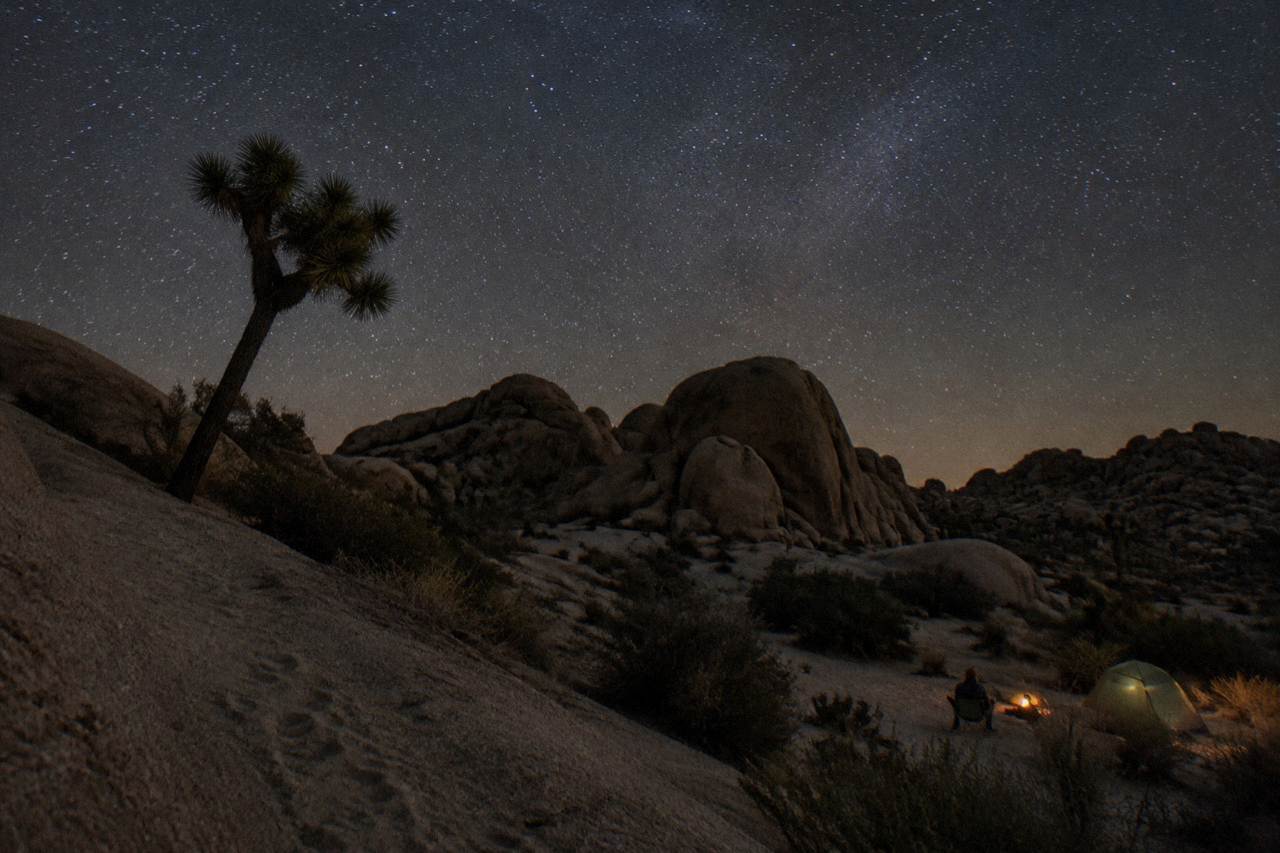
The best stargazing in Joshua Tree is at the four designated stargazing areas (Quail Springs, Hidden Valley, Cap Rock, Ryan Mountain) or along Pinto Basin Road, on a moonless night, using red light only. Guided options run from $95 to $200 per person; the Professional Stargazing Night meets on private land in Yucca Valley, while the other session uses a remote site shared after booking.
Joshua Tree National Park is one of the darkest places in southern California, and the park's own stargazing guidance is unusually specific about where to point your chair. The sky over the desert holds an International Dark Sky Park designation, earned through years of work cutting light pollution inside park boundaries. That does not mean every pullout is equal. The difference between a so-so night and one you will talk about for years is mostly logistics: which parking lot you choose, whether the moon is up, and how disciplined you and everyone around you are about lights.
This guide covers the practical side. Where the park wants you to stargaze, what the moon does to your view, what the rules actually say about flashlights and pets and staying near your car, and how the guided options stack up, including the two telescope sessions that run on private land just outside the park in Yucca Valley, a distinction the listings are careful about and this guide will be too. For the full menu of night tours, see the Joshua Tree stargazing tours hub, and for the deeper astronomy picture, the milky way season in Joshua Tree guide tracks when the galactic core is visible.
Where Is The Best Stargazing In Joshua Tree National Park?
The park names four designated stargazing areas: the Quail Springs, Hidden Valley, Cap Rock and Ryan Mountain parking lots, and points to Cottonwood Campground and the Pinto Basin Road stretch between the Cholla Cactus Garden and Cottonwood as the darkest spots of all. These are the places the park itself recommends, and they exist so night visitors cluster where the sky is blackest and the impact on the desert is lowest. If you're torn between these dark lots and Death Valley's famously black skies, the Joshua Tree or Death Valley stargazing comparison lays out each park's night-sky zones, tours and fees side by side.
The four designated areas are ordinary parking lots by day and observatories by night. The park asks stargazers at these lots to stay awake and within 20 ft of their vehicle, a rule that sounds odd until you understand it exists for safety: the desert at night is disorienting, and rangers would rather everyone be near a car than wandering into a wash. You do not need a reservation for any of them, and there is no separate stargazing fee beyond your entrance pass.
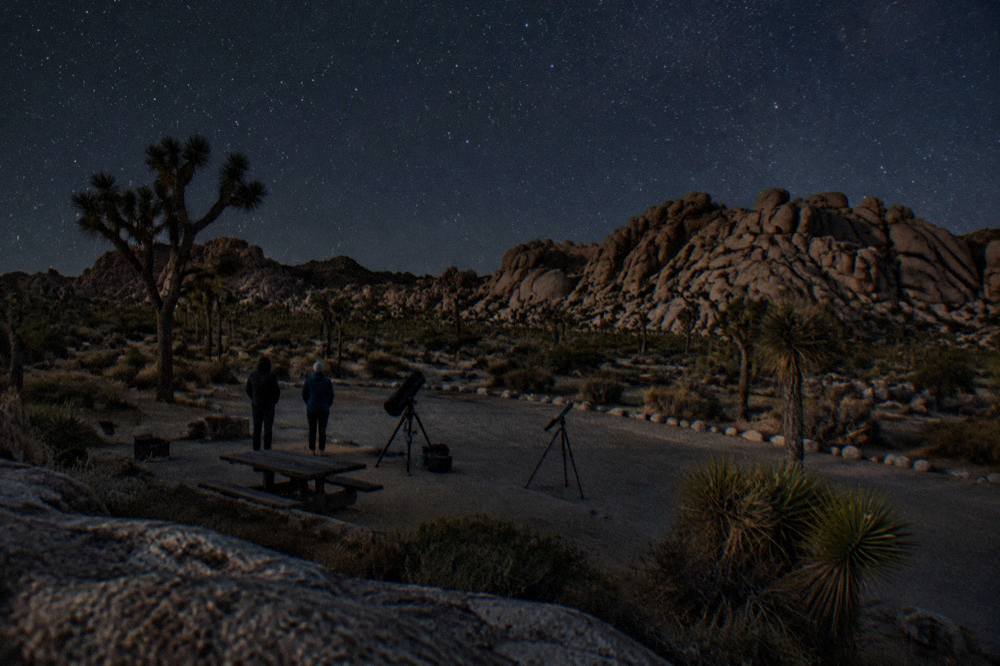
If you want the absolute darkest sky the park offers, the answer is the southeast corner. Cottonwood Campground is, in the park's own words, the darkest of the campgrounds, and Pinto Basin Road between the Cholla Cactus Garden and Cottonwood has the least traffic and darkest skies of any roadside stretch. You are farther from the glow of the Coachella Valley cities out there, and the elevation drop into the Pinto Basin puts the horizon low in every direction.
| Stargazing spot | What it is | Why go | Watch out for |
|---|---|---|---|
| Quail Springs | Designated stargazing parking lot | Central location, easy access from Park Boulevard | Popular, can fill on weekend nights |
| Hidden Valley | Designated stargazing parking lot | Rocks break the horizon glow, classic Joshua Tree scenery | Daytime crowds linger near sunset |
| Cap Rock | Designated stargazing parking lot | Split rock silhouette against the sky, central | Small lot, arrive early on busy nights |
| Ryan Mountain | Designated stargazing parking lot | High vantage near the trailhead | Wind is common at this elevation |
| Cottonwood Campground | Campground, far southeast | Darkest campground sky in the park | Long drive from the north entrances |
| Pinto Basin Road | Roadside pullouts | Least traffic, darkest roadside skies | Very dark, no services, stay with your vehicle |
One planning note that surprises people: the park is open 24 hours a day, every day of the year, and no timed-entry or advance reservation is needed to enter. You buy or show an entrance pass and you can drive in at any hour. The fee booth sometimes closes at night, in which case you may be asked to show a pass or pay on the way out. Details on passes and the fee-free days are on the park's fees page.
Should You Stargaze Alone Or Take A Guided Night Tour?
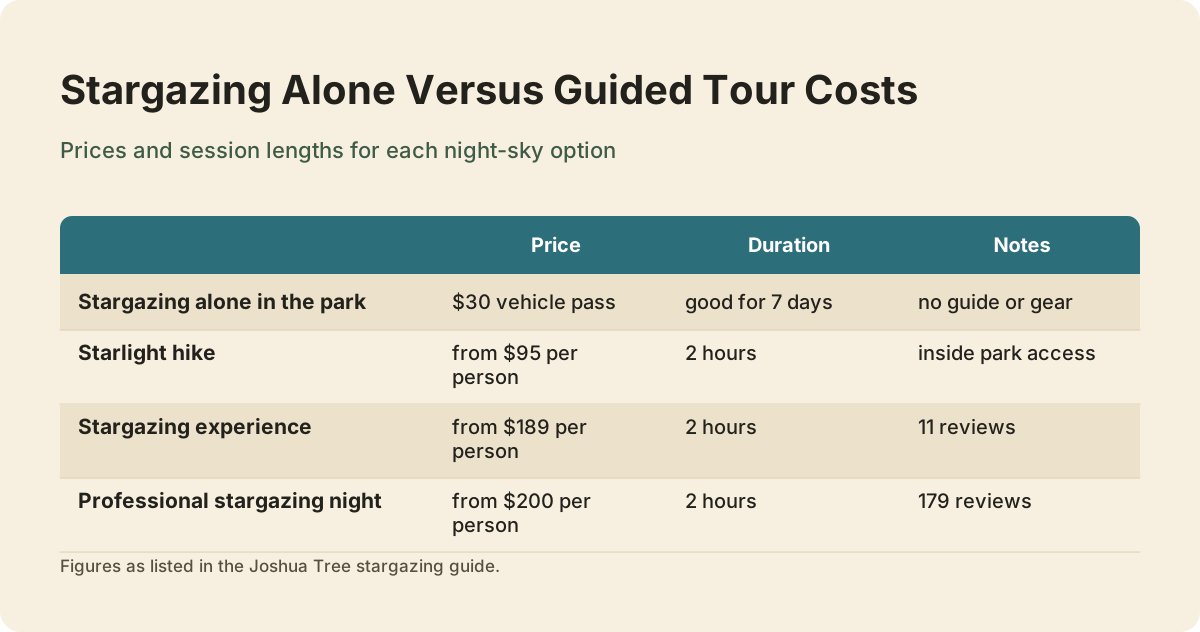
Going alone is free once you have paid park entry, and the designated lots make it genuinely easy. A guided tour adds an astronomer, telescopes and gear you would never haul yourself, at prices from $95 per person for the starlight hike to $200 per person for the professional stargazing night. The two telescope sessions run on private land just outside the park in Yucca Valley, not inside it, and no park pass is needed for those. And if you're weighing both deserts, our Joshua Tree versus Death Valley stargazing comparison walks through fees, tour options and timing so you can pick the darker sky.
The honest comparison is about what you want from the night. Stargazing alone in the park costs nothing beyond your $30 vehicle pass (good for 7 days), and on a moonless night at Cap Rock the sky is spectacular unaided. What you give up is interpretation. The difference between looking at a bright smudge and knowing it is the Andromeda galaxy, 2.5 million light years away, is the difference between a nice evening and a memorable one, and that is what a guide sells.
The guided landscape splits three ways. The starlight hike ($95 per person, 2 hours, meets in the Joshua Tree area) includes access to a trailhead inside the park, so this is the option for people who want the night-sky experience combined with walking under it. The two telescope sessions, the professional stargazing night and the stargazing experience, both run on private land just outside the park in Yucca Valley. That is stated plainly on the listings and worth repeating here: no park entry, no park pass, no drive through the gate after dark.
The professional stargazing night is the most fully equipped of the three: from $200 per person for 2 hours, rated 4.9 across 179 reviews, with telescopes, astro-binoculars, an astronomer, blankets, loungers and hot drinks included. The stargazing experience, from $189 per person for 2 hours, also runs on the private Yucca Valley land and has a small review pool of 11, too few for a star claim. The starlight hike, from $95 per person, is the budget pick and the only one of the three that puts you on a trail inside the park.
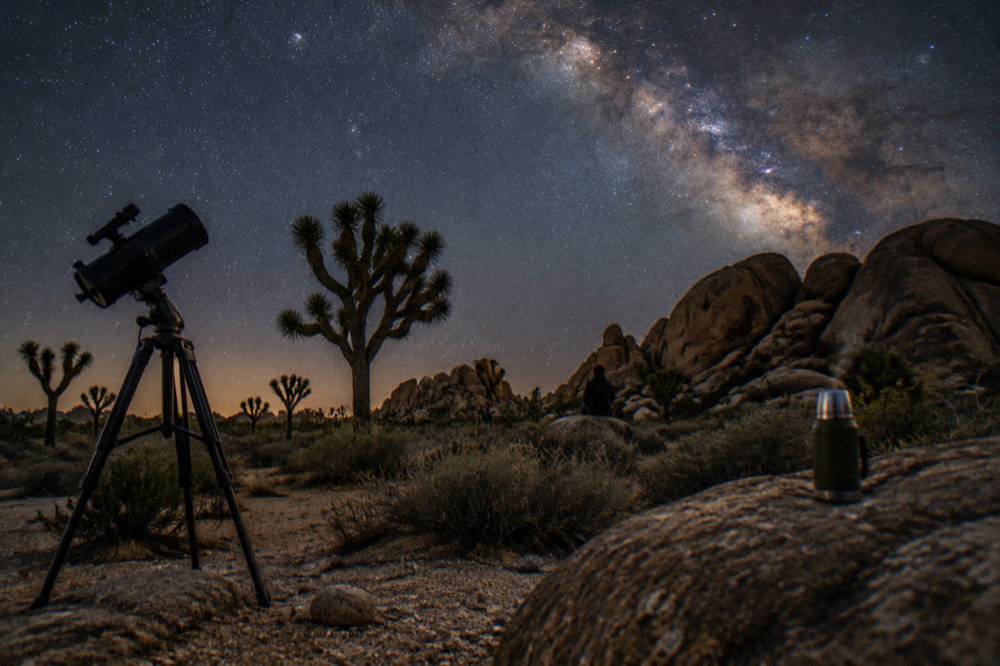
There is also a middle path worth naming: a guided tour that ends near dark, then staying in the park on your own afterward. Several of the day-trip and private options end at sunset, and the sunset stargazing day trip from Los Angeles is built exactly around this idea, pairing the golden hour with the first stars. You get a guide's eyes for the daytime landscape and the quiet sky to yourself afterward. If you're still weighing which desert park suits you best, our comparison of Anza-Borrego versus Joshua Tree covers landscape, crowds, and stargazing side by side.
What Does The Moon Do To Your Joshua Tree Stargazing?
The moon is the single biggest factor in how many stars you will see, and the park says it plainly: avoid the moon, because bright moonlight reduces the stars visible to your eye. Plan around the new moon for the best views, and remember that even a half moon washes out the fainter stars, leaving only the brightest handful.
The moon reflects sunlight, and any appreciable moonlight acts like a dim urban glow across the whole sky. On a full moon night at Joshua Tree you can walk the trails without a flashlight, which is its own kind of beautiful, but the Milky Way is gone and the star count drops to a few hundred at best. On a new moon night from a dark corner of the park, the star count climbs into the thousands and the Milky Way casts a visible shadow of its own. Since the moon makes this much difference, timing your visit around the lunar calendar is half the battle, and our guide to the best month for stargazing in Joshua Tree covers exactly that.
Practical planning means checking the moon phase for your dates before you commit. The galactic core of the Milky Way is at its best on moonless summer nights, which is why the summer months pull the photographers. Outside of summer the sky rotates but stays dark, and winter nights in the desert are cold, clear and famously uncrowded. For the seasonal picture, the best time to visit Joshua Tree guide covers the trade-offs, and the question of what month is best for stargazing in Joshua Tree has its own dedicated answer.
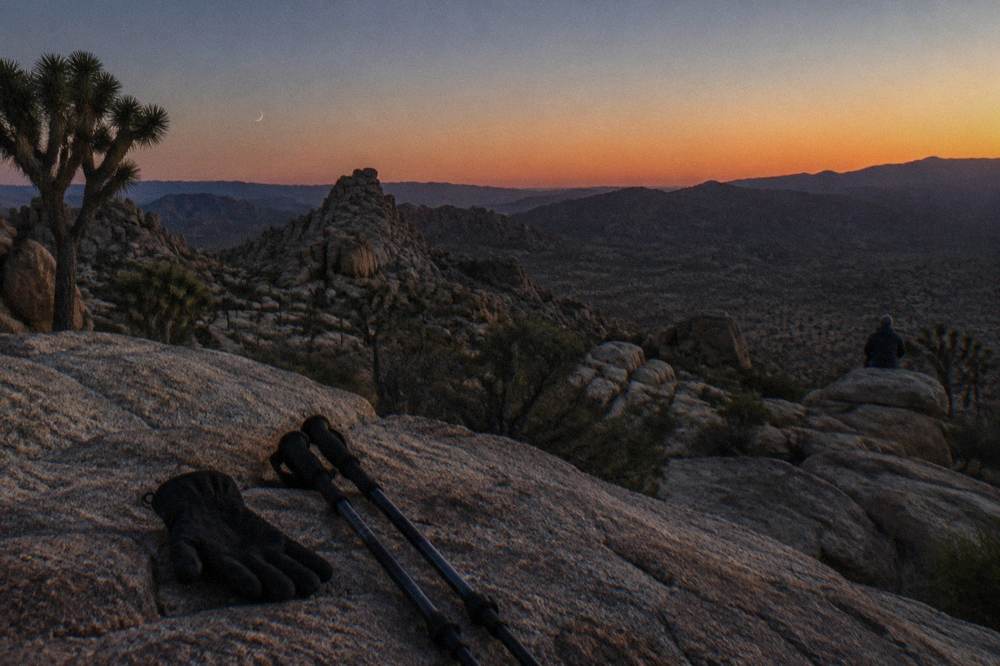
The other half of the moon equation is your own light discipline. The park's guidance is blunt: use red lights only, no bright white flashlights, headlamps or cell phones, because your eyes need 20 to 30 minutes to fully adapt to the dark. One person checking their phone in a parking lot resets everyone's night vision within a hundred feet. Red headlamps are cheap, and the guided tours hand them out or enforce them for exactly this reason.
| Moon phase | What you will see | Best use of the night |
|---|---|---|
| New moon | Maximum star count, Milky Way visible when in season | Prime stargazing, plan trips around it |
| Thin crescent | Nearly full darkness, faint objects visible | Almost as good as new moon |
| First or last quarter | Brighter stars only, faint objects washed out | Moon viewing, bright planet viewing |
| Full moon | Few hundred stars, no Milky Way | Moonlit hiking, photography of the moonlit landscape |
What Are The Rules For Stargazing In The Park?
The core rules are simple: stay within 20 ft of your vehicle at the designated stargazing areas, use red light only, keep pets leashed and off trails, and know that drones are prohibited. The park is open 24 hours a day year-round with no reservation needed, and campfires are only allowed in designated fire rings, with an annual campfire ban from June 15 to October 1.
The 20 ft rule deserves a sentence of explanation because it reads strangely the first time. The designated stargazing lots are parking lots, and the park wants night visitors awake and near their cars rather than asleep or wandering. It is a safety rule for a desert where cell reception is very limited, there is no water in the park interior, and nighttime temperatures swing hard. It also concentrates people, which paradoxically keeps the darkest corners dark.
Pets are the rule that catches the most people off guard. Dogs are not allowed on trails, in the backcountry or in park buildings, even carried, and must stay within 100 ft of roads, parking areas and campgrounds on a leash of 6 ft or less. A dog at a stargazing lot is fine; a dog on a night hike is not. The full policy is on the park's pets page.
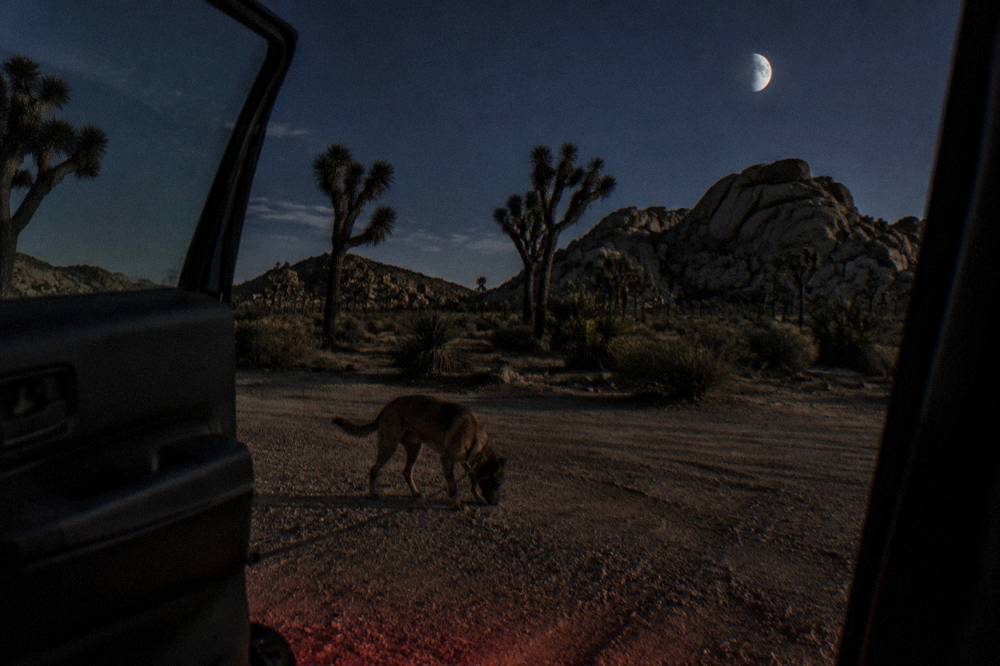
A few more rules that matter at night. Drones are prohibited, which protects both the darkness and the wildlife. Vehicles, street-legal motorbikes and bicycles must stay on designated roads, and ATVs and dirt bikes are prohibited outright. "Paint with light," the photography trick of sweeping a flashlight across a foreground during a long exposure, is not permitted for night photography in the park. And if you are camping to stargaze, campfires are only allowed in park-provided fire rings, with the seasonal fire restrictions running June 15 to October 1 each year; check the park's campgrounds page for the current rules before you build one.
| Rule | What it says | Why it matters at night |
|---|---|---|
| 20 ft rule | Stay awake and within 20 ft of your vehicle at designated stargazing areas | Safety in a dark, remote desert with limited cell service |
| Red light only | No white flashlights, headlamps or phones; eyes need 20-30 minutes to adapt | One white light resets night vision for everyone nearby |
| Pets | Leashed, max 6 ft, not on trails or in the backcountry, within 100 ft of roads and lots | Night wildlife and the darkness both suffer from roaming pets |
| Drones | Prohibited | Protects darkness, quiet and wildlife |
| Paint with light | Not permitted for night photography | Keeps artificial light out of the night landscape |
| Campfires | Designated fire rings only; seasonal ban June 15 to October 1 | Fire risk in the desert |
Which Campground Should You Book For Dark Skies?
Cottonwood Campground has the darkest skies of any campground in the park, per the park's own stargazing guidance, and it books on recreation.gov for $35 per night along with Black Rock, Indian Cove, Jumbo Rocks ($30) and Ryan ($30). Hidden Valley, White Tank and Belle are first-come, first-served at $25 per night. Reserve well ahead for October through May.
Camping is the stargazer's cheat code: you step out of your tent and the sky is already there, no night drive required. About 500 sites are spread across the park, and most are reservation-only on recreation.gov, bookable same day up to six months ahead. The busy season runs October through May, which is exactly the stargazing season, so the popular dark-sky sites go fast.
The trade-off map is straightforward. Black Rock, at the northwest corner near Yucca Valley, is close to town and the most convenient, but its sky is the most light-compromised of the reservation campgrounds. Jumbo Rocks and Ryan sit in the high central Mojave and give you the classic boulder-and-sky compositions. Cottonwood, far to the southeast, is the darkest, and it is the one the park itself names for stargazers. The three first-come, first-served campgrounds, Hidden Valley, White Tank and Belle, are small, cheap at $25 per night, and require arriving early in the day to claim a site.
| Campground | Booking | Nightly fee | Sky quality for stargazing |
|---|---|---|---|
| Cottonwood | Reservation, recreation.gov | $35 | Darkest campground in the park |
| Black Rock | Reservation, recreation.gov | $35 | Convenient, closest to town glow |
| Indian Cove | Reservation, recreation.gov | $35 | Dark, sheltered among rocks |
| Jumbo Rocks | Reservation, recreation.gov | $30 | High, open, classic rock silhouettes |
| Ryan | Reservation, recreation.gov | $30 | Small, near a designated stargazing lot |
| Hidden Valley | First-come, first-served | $25 | Central, arrive early |
| White Tank | First-come, first-served | $25 | Quiet, among the boulders |
| Belle | First-come, first-served | $25 | Small, south side of the park |
One caution worth planning around: summer nights at the lower-elevation campgrounds stay warm, lows near 75 F, while winter nights drop to near or below freezing even in the desert. The Joshua Tree in winter guide covers what that season actually feels like, and it is a genuinely good stargazing season if you pack for it.
How Do The Guided Night Tours Compare On Price And What You Get?
The three night options span $95 to $200 per person. The starlight hike, from $95 per person for 2 hours, includes trailhead access inside the park. The stargazing experience, from $189 per person for 2 hours, and the professional stargazing night, from $200 per person for 2 hours with telescopes, an astronomer, binoculars, blankets and hot drinks, both run on private land in Yucca Valley just outside the park.
Price is only part of the comparison. The inclusions differ sharply. The professional stargazing night lists telescopes, astro-binoculars, an astronomer, Yogibo loungers, blankets and coffee or tea, which is essentially a pop-up observatory; it excludes transportation, so you drive yourself to the Yucca Valley site. The stargazing experience is the same format at a slightly lower price with a small review pool. The starlight hike is a different animal entirely: a walk under the sky inside the park, with trailhead access included and private transportation excluded.
| Tour | From (per person) | Duration | Where it runs | Rating and reviews | Key inclusions |
|---|---|---|---|---|---|
| Starlight Hike | $95 | 2 hours | Trailhead inside the park | No reviews listed | Trailhead access inside the park |
| Stargazing Experience | $189 | 2 hours | Private land, Yucca Valley, outside the park | 11 reviews, small pool | Guided session outside the park |
| Professional Stargazing Night | $200 | 2 hours | Private land, Yucca Valley, outside the park | 4.9 across 179 reviews | Telescopes, astronomer, binoculars, loungers, blankets, hot drinks |
A guest on the professional stargazing night, James, put it simply: "Everyone was very awesome. Very knowledgeable and very nice. We had a great time. I would highly recommend anyone." Short, but it names the thing people are buying: knowledgeable people and a good time, not just equipment.
Because the two telescope sessions sit on private land outside the park, they sidestep the entrance fee question entirely. The starlight hike does not: as the park publishes for guided-tour guests, entry is $15 per person or your own valid pass. That fee is separate from the tour price, so budget it in when comparing. The stargazing hub carries the full current roster with live prices.
Is Joshua Tree Safe At Night For Stargazing?
Broadly yes, with desert-standard precautions: stay at the designated lots, keep to the 20 ft rule, carry more water than you think you need, and check conditions before you go. The park has no gas, food, water or lodging inside its boundaries, cell reception is very limited, and nighttime temperatures drop fast, so a breakdown far from an entrance is the real risk, not wildlife.
The park's own safety guidance for the dark hours is mostly about preparation. Tell someone where you are going, watch the weather, and know that flash flooding is possible from summer storms, so avoid washes and low-lying areas when rain is anywhere in the forecast. Wildlife at night is a modest concern: the desert has snakes and scorpions, and a red light and closed shoes handle most of it. The bigger practical risk is driving, since the roads are unlit and the rocks come close to the pavement in places.
For a fuller treatment of after-dark safety, including the specifics of solo visits, the site's article on whether Joshua Tree is safe at night covers it in depth. The short version for stargazers: the designated lots are social places on good nights, you are rarely alone under a new moon, and the drive back to town is the part that deserves your attention. Once you have the safety side settled, timing your trip matters just as much, and the month-by-month guide to Joshua Tree stargazing helps you pick when the sky will actually cooperate.
What Should You Bring For A Night In The Desert?
The essentials are a red light, warm layers, more water than feels reasonable, a chair or blanket to sit on, and snacks, because nothing inside the park is open after dark. The park itself recommends layering up and bringing a chair and water for stargazing, and the guided tours that include blankets and drinks are solving exactly this problem for you.
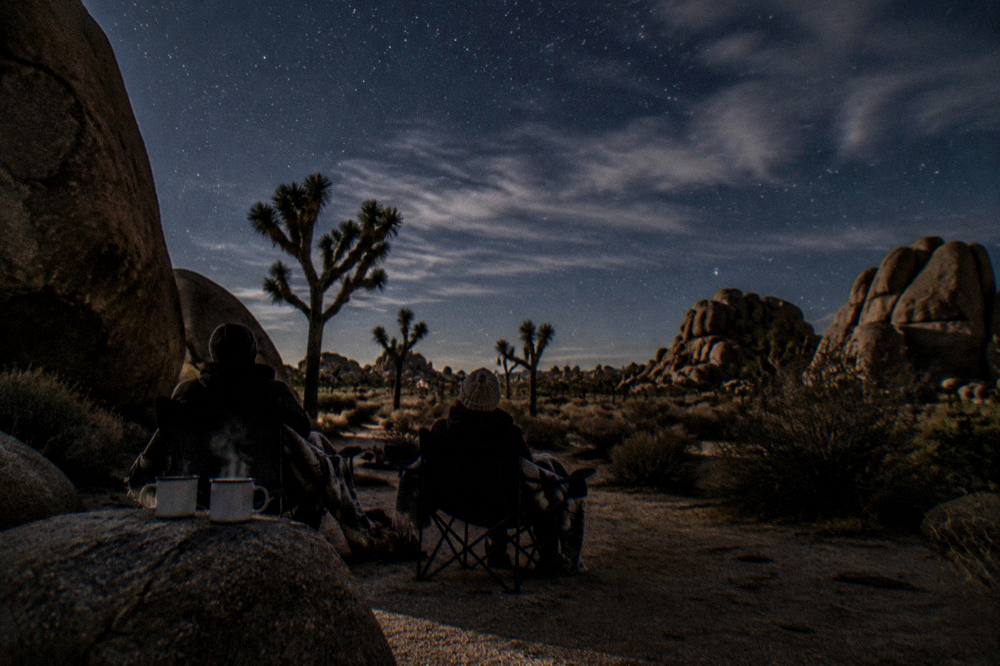
The layering advice surprises first-timers. Even after a hot day, a desert night can turn genuinely cold, and winter nights go below freezing. A beanie and a real jacket, not a hoodie, are standard kit from October through April. The chair matters more than people expect: standing craned upward for an hour is miserable, and the park's own guidance lists bringing a chair right alongside the red-light rule.
| Item | Why | Notes |
|---|---|---|
| Red headlamp or flashlight | Preserves night vision for you and everyone nearby | Standard white lights reset 20-30 minutes of eye adaptation |
| Warm layers, beanie, gloves | Desert nights drop sharply after sunset | Below freezing is possible in winter |
| Water | No water is available anywhere in the park interior | Bring more than the daytime amount |
| Camp chair or blanket | Comfortable upward viewing for an hour or more | The park's own recommendation |
| Snacks | Nothing inside the park is open at night | Nearest food is in town, a long drive from most lots |
| Offline maps | Cell reception is very limited | Download before you arrive |
Photographers should add a tripod and a remote or timer, and should know the paint-with-light ban before planning foreground lighting. Everyone else should add patience: the first 20 minutes in the dark are the investment, and the payoff is the sky getting steadily better the longer you stay still.
Can You Combine Stargazing With A Day Tour Or A Day Trip?
Yes, and it is one of the best-value ways to do the park. The sunset stargazing day trip from Los Angeles, from $299 per person for 10 to 12 hours with park entrance included, is built around exactly this pairing, and any day tour that ends near dusk positions you to stay into the dark on your own pass. The small-group day trip from LA, from $219 per person, covers the daytime half of the same idea.
The logic is simple. Your vehicle pass is good for 7 days, so a day tour followed by a night on your own costs the entry once. The LA-based options bundle the whole thing: the sunset stargazing trip includes the entrance fee and runs 10 to 12 hours, so you leave the city, see the park in afternoon light, watch the sun go down and stay for the first stars before the drive back. The small-group day trip, rated 4.8 across 36 reviews, includes admission and a deli lunch but returns at a more conventional hour.
Closer to the park, the same stacking works with any of the daytime guided options. A half-day guided hike from $335 per person ends with daylight to spare; the sightseeing adventure tour from $99 per person is the budget-friendly way to learn the park's geography by day so your night drive between lots feels familiar. This site's publisher, Joshua Tree Park Tours, keeps the full roster so you can match a daytime tour to a night plan without double-booking your energy.
What About The Private-Land Telescope Sessions Outside The Park?
The professional stargazing night ($200 per person, 2 hours, 4.9 across 179 reviews) and the stargazing experience ($189 per person, 2 hours, 11 reviews) both run on private land just outside the park in Yucca Valley, which means no entrance fee, no park pass and no night drive through the gate. They are not park activities, and the listings say so plainly.
This distinction matters for planning more than it first appears. The upside is friction: you park at a private site near Yucca Valley, walk a short distance, and there are telescopes, an astronomer and hot drinks waiting. No long drive back out of the park at midnight, no entrance booth, no pass logistics. The sky over Yucca Valley is darker than any city and darker than the park's northwest corner, though not quite the equal of Cottonwood's deep-southeast darkness.
The trade-off is that you are not inside a national park at night. Some visitors want the rocks and the silence of the park interior specifically, and for them the starlight hike, which includes access to a trailhead inside the park, is the guided option that delivers it. Others just want the deepest possible look at the sky with someone who can name what they are seeing, and for that the telescope sessions are the stronger product: the professional night's equipment list, telescopes, astro-binoculars, loungers, blankets, an astronomer, is unmatched on the roster.
Whichever way you lean, the decision framework is short. Inside the park, alone or on the starlight hike, for the landscape and the solitude. Private land outside it, with telescopes, for the astronomy. Either way, go on a moonless night, keep the lights red, and stay long enough for your eyes to finish their 20 minutes of work.
Common Questions About Joshua Tree Stargazing
Where is the best stargazing in Joshua Tree National Park?
The park names four designated stargazing areas, the Quail Springs, Hidden Valley, Cap Rock and Ryan Mountain parking lots, and identifies Cottonwood Campground and Pinto Basin Road between the Cholla Cactus Garden and Cottonwood as the darkest spots. The designated lots ask visitors to stay within 20 ft of their vehicle.
Do I need a reservation to stargaze in Joshua Tree?
No. The park is open 24 hours a day, 365 days a year, and no timed-entry or advance reservation is required to enter. You need an entrance pass, $30 per private vehicle for 7 days or $15 per person on foot or bicycle, which you may be asked to show on the way out if the booth is closed at night.
How much does a guided stargazing tour in Joshua Tree cost?
From $95 per person for the starlight hike (2 hours, trailhead inside the park), from $189 per person for the stargazing experience, and from $200 per person for the professional stargazing night with telescopes and an astronomer. The two telescope sessions run on private land just outside the park in Yucca Valley.
When is the best time of year for stargazing in Joshua Tree?
Any moonless night works, but the Milky Way including the galactic core is at its best on moonless summer nights. Fall through spring offers darker, cooler nights with fewer crowds the later you go in the evening. Check the moon phase before choosing your dates, since bright moonlight reduces the stars you can see.
Can I use a flashlight while stargazing in Joshua Tree?
Red lights only. The park prohibits bright white flashlights, headlamps and cell phones for night activities because eyes need 20 to 30 minutes to adapt to darkness, and one white light resets that adaptation for everyone nearby.
Are the Joshua Tree stargazing tours inside the national park?
Only the starlight hike is, which includes access to a trailhead inside the park. The professional stargazing night and the stargazing experience both run on private land just outside the park in Yucca Valley, so no entrance fee or park pass applies to them.