Is Joshua Tree Or Death Valley Better For Stargazing?
A straight comparison of Joshua Tree and Death Valley for stargazing, with the park's designated night-sky areas, tour options, fees and timing, so you can decide where to point your telescope.
Is Joshua Tree Or Death Valley Better For Stargazing?
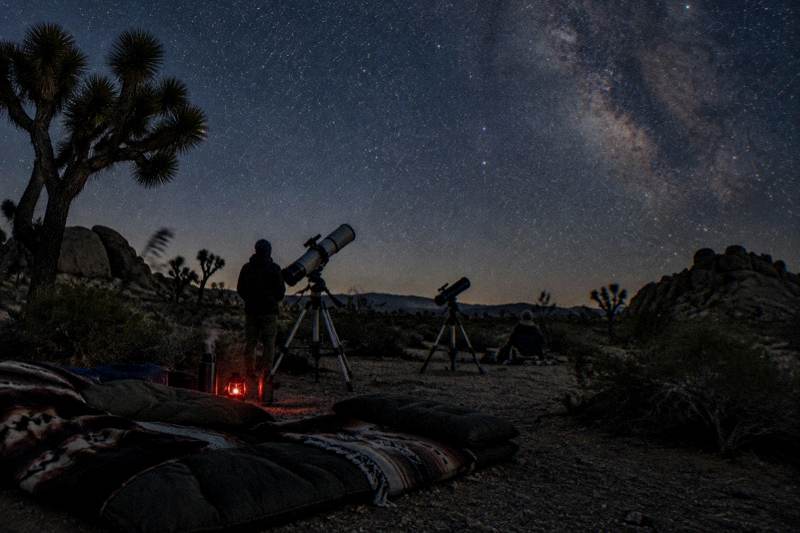
Joshua Tree is the better pick for most stargazers, and the reason is practical rather than astronomical: it is an International Dark Sky Park with four designated stargazing areas, bookable guided night tours from $95 per person, and a short drive from Los Angeles or Palm Springs. Death Valley is also a dark-sky destination, but it demands a far longer commitment to reach and offers far fewer ways to tour its night sky. If you're basing yourself nearby, where to stay between Palm Springs and the Joshua Tree gateway towns explains which town puts you closest to those guided night tours.
That is the short verdict, and it holds for the majority of travelers comparing the two. The park's own stargazing page lays out what makes a night here work: designated stargazing areas, red-light etiquette, and a season for the Milky Way's galactic center. Death Valley's remoteness is real darkness, but this article's comparison leans on what can be verified for Joshua Tree, and treats Death Valley in general terms only.
The choice usually comes down to logistics. A visitor flying into Los Angeles can be at a trailhead inside Joshua Tree National Park the same evening. Death Valley sits roughly twice as far out, past a stretch of highway with few services and no easy exit if plans change. If the trip is specifically about deep-sky observation over multiple nights, the calculus shifts. For everything else, a night in Joshua Tree with a guide, or alone at a designated pullout, delivers more sky per hour of driving.
For travelers who want the guided version rather than a self-driven one, the three night options below cover the range: a professional astronomer session, a smaller stargazing experience, and a guided starlight hike inside the park.
Which Is Better, Joshua Tree Or Death Valley?
For most visitors, Joshua Tree wins on accessibility and tour choice, while Death Valley's advantage is raw remoteness. Joshua Tree holds an International Dark Sky Park designation, publishes four designated stargazing areas, and sits within reach of an evening drive from Los Angeles or Palm Springs. Death Valley is also a dark-sky destination, but reaching it means a much longer drive with limited services, and guided night options there are not something this site can verify.
The honest framing is that both parks are genuinely dark, and both sit far from the coastal light domes that wash out Southern California's suburbs. What separates them is everything around the sky. Joshua Tree National Park is open 24 hours a day, year-round, with no timed-entry reservation needed to enter, so a spontaneous night visit is as simple as buying a pass and driving in. The park publishes its own guidance on where to go and how to behave after dark, which matters more than most first-time night visitors expect.
Death Valley's case rests on distance. It is one of the most remote corners of the state, and remoteness is the single biggest driver of sky quality. But that remoteness cuts both ways: gas, food and lodging all require planning, and a night that goes wrong, a forgotten layer, a dead phone, is harder to recover. This site's verified facts cover Joshua Tree in detail, so the comparison below sticks to what is documented here and treats Death Valley as the general dark-sky alternative it is.
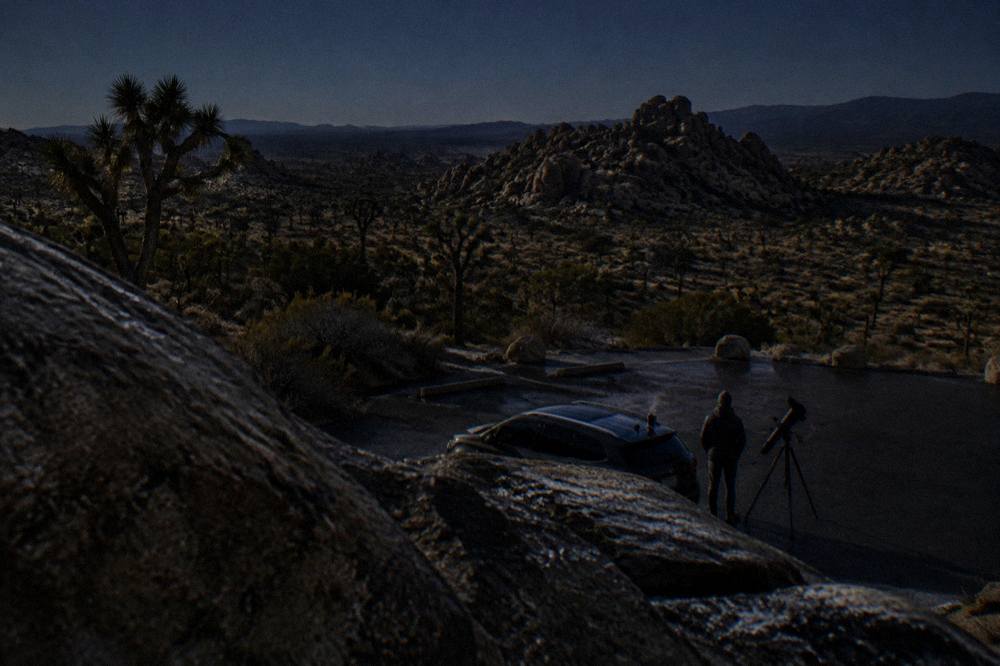
One point worth making early: the stargazing tours sold near Joshua Tree are not all inside the park. The Professional Stargazing Night, from $200 per person for two hours with an astronomer, telescopes, astro-binoculars, blankets and hot drinks included, runs on private land just outside the park in Yucca Valley. The same is true of the smaller Stargazing Experience, from $189 per person. Neither requires a park pass, and neither should be booked by someone specifically hoping to stand inside the national park boundary at night. The Starlight Hike, from $95 per person, is the guided option that does include access to a trailhead inside the park.
Thinking about booking a guided night while the dates are still open? The professional session includes telescopes, an astronomer and loungers, and free cancellation terms are shown on the operator's live listing before you pay.
What Month Is Best For Stargazing In Joshua Tree?
The best months for stargazing in Joshua Tree are the cooler, drier stretch from late September through early May, with summer offering the Milky Way's galactic center on moonless nights but pairing it with heat. The park's guidance is to avoid the moon entirely, since bright moonlight reduces the stars you can see, and to check a moon-phase calendar before locking a date.
The moon matters more than the season. A moonless night in any month beats a full-moon night in the best one, because moonlight is effectively light pollution that no amount of desert remoteness fixes. The park's stargazing page says it plainly: avoid the moon, let eyes adapt for 20 to 30 minutes, and layer up. Visitors planning around the lunar calendar should pick a night within roughly a week either side of a new moon.
| Factor | What The Park Publishes | What It Means For Planning |
|---|---|---|
| Moon phase | Bright moonlight reduces visible stars | Book within a new-moon window |
| Eye adaptation | 20 to 30 minutes in darkness | Arrive early, use red light only |
| Best Milky Way window | Moonless summer nights for the galactic center | Summer trips need heat planning |
| Darkest campground | Cottonwood | Reserve on recreation.gov, up to 6 months ahead |
| Darkest roadside | Pinto Basin Road, Cholla Cactus Garden to Cottonwood | Least traffic, darkest pullouts |
Heat is the second variable. Summer nights in the park can stay near 75 degrees Fahrenheit, which is comfortable for stargazing itself but makes the drive in and any daytime activity punishing, with highs around 100 degrees or more. Winter flips the problem: nights fall to near or below freezing at higher elevations, occasionally with snow, which is excellent for sky clarity but demands serious layers. Spring and fall, with typical lows around 50 degrees, are the sweet spot for most people sitting still outdoors for hours.
The guided tours run year-round, which is one argument for booking one. The Professional Stargazing Night includes blankets and Yogibo loungers, so the cold-sitting problem is partly solved for you, and the Starlight Hike keeps you moving, which changes the layering math entirely. More on choosing between them below.
Where Can You Stargaze Inside Joshua Tree National Park?
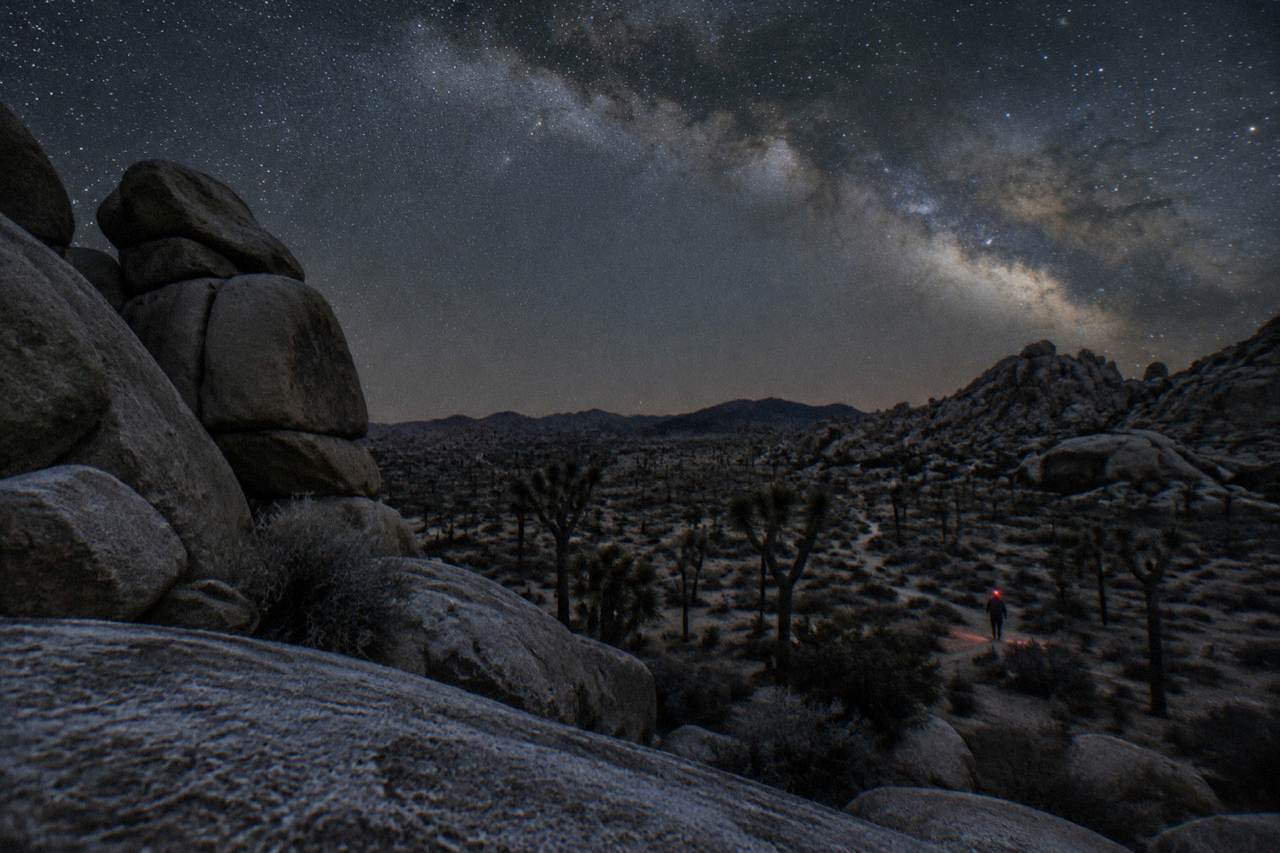
The park maintains four designated stargazing areas, the parking lots at Quail Springs, Hidden Valley, Cap Rock and Ryan Mountain, and asks visitors to stay awake and within 20 feet of their vehicle. Beyond those, Cottonwood Campground has the darkest skies of any campground, and the Pinto Basin Road pullouts between the Cholla Cactus Garden and Cottonwood see the least traffic and darkest skies.
The designated-area rule exists for safety and for the park's after-dark operations, and it is worth following rather than improvising. The four lots are spread across the main visited corridor, so most visitors can reach one without adding much driving. Ryan Mountain's lot sits near a popular trailhead, Hidden Valley's near the climbing mecca, Cap Rock near a picnic area, and Quail Springs on the main Park Boulevard artery. All four put a car, water and an exit within a short walk, which is exactly what a 2 a.m. session needs.
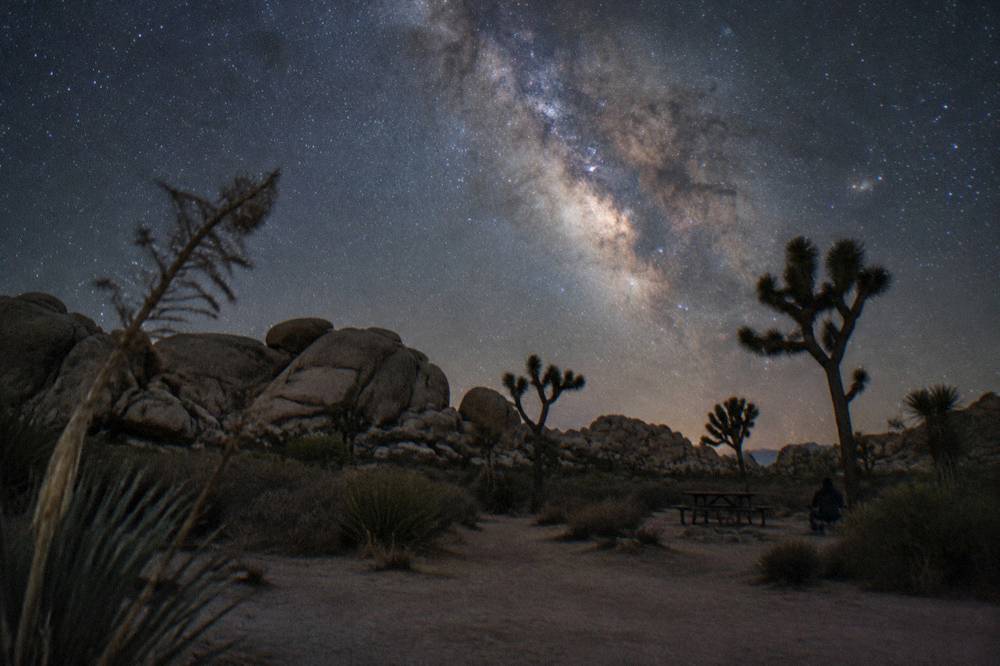
The darker alternatives require more commitment. Cottonwood, in the park's southeast corner, is a reservation campground on recreation.gov, bookable same-day up to six months ahead, and the park itself names it the darkest campground sky. The Pinto Basin Road pullouts are drive-up, no reservation, but they put you farther from the entrances and any services; there is no gas, no food and no water anywhere inside the park, so a full tank and supplies are non-negotiable.
The park's stargazing guidance, including the red-light rule and the 20-foot vehicle rule, is published on the park's stargazing page, and it is worth reading before a first night visit. For a deeper dive into the where and when, the site's own Joshua Tree stargazing guide covers the areas in more detail, and the Milky Way season in Joshua Tree guide handles the galactic-center timing question.
What Are The Stargazing Tours Near Joshua Tree?
There are three bookable night options around Joshua Tree: the Professional Stargazing Night from $200 per person for two hours with an astronomer and telescopes on private land in Yucca Valley, the Stargazing Experience from $189 per person, also on private land outside the park, and the Starlight Hike from $95 per person, which includes access to a trailhead inside the park.
The distinction between private land and park land is the detail most buyers miss. The Professional Stargazing Night, rated 4.9 across 179 reviews, runs on private land just outside the park in Yucca Valley, and includes telescopes, astro-binoculars, an astronomer, blankets, Yogibo loungers and coffee or tea. No park pass is needed and none is implied. A guest, James, describes it simply: "Everyone was very awesome. Very knowledgeable and very nice. We had a great time."
The Stargazing Experience, from $189 per person for two hours, is the same private-land arrangement in a smaller format, with a review pool too small for a star claim at 11 reviews. The Starlight Hike, from $95 per person for two hours, is the budget entry and the only one of the three that includes access to a trailhead inside the park itself, though it excludes private transportation and, like any park entry, the entrance fee applies unless you hold a pass.
| Tour | From Price | Duration | Location | Rating |
|---|---|---|---|---|
| Professional Stargazing Night | $200 per person | 2 hours | Private land, Yucca Valley | 4.9 across 179 reviews |
| Stargazing Experience | $189 per person | 2 hours | Private land, Yucca Valley | 11 reviews, too few for a star claim |
| Starlight Hike | $95 per person | 2 hours | Trailhead inside the park | No reviews listed |
Which one fits depends on what the night is for. A bucket-list evening with a telescope on a lounger points to the professional session. A tight budget or a desire to actually be inside the national park at night points to the Starlight Hike. Families weighing the whole category can browse the full set of Joshua Tree stargazing tours to compare formats side by side.
How Dark Are Joshua Tree's Skies Compared To Death Valley's?
Joshua Tree is an International Dark Sky Park at the Silver Tier level under its 2017 designation by DarkSky International, with the darkest zones at Cottonwood Campground and along Pinto Basin Road. Death Valley is also a dark-sky destination, and its greater remoteness means darker horizons in absolute terms, but this site's verified sources do not carry comparable figures for it, so no numbers are claimed here.
Silver Tier means the park met a measured standard for sky quality and, importantly, committed to protecting it through lighting rules and public programming. That designation is why the park can publish designated stargazing areas with a straight face, and why the red-light etiquette is enforced socially if not legally. The practical takeaway for a visitor is that the sky over the park's interior is genuinely dark by any standard a city dweller would apply. More of these guides are collected on Joshua Tree Park Tours.
The comparison with Death Valley is where honesty matters. Death Valley's remoteness is legendary, and its skies are, in general terms, among the darkest in the country. But a darker horizon only pays off if you can get to it, stay comfortable in it, and get home from it. For a traveler with two or three days total, the hours saved by choosing Joshua Tree are hours actually spent under stars rather than under a steering wheel.
There is also the question of what you can book. Around Joshua Tree, the night-tour menu above is verified and bookable tonight. This site carries no equivalent verified roster for Death Valley, and inventing one would be exactly the kind of guess this article refuses to make. If a Death Valley trip is already planned, the same principles apply: go on a moonless night, get far from the headlights, use red light, and give your eyes half an hour.
Do You Need A Reservation Or Pass To Stargaze In Joshua Tree?
No reservation is needed to enter Joshua Tree National Park at any hour, but an entrance pass is required: $30 per private vehicle for seven days, $25 per motorcycle, or $15 per person on foot or bicycle, with children under 16 free. The park is open 24 hours a day, and if the fee booth is closed you may be asked to show a pass or pay on the way out.
The fee structure is the part worth planning around, because it interacts with the tour choice. A self-driven night at a designated stargazing area needs the vehicle pass, $30 for seven days, or an annual pass at $55, or any valid America the Beautiful pass. The guided-tour guest rule, as the park publishes it, is $15 per person or the guest's own valid pass, and several of the roster's tour listings note the entrance fee separately, so it is worth reading the fine print on whichever tour is booked. The two private-land Yucca Valley sessions need no pass at all.
Passes can be bought at the Joshua Tree Visitor Center, the Twentynine Palms visitor center, Cottonwood Visitor Center, the North and West Entrance Stations (card only), or online at recreation.gov. The park advises printing or saving a digital pass before arriving, because connectivity inside the park is very limited, a detail that also matters for navigation on the way out at night. The full fee and pass breakdown is on the park's fees page, and this site's own entrance fee and passes guide walks through which pass pays for itself.
Campgrounds are the exception to the no-reservation rule. Most sites, including the darkest one at Cottonwood, are reservation-only on recreation.gov, bookable same-day up to six months ahead, and the busy season runs October through May, which overlaps the best stargazing months exactly. A night-sky trip that includes camping should be booked well before the moon calendar is finalized.
What Should You Bring For A Night Under The Joshua Tree Sky?
Bring a red-light headlamp or flashlight, serious layers, water, a chair or blanket, and a saved offline map, because nights in the park fall to around 50 degrees in spring and fall and to near or below freezing in winter, and there is no water, no gas and very little cell reception inside the park. The park's own advice is to layer up, bring a chair and water, and give eyes 20 to 30 minutes to adapt.
The red-light rule deserves its own sentence. White headlamps and phone screens reset the eye's dark adaptation, and one careless beam can cost a whole viewing party its night vision. Red lights are cheap, and the professional tour sidesteps the problem by supplying the etiquette and the equipment. Solo visitors should also tell someone where they are going, since the designated areas ask you to stay within 20 feet of your vehicle precisely so that help can find you if it must.
Layering is the other common failure. Sitting still for two hours in a desert is a different thermal problem than hiking in one, and the Starlight Hike, which keeps you moving, needs less insulation than a stationary telescope session. The park's seasonal guidance, typical lows around 50 degrees in spring and fall, near freezing on winter nights, is the planning baseline, and current conditions are always worth checking against the park's conditions page before any desert night out.
For the tour buyers, most of this list is handled. The Professional Stargazing Night includes blankets, loungers and hot drinks. The trade-off is the private-land location in Yucca Valley rather than the park interior, which for many buyers is a fair exchange for not hauling a chair and a coat into the dark.
Is A Guided Stargazing Tour Worth It Over Going Alone?
A guided tour is worth it for first-time desert stargazers, anyone without a telescope, and visitors who want the night interpreted rather than just observed, since the Professional Stargazing Night supplies an astronomer, telescopes, astro-binoculars, loungers and blankets from $200 per person. Going alone is better for repeat visitors, tight budgets and photographers with their own gear, at the cost of a $30 vehicle pass and full self-sufficiency.
The value in a guide is interpretation. An astronomer can find the galactic center, explain what the eye is adapting to, and answer the questions that a sky app cannot. The professional session's inclusions list is genuinely complete for a stationary night: telescopes, binoculars, seating, warmth and drinks. Against that, a solo night at Cap Rock or Ryan Mountain costs the vehicle pass and whatever gear is already in the trunk, and the sky itself is identical.
The middle path is the Starlight Hike, from $95 per person, which buys a guide, a route and trailhead access inside the park without the telescope apparatus. It suits visitors whose main goal is standing in the national park at night with someone who knows the way back. Its listing shows no review count yet, so judge it on format and price rather than reputation.
For anyone still choosing between the two parks, the guided-tour density around Joshua Tree is itself part of the answer. Death Valley's darkness is deeper on paper, but the ecosystem of astronomers, loungers and two-hour sessions that makes a night sky accessible to a non-astronomer is concentrated here. That, plus the drive time, is why the verdict lands where it does.
One more consideration before booking: moon phase. Every one of these tours is better on a moonless night, and every operator runs regardless of the moon unless stated otherwise, so the calendar check is the buyer's job. Cross-reference the tour date against a new-moon window, then book.
Common Questions About Joshua Tree Vs Death Valley Stargazing
Is Joshua Tree Or Death Valley Better For Stargazing?
For most travelers, Joshua Tree is the better practical choice: it is an International Dark Sky Park with four designated stargazing areas, bookable guided night tours from $95 per person, and a much shorter drive from Los Angeles or Palm Springs. Death Valley is also a dark-sky destination and its remoteness means darker horizons, but it takes far longer to reach and this site carries no verified tour roster for it.
Which Is Better, Joshua Tree Or Death Valley?
Joshua Tree wins on accessibility, tour options and infrastructure, with the park open 24 hours and no entry reservation needed. Death Valley's advantage is deeper remoteness and darker skies in absolute terms, at the cost of a much longer drive with limited services.
What Month Is Best For Stargazing In Joshua Tree?
Late September through early May is the comfortable window, with spring and fall lows around 50 degrees. The Milky Way's galactic center is best on moonless summer nights, though summer days run around 100 degrees or more. Whatever the month, pick a night near a new moon, since bright moonlight reduces the stars you can see.
Do The Stargazing Tours Go Inside The National Park?
Two of them do not. The Professional Stargazing Night, from $200 per person, and the Stargazing Experience, from $189 per person, both run on private land just outside the park in Yucca Valley and need no park pass. The Starlight Hike, from $95 per person, includes access to a trailhead inside the park.
Where Are The Designated Stargazing Areas In Joshua Tree?
The park maintains four: the parking lots at Quail Springs, Hidden Valley, Cap Rock and Ryan Mountain. Visitors are asked to stay awake and within 20 feet of their vehicle. For darker skies, the park points to Cottonwood Campground and the Pinto Basin Road pullouts between the Cholla Cactus Garden and Cottonwood.
Do You Need A Pass To Stargaze In Joshua Tree?
Yes, if you enter the park. A private vehicle pass is $30 for seven days, a motorcycle pass $25, and entry on foot or bicycle $15 per person, with children under 16 free. The park is open 24 hours a day, and if the booth is closed you may be asked to show a pass or pay on the way out. The private-land tours in Yucca Valley require no pass.