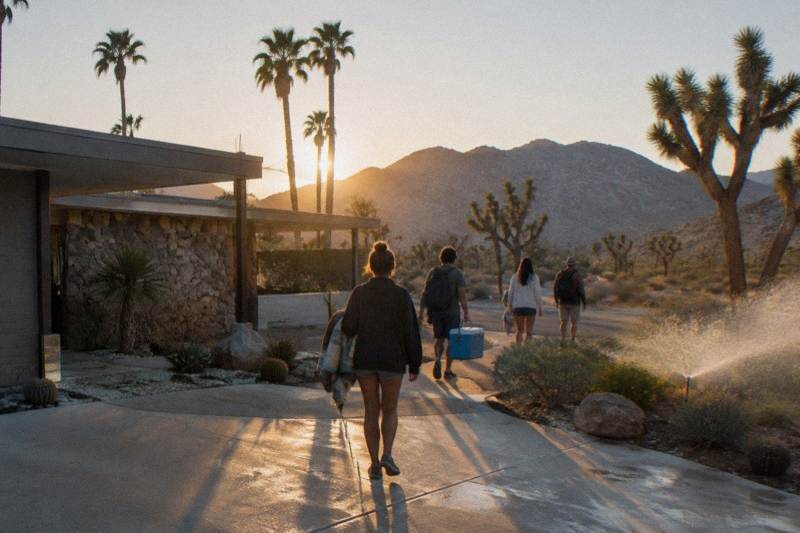
Is It Better To Stay In Palm Springs Or Joshua Tree?
A logistics-first comparison of staying in Palm Springs versus the gateway towns around Joshua Tree National Park, with departure areas, campground options, and which tours leave from where.
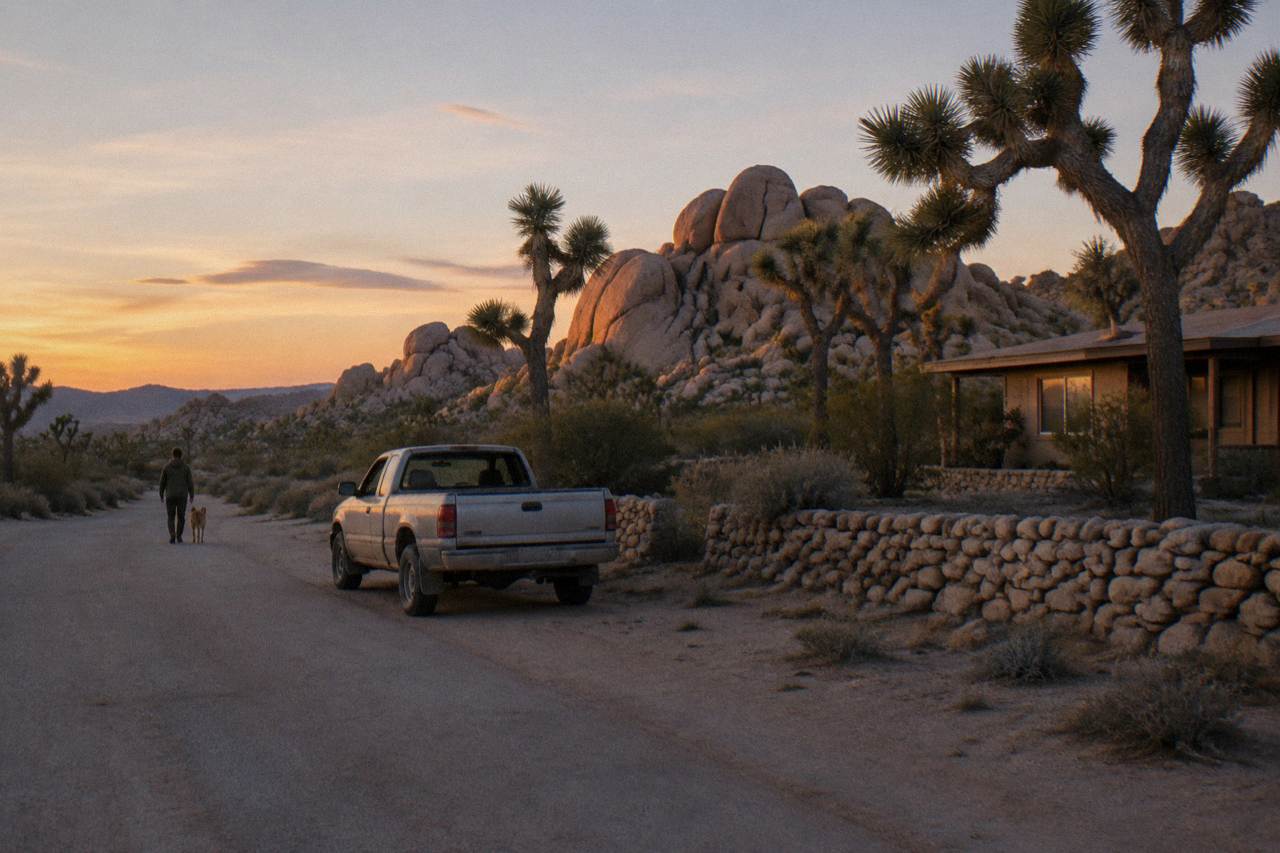
Is It Better To Stay In Palm Springs Or Joshua Tree?
Neither town is inside the park, because nothing is: Joshua Tree National Park has no hotels, no restaurants, no gas stations, and no water in its interior. The choice is really between a full-service resort city about an hour from the gates and small towns that sit minutes from them. Stay in Palm Springs for amenities and nightlife, stay in the gateway towns for early starts and dark skies. If you'd rather skip the overnight question entirely, our honest take on Joshua Tree as a day trip covers the drive from Palm Springs and whether the park justifies the effort.
The park publishes this plainly on its first-time-visitor page: there are no lodging, food, or fuel services inside the boundary, and cell reception is very limited. That single fact reframes the whole question. Nobody stays "in Joshua Tree National Park" unless they are in a tent, so the debate is about which base puts you in the best position for the park while matching what you want from the evenings.
Palm Springs is the resort option. It has the hotels, the restaurants, the pool scenes, and the airport, and several tours depart from or pick up in the Palm Springs area, including the Backroads Hummer H2 Tour from $159 per person and the Open-Air Hummer Adventure from $179 per person. A guest named Lori on the Hummer tour noted that the park was about an hour's drive from Palm Springs, which matches the general distance between the city and the west entrance (see Day Trip From Palm Springs). That hour is the price of the pool.
The town of Joshua Tree and its neighbors trade the resort infrastructure for proximity. A tour leaving from the Joshua Tree area, such as the Sightseeing Adventure Tour from $99 per person, starts minutes from an entrance station rather than an hour away. For photographers, hikers, and anyone chasing a sunrise or a stargazing session, that gap matters more than a minibar. Lori's review also carried a warning worth repeating for summer visitors from either base: temperatures on her trip were above 100 degrees, and she recommended a hat and sunscreen.
For a first visit with limited time, a guided product solves the base-town problem in a different way. A guide handles the route, the timing around heat, and the parking scramble at popular spots, which is the part of the park that punishes unprepared drivers most. The comparison below works through each option in detail, starting with the practical question of where you can actually sleep.
Where Is The Best Place To Stay When Visiting Joshua Tree National Park?
The best place to stay is a gateway town, either the town of Joshua Tree itself for the west entrance, Twentynine Palms for the north and south entrances, or Yucca Valley for the Black Rock side. Palm Springs works as a base if amenities matter more than early starts. Inside the park itself, the only option is a tent in one of the roughly 500 campsites. And if a night in a tent sounds like more commitment than you need, our honest verdict on visiting Joshua Tree in a single day covers the drive from the city and when it still makes sense.
The honest answer depends on what the day looks like. Spring and fall mornings are the park's best hours, and entrance-adjacent towns let you be at a trailhead before the crowds build. The park's own guidance flags holidays, weekends from October through May, and spring break as the crowded periods, and parking at popular spots fills early on those days. Staying five minutes from an entrance buys you the first parking space at Hidden Valley or Cap Rock.
The town of Joshua Tree sits closest to the west entrance on Park Boulevard, the road that threads the park's most visited stretch. Twentynine Palms anchors the north and south entrances and hosts the main park visitor center on Freedom Way. Yucca Valley sits northwest of the park and is the natural base for the Black Rock campground area, and it is also where the stargazing sessions on private land outside the park take place. Each town has its own visitor center or nature center where passes can be bought.
Palm Springs remains a legitimate answer for a different traveler. If the trip is half resort and half park, the drive is manageable and several tours depart from the Palm Springs area anyway, so you can let someone else do the driving. The Private Group Adventure picks up in Palm Springs and runs four hours from $275 per person, which converts a resort stay into a park day without renting a car for the park roads.
The question of where to sleep also has a third answer that many visitors miss: camping. The park holds about 500 sites across nine campgrounds, and the experience of waking inside the boundary, under a sky the park is recognized for, is something no hotel in any town can replicate. The next sections break down the town-by-town comparison and the camping option in full.
Which Is Better, Palm Springs Or Joshua Tree?
Palm Springs is better for travelers who want restaurants, pools, an airport, and evening entertainment, with the park as a daytime excursion. The town of Joshua Tree is better for travelers whose trip is the park, offering entrance proximity, early starts, and quiet nights. Neither is better on price alone; both towns span budget and mid-range lodging, and no hotel exists inside the park.
Frame it as a trip-shape decision. A Palm Springs base suits a longer desert vacation that includes the Aerial Tramway, golf, and a single park day, ideally a guided one. A Joshua Tree base suits a two or three day park trip built around hikes, a climbing session, and a night of stargazing, where being able to return to town for lunch and go back out for the evening is the whole point.
The tour roster reflects the split. Products departing the Palm Springs area, like the Backroads Hummer H2 Tour from $159 per person, bundle the drive into the experience, with air-conditioning, snacks, and a guide who narrates the route. Maria, a guest on the Paved Road Van Tour that departs the Palm Desert area, praised her guide's knowledge of both the Palm Desert area and the park itself, which is the format working as designed: the drive becomes part of the tour.
| Departure area | Tours departing there | From price | Duration |
|---|---|---|---|
| Palm Springs area | Backroads Hummer H2 Tour; Open-Air Hummer Adventure; Private Group Adventure (pickup) | $159 to $275 per person | 3 to 5 hours |
| Palm Desert area | Offroad 4x4 Park Tour; Paved Road Van Tour | $249 per person | 5 hours |
| Joshua Tree area | Sightseeing Adventure Tour; Half-Day Guided Hike; Private Sightseeing Adventure (pickup) | $99 to $550 | 3 to 7 hours |
| Yucca Valley area | Local Expert Park Tour; Professional Stargazing Night | $159 to $200 per person | 2 to 3 hours |
| Twentynine Palms area | Electric Motorbike Tour; E-Bike Rental | $100 to $169 per person | 2.5 to 4 hours |
| Los Angeles | Small-Group Day Trip; Sunset Stargazing Day Trip; Las Vegas to LA via Joshua Tree | $150 to $299 per person | 10 to 16 hours |
The table shows the pattern: full-size vehicle tours cluster on the Palm Springs side, where guests arrive without cars and want the drive included, while hikes, bikes, and astronomy products cluster at the towns nearest the entrances. If you already know which tour format you want, the table quietly answers the base-town question for you.
Is It Better To Stay In Joshua Tree Or Yucca Valley?
Yucca Valley is better for travelers using the Black Rock entrance, staying closer to Palm Springs, or attending a stargazing session on private land outside the park. The town of Joshua Tree is better for the main west entrance, Park Boulevard access, and the shortest drive to the park's most visited formations. The two towns sit about ten minutes apart, so the difference is modest. If stargazing is the main reason for your trip, our Joshua Tree versus Death Valley stargazing comparison can help you figure out which dark-sky park deserves your nights.
Yucca Valley is the larger of the two and the first town you reach driving from Palm Springs, which makes it the natural stop for supplies, since the park interior has no water and no stores. It anchors the Black Rock Nature Center and the Black Rock Campground area, a quieter side of the park popular with hikers and horseback riders. The Professional Stargazing Night, from $200 per person, runs on private land just outside the park in Yucca Valley, with telescopes, an astronomer, blankets, and hot drinks included, and it should not be confused with stargazing inside the park itself.
The town of Joshua Tree is smaller and sits at the junction of Highway 62 and Park Boulevard, the road that runs straight to the west entrance. Its visitor center on Park Boulevard opens at 7:30 in the morning, the earliest of the park's information points, and it is one of the places entrance passes are sold. Tours departing the Joshua Tree area include the Sightseeing Adventure Tour from $99 per person, one of the most affordable guided options on the roster, and the Half-Day Guided Hike from $335 per person. If you're weighing Joshua Tree against another Southern California desert park, our comparison of Anza-Borrego and Joshua Tree covers the differences in landscape, crowds, cost, and stargazing.
For either town, the same planning logic applies: buy the park pass the day before if you can, because digital passes must be printed or saved to the phone before arriving, and connectivity inside the park is very limited. The park's fees page lists every pass option from the $30 seven-day vehicle permit to the $55 annual pass, plus the America the Beautiful passes it honors.
Is It Better To Stay In Joshua Tree Or 29 Palms?
Twentynine Palms is better for the north and south entrances, the park's main visitor center, and quieter access to the Pinto Basin side, including the darkest skies near Cottonwood. The town of Joshua Tree is better for the west entrance and the Park Boulevard corridor. If your itinerary centers on Hidden Valley, Skull Rock, and Keys View, stay in Joshua Tree; if it centers on the Pinto Basin, stay in Twentynine Palms.
The two towns sit at opposite ends of the park's northern settlements, and the drive between them along Highway 62 takes about twenty minutes, so neither is a wrong answer. Twentynine Palms hosts the Oasis Visitor Center on Freedom Way, open 8 am to 5 pm, and the Oasis of Mara sits at its doorstep near the park's headquarters area. The south entrance on Cottonwood Road is a longer drive but rewards with the least traffic and the darkest roadside skies along Pinto Basin Road, according to the park's own stargazing guidance.
Tours departing the Twentynine Palms area lean toward two-wheel formats: the Electric Motorbike Tour, from $169 per person and rated 4.8 across a small pool of 19 reviews, and the E-Bike Rental from $100 per person. These suit confident riders who want to cover ground quietly. Joanne, a guest on the motorbike tour, called the bikes easy to operate and praised the guide's knowledge of the park's plants and geology.
The stargazing angle deserves a clear statement, because it confuses many first-time visitors. The two dedicated stargazing sessions on this site's roster, the Professional Stargazing Night, run on private land just outside the park in Yucca Valley, and the Stargazing Experience, which departs from Joshua Tree, not inside the national park, and neither requires a park pass. The park itself is a designated International Dark Sky Park with four designated stargazing areas at Quail Springs, Hidden Valley, Cap Rock, and Ryan Mountain, which anyone who has paid entry or holds a pass can use for free after dark. The two systems are complementary, not competing.
What Does It Cost To Stay Near Each Entrance?
Lodging prices in Palm Springs, Palm Desert, and the gateway towns vary too widely by season for any single figure to be honest, so check listings for your dates; this article will not invent hotel numbers. The fixed, verifiable costs are the park fees: $30 per vehicle for seven days, $15 per person on foot or bicycle, and campground rates of $25 to $35 per night depending on the site.
Hotel pricing is genuinely volatile in this region. Palm Springs swings with events, heat, and conference seasons, and the gateway towns swing with park visitation, which the park itself describes as peaking October through May. Any dollar figure printed here would be a guess dressed as a fact. What can be stated firmly is the cost structure on the public-land side, which is published and stable.
| Cost item | Amount | Notes |
|---|---|---|
| Park entry, private vehicle | $30 | Valid 7 days, covers all passengers |
| Park entry, per person on foot or bicycle | $15 | Children under 16 need no pass |
| Joshua Tree annual pass | $55 | 12 months from purchase month |
| Guided-tour guest entrance | $15 per person | Or the guest's own valid pass, per the park's CUA page |
| Campgrounds, reservation sites | $30 to $35 per night | Black Rock, Cottonwood, Indian Cove, Jumbo Rocks, Ryan |
| Campgrounds, first-come first-served | $25 per night | Hidden Valley, White Tank, Belle |
One fee detail that surprises guests on guided tours: unless the roster line says admission is included, the park charges guided-tour guests a $15 per person entrance fee or accepts their own valid pass, a rule the park publishes on its commercial-use-authorization page. Some tours, like the Backroads Hummer H2 Tour and the Open-Air Hummer Adventure, list general admission as included. Others, like the Offroad 4x4 Park Tour and the guided hikes, exclude the entrance fee. Read the includes and excludes lines on the listing before budgeting.
Which Tours Depart From Which Town?
Palm Springs and Palm Desert departures cover the Hummer and 4x4 vehicle tours; Joshua Tree area departures cover the sightseeing, hiking, and climbing products; Yucca Valley covers the local-expert tour and the private-land stargazing night; Twentynine Palms covers the motorbike and e-bike options. Los Angeles departures cover full day trips of 10 to 16 hours. The departure table above lists exact prices. And if the night sky is your main draw, our guide comparing Joshua Tree and Death Valley for stargazing covers the designated dark-sky areas and the best spots to set up your telescope.
The geography is not arbitrary. Vehicle tours that carry guests from resort bases need the highway drive to be part of the product, so they cluster where resort visitors are. Activity tours that meet you at the park need you close to the rock, so they cluster at the entrances. This is why the climbing products, including the Beginner Group Climbing from $240 per person, rated 5.0 across 71 reviews, all meet in the Joshua Tree area: the granite is there, and the guide meets you at the crag.
The same logic applies to the day-trip products from Los Angeles. The Small-Group Day Trip from LA runs 10 to 12 hours from $219 per person and includes park admission, a deli lunch, and snacks, which makes the base-town question irrelevant for anyone without a car in California. OscarTrotter, a guest on that trip, noted that the guide kept things smooth enough that guests had real time to wander the park rather than photographing it from the bus window.
For readers comparing the vehicle formats side by side, the Joshua Tree jeep and 4x4 tours hub gathers them in one place, and the Joshua Tree day trips and private tours hub does the same for the pickup-based products. Choosing a tour with the right departure point often settles the lodging question in reverse: book the format first, then sleep where it leaves from.
Can You Sleep Inside Joshua Tree National Park?
Yes, but only in a tent: the park has roughly 500 campsites across nine campgrounds and no lodging of any kind. Most sites require reservations through recreation.gov, bookable same day up to six months ahead, at $30 to $35 per night. Three campgrounds, Hidden Valley, White Tank, and Belle, are first-come first-served at $25 per night, with payment expected within an hour of setup.
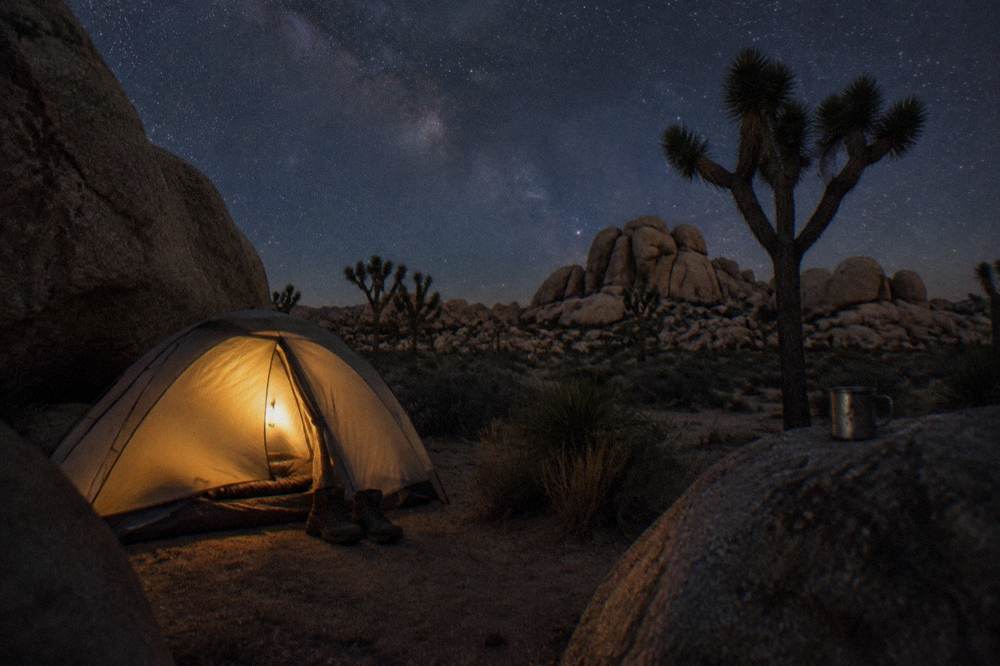
Camping is the one way to be inside the boundary overnight, and for stargazers it is the premium option. The park's stargazing guidance names Cottonwood Campground as having the darkest skies of the campgrounds, with Pinto Basin Road between the Cholla Cactus Garden and Cottonwood offering the least traffic and darkest roadside views. Jumbo Rocks, at 124 sites the largest campground, puts you among the formations along Park Boulevard.
| Campground | Sites | Nightly fee | Booking |
|---|---|---|---|
| Black Rock | 99 | $35 | Reservation, recreation.gov |
| Cottonwood | 62 | $35 | Reservation, recreation.gov |
| Indian Cove | 101 | $35 | Reservation, recreation.gov |
| Jumbo Rocks | 124 | $30 | Reservation, recreation.gov |
| Ryan | 31 | $30 | Reservation, recreation.gov |
| Hidden Valley | First-come | $25 | Arrive early in busy season |
| White Tank | First-come | $25 | Arrive early in busy season |
| Belle | First-come | $25 | Arrive early in busy season |
Two rules shape a camping stay. Campfires are allowed only in park-provided fire rings, and the park runs an annual campfire ban from June 15 to October 1, during which gas stoves remain the cooking option. Pets are prohibited on trails and in the backcountry, must stay within 100 feet of roads, parking areas, and campgrounds, and must be leashed at six feet or less, which effectively rules out most camping trips with dogs beyond the campground itself.
The reservation window matters. Sites can be booked on recreation.gov from same day up to six months in advance, and the busy season runs October through May, which is exactly when this comparison article is most likely being read. For a spring trip, book the moment the window opens or plan on the first-come campgrounds with an arrival timed to early morning.
How Do You Decide If You Only Have One Night?
With one night, stay in the town of Joshua Tree or Twentynine Palms, not Palm Springs: the hour saved each way is the difference between a relaxed evening stargazing session and a late highway drive. Book a tour that departs from your town, buy the pass in advance, and spend the daylight hours inside the boundary rather than commuting to it.
One night is the scenario where proximity wins outright. The math is simple: a Palm Springs base costs roughly two hours of round-trip driving that a gateway base eliminates, and on a single-night trip those two hours are the difference between fitting a stargazing stop and missing it. The park's stargazing etiquette asks for red lights only and notes that eyes need 20 to 30 minutes to adapt, so arriving rushed works against the whole experience.
For the one-night itinerary, the roster offers a clean pairing. A daytime product that departs the Joshua Tree area, such as the Sightseeing Adventure Tour from $99 per person, rated 4.9 across 178 reviews, covers the park's highlights in four to five hours with a guide who handles the driving. An evening option like the Starlight Hike, from $95 per person, includes access to a trailhead inside the park for a two-hour guided night walk. Together they fill a single day and evening without a visitor ever needing to plan a route.
Travelers coming from Los Angeles without a car can compress further. The Sunset Stargazing Day Trip from LA runs 10 to 12 hours from $299 per person and includes the park entrance fee, combining the drive, the sunset, and the night sky in one product. It is a long day, but it converts a one-night question into a zero-night answer.
What Should Influence The Final Choice?
Choose on three factors in order: how early you want to start, what your evenings are for, and whether a tour is doing the driving. Gateway towns win on early starts and dark nights; Palm Springs wins on restaurants, pools, and the airport; and if a guided product with pickup is handling the park day, the base town matters far less than the hotel you like.
Be honest about the evenings. A trip built around the park's night sky, which is a recognized International Dark Sky Park, wants a base with minimal light pollution and a short drive back to bed. A trip built around dinner reservations and a morning by the pool wants Palm Springs, and there is nothing wrong with that; the park will still be there after brunch. The mistake is choosing Palm Springs while secretly wanting a 5 am trailhead start, or choosing a gateway town while wanting a resort evening.
The guided middle path deserves more attention than it gets. A private product like the Private Sightseeing Adventure, from $550 per group with pickup from the town of Joshua Tree, rated 4.9 across 77 reviews, removes route planning, parking, and heat timing from the day. A guest named catherinemarystanton described her guide as knowing the park inside and out, including the hidden spots. When a licensed guide carries the logistics, the lodging choice shrinks to comfort and budget.
For readers who want a deeper dive into the park's signature draws, the best hikes in Joshua Tree guide maps the trails by town and difficulty, and the question of how many days the park deserves has its own treatment in how many days is enough for Joshua Tree. Whichever base you pick, the park's own first-time-visitor guidance and its campgrounds page carry the current rules worth checking before you book anything. This site, Joshua Tree Park Tours, exists to make the tour side of that decision easy.
Common Questions About Choosing Where To Stay Near Joshua Tree
Is It Better To Stay In Palm Springs Or Joshua Tree?
Palm Springs suits travelers who want resort amenities, restaurants, and an airport, accepting about an hour of driving to the entrances. The town of Joshua Tree suits travelers whose trip centers on the park, with entrance proximity, early starts, and quiet nights. Since the park has no hotels inside it, the choice is between a resort base and a gateway base, and a guided tour with pickup can make either work.
Where Is The Best Place To Stay When Visiting Joshua Tree National Park?
The gateway towns: the town of Joshua Tree for the west entrance, Twentynine Palms for the north and south entrances, and Yucca Valley for the Black Rock side. The only way to sleep inside the boundary is a campsite, roughly 500 of them, most reservable on recreation.gov at $30 to $35 per night.
Can You Stay Overnight Inside Joshua Tree National Park?
Only in a tent. The park has about 500 campsites across nine campgrounds and no lodging, restaurants, gas stations, or water in its interior. Campfires are allowed only in designated fire rings, and an annual campfire ban runs June 15 to October 1, with gas stoves as the alternative.
Do Tours Pick You Up In Palm Springs?
Yes. The Private Group Adventure picks up in Palm Springs from $275 per person, and the Hummer tours depart from the Palm Springs area from $159 and $179 per person. Day trips from Los Angeles also run with pickup, from $150 to $299 per person, for travelers without a car.
Is The Drive From Palm Springs To Joshua Tree Long?
Plan on roughly an hour between Palm Springs and the west entrance, a figure guests on Palm Springs-area tours regularly confirm. It is a manageable drive, but it adds about two hours of round-trip time to every park day compared with staying in a gateway town.
Which Town Is Closest To The Stargazing?
Yucca Valley hosts the two dedicated stargazing sessions, which run on private land just outside the park and need no park pass. Inside the park, the four designated stargazing areas, Quail Springs, Hidden Valley, Cap Rock, and Ryan Mountain, are closest to the town of Joshua Tree, and Cottonwood Campground has the darkest skies of the campgrounds.