Best Hikes In Joshua Tree National Park: Trails By Difficulty And Time
Four trails carry most of the park's walking fame: Hidden Valley, Ryan Mountain, Barker Dam and Skull Rock. Here is how they compare on effort and timing, and when a guided hike is the smarter call.
Short answer
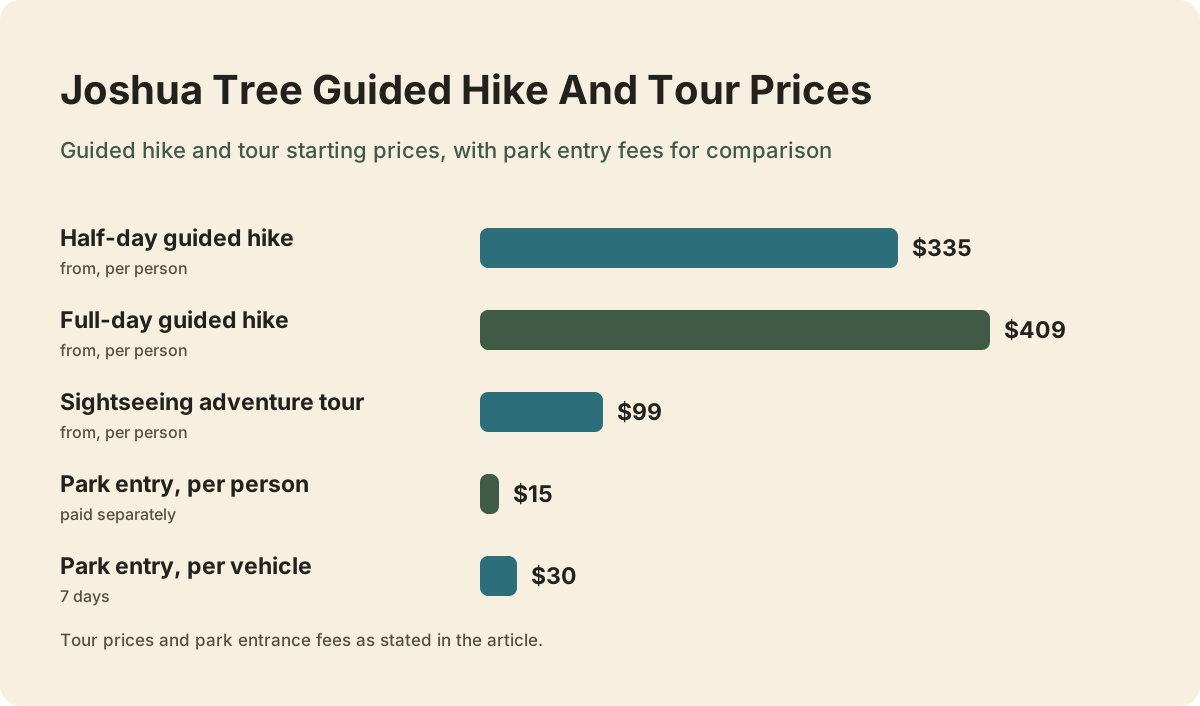
The best hikes in Joshua Tree National Park are Hidden Valley for an easy loop among boulders, Ryan Mountain for the park's signature summit climb, Barker Dam for a shaded loop with a water pocket, and Skull Rock for a roadside scramble. Park entry is $30 per vehicle for 7 days. Guided hikes run from $335 per person for a half day, from $409 for a full day.
Joshua Tree National Park spans an elevation range from 536 ft to 5,814 ft at Quail Mountain, and almost none of it has drinking water. That single fact shapes every good hiking decision in the park: which trail, what hour, and how much you carry. The four walks that come up again and again, Hidden Valley, Ryan Mountain, Barker Dam and Skull Rock, earn their reputations for different reasons, and picking between them is mostly a question of legs, season and daylight. And if you're curious how far those legs can take you, our rundown of the park's toughest trails by effort type covers the heat-closed routes, the serious rock scrambles, and the longest outings on the roster.
This guide compares those trails by effort and timing, then looks at what a guided hike actually adds over walking alone. The park's own pages carry the authoritative trail detail, and where a distance or elevation figure is not published here, the trail descriptions stay qualitative on purpose rather than invented. For the broader picture of what a day in the park holds, the things to do in Joshua Tree overview covers the non-walking options too.
What Are The Best Hikes In Joshua Tree National Park?
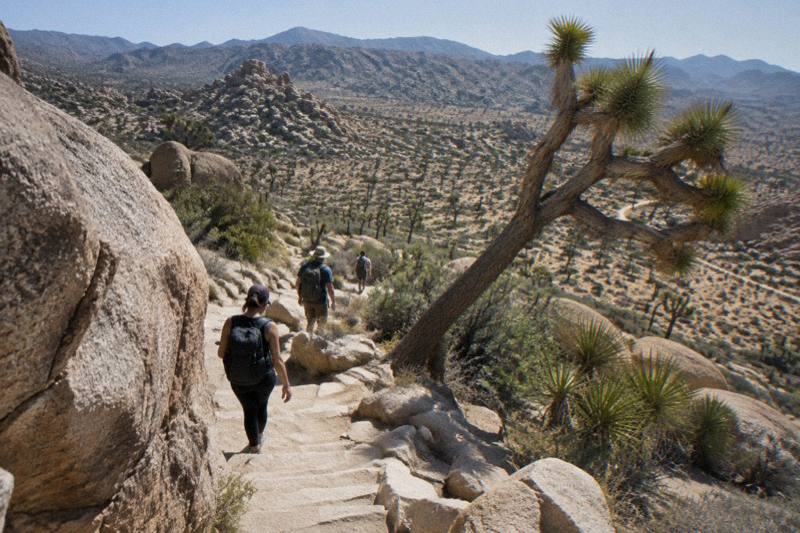
The shortlist comes down to four trails. Hidden Valley is a short loop through a boulder-enclosed valley that suits nearly everyone. Ryan Mountain is the park's classic summit climb, all elevation gain and open views. Barker Dam loops past a historic water pocket with shade in parts. Skull Rock is a roadside stop where the walking is a scramble between formations rather than a defined trail.
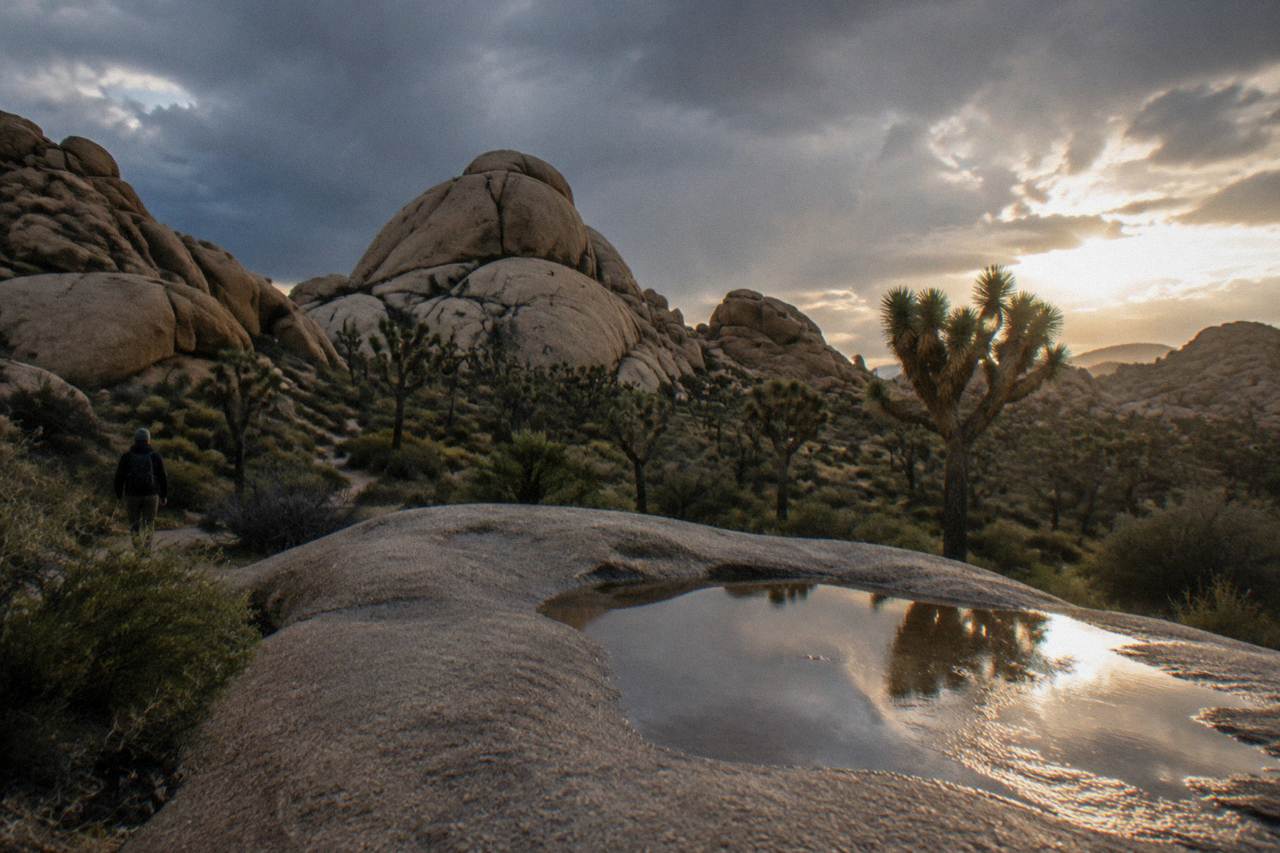
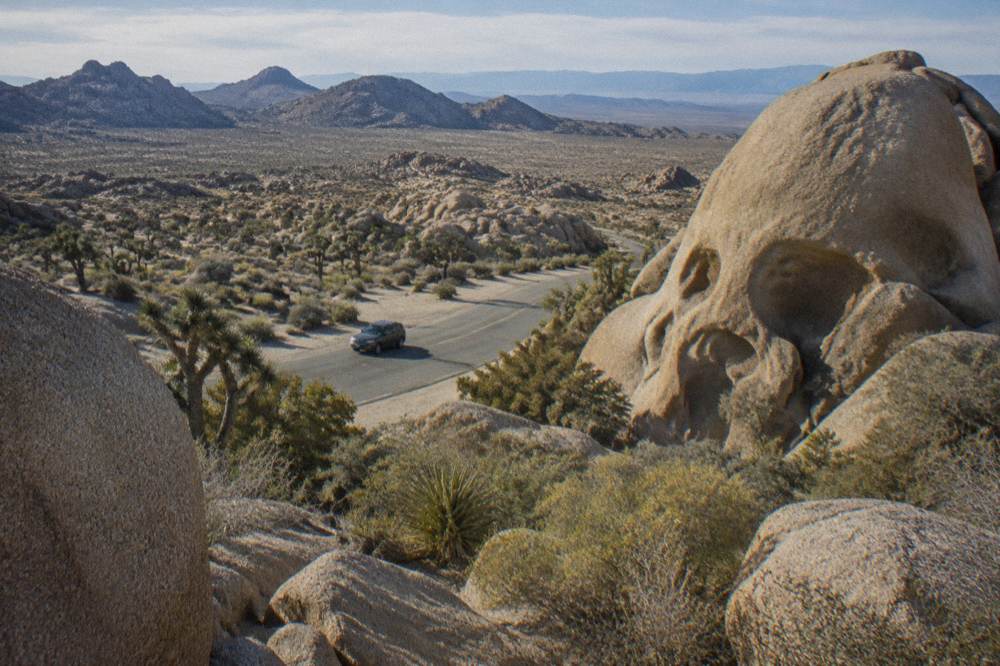
Hidden Valley sits inside a ring of rock walls, which keeps it cooler later in the morning than the open flats and gives it the densest concentration of Joshua trees and boulders in one walk. Climbers use it heavily, so the parking area fills early on weekends from October through May, the park's own busy season note. Ryan Mountain is the one people remember: a steady climb to a summit that looks out over the whole park, with the Colorado Desert on one side and the Mojave on the other. Barker Dam's loop passes the remains of a stone dam built for cattle and, after rain, an actual water pocket, one of the few places in the park where water sits visible. Skull Rock itself sits right on the main road, and most of its value is the surrounding scramble, not the roadside photo.
Every one of these is reached from Park Boulevard, the paved spine of the northern, Mojave-side park where the Joshua trees actually grow. None of them require a reservation to walk. The park publishes its trail information on its own pages, and trail conditions change with weather, so checking the park's conditions page before setting out is the habit worth building. For a deeper look at one of these walks, the write-up on the most beautiful hike in Joshua Tree takes a single-trail view.
Which Trail Should You Hike First: Hidden Valley, Ryan Mountain, Barker Dam Or Skull Rock?
Start with Hidden Valley if it is your first visit and you want the park's signature scenery with the least commitment. Choose Ryan Mountain if you have half a day and good legs. Barker Dam works best as a morning loop in warmer months because parts of it hold shade. Skull Rock belongs on the itinerary as a stop between other walks, not as a destination hike on its own.
That ordering reflects effort more than beauty. Hidden Valley and Barker Dam are loops on developed paths, suited to most visitors including careful children. Ryan Mountain is a sustained climb with no water and little shade, and the park's heat guidance treats hikes like it as morning-only business for much of the year. Skull Rock is whatever you make it: a five-minute photo stop or an hour of scrambling among the formations behind it, and the rock itself sits at the road's edge.
| Trail | Effort | Character | Best fit |
|---|---|---|---|
| Hidden Valley | Easy to moderate loop | Boulder valley, dense Joshua trees, climbers | First visit, most fitness levels |
| Ryan Mountain | Strenuous climb | Open switchbacks, panoramic summit | Fit hikers with half a day |
| Barker Dam | Easy to moderate loop | Historic dam, seasonal water pocket, partial shade | Families, warmer mornings |
| Skull Rock | Choose your own | Roadside formation with freeform scramble | A stop between hikes, kids who climb |
For visitors who would rather have the route chosen for them, a guided option removes the guesswork entirely. The half-day guided hike, from $335 per person, matches the trail to the group on the day, and the full-day version, from $409 per person, opens up quieter zones of the park. The sightseeing adventure tour, from $99 per person, is the low-effort alternative for anyone whose walking days are numbered but who still wants the interpretation.
One guest on the half-day guided hike, Cynthia, described the guide as someone who "knows the trails, and chose one that suited us perfectly," which is exactly the decision this section is about. Choosing the trail to match your legs and the day's heat is the whole skill, and it is learnable, but it takes a few visits to learn it.
How Long Does Each Trail Take And When Should You Start?
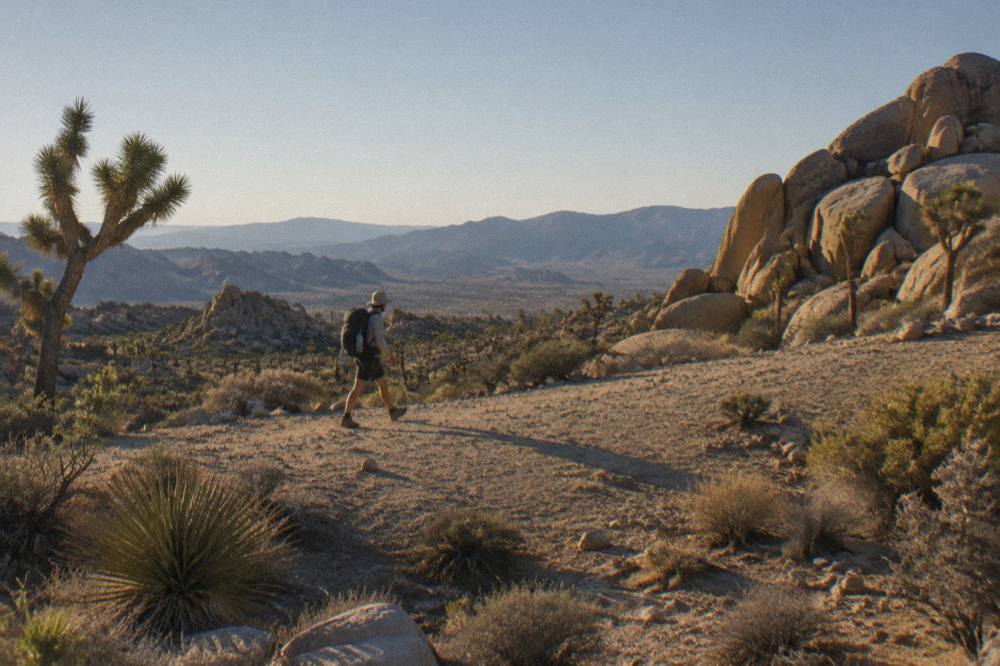
Plan Hidden Valley and Barker Dam as one to two hour walks with stops, Ryan Mountain as a half-day project with rest breaks, and Skull Rock as a stop of whatever length you enjoy. Start all of them early: the park's own guidance says to avoid midday activity in summer, and even in spring and fall the sun on exposed rock is the limiting factor, not the distance.
The park's heat guidance is direct about this. Summer daytime temperatures typically run around 100 F or more, with lows near 75 F, and the advice is to check forecasts, carry ample water and skip the middle of the day. Spring and fall bring average highs of 70 to 85 F, which sounds gentle until you are on an exposed climb with no shade. Winter days sit around 60 F with near-freezing nights, which makes winter the season where start time matters least.
| Season | Typical daytime high | Best hiking window | Notes |
|---|---|---|---|
| Spring (Mar to mid-Apr) | 70 to 85 F | Morning to early afternoon | Crowded season, weekends busiest |
| Fall (Oct to Nov) | 70 to 85 F | Morning to early afternoon | Busy Oct to May per the park |
| Winter | Around 60 F | Any daylight hour | Freezing nights, occasional snow up high |
| Summer | Around 100 F or more | Before mid-morning only | Park advises avoiding midday activity |
Timing also interacts with parking. The four trailheads on this list sit along the park's main road, and the park itself flags holidays, weekends from October through May and spring break as the crowded periods. Arriving at a trailhead by mid-morning on a weekend in those windows often means circling for a space. A guide handles this differently: guided groups still use the same lots, but the operator picks the trail and the hour, which is a real advantage when the popular lots are full before ten.
The half-day guided hike runs 4 hours 30 minutes and includes a daypack and bottled water, though the park entrance fee of $15 per person, or your own valid pass, is paid separately. It is rated 5.0 across 122 reviews, a pool large enough to take seriously, and it meets in the Joshua Tree area rather than picking up, so it suits visitors already staying near the park.
Is Hiking In Joshua Tree Safe In Summer Heat?
Summer hiking here is possible but narrowly timed: the park's own safety guidance says to check forecasts, carry ample water, avoid midday activity and know the signs of heat illness. Typical summer highs run around 100 F with lows near 75 F, and there is no water anywhere in the park interior. The safest summer pattern is a pre-dawn start, a short trail, and finishing before the sun is high.
Flash flooding is the second summer hazard. Monsoonal and other heavy rain events can flood washes and low-lying areas, and the park advises monitoring weather and staying out of washes when storms are around. The third is simply remoteness: cell reception is very limited, there are no gas stations, restaurants or stores inside the park, and help is not minutes away.
The park's conditions page is the right place to check before any summer walk, and its seasonal closures page lists the annual summer restrictions in full. Those pages state current status, which this guide deliberately does not. For the seasonal case against summer visits generally, the piece on whether you can visit Joshua Tree in summer works through the tradeoffs.
Should You Hike Alone Or Book A Guided Hike?
Walking alone costs nothing beyond your park entry and gives you full control of pace and route. A guided hike, from $335 per person for a half day, buys three things the trailhead cannot: a route matched to your ability, a start time chosen for the day's heat rather than your alarm clock, and someone who knows where the parking pressure will be. Guides working in the park must hold a park permit, which is a baseline quality filter.
The park requires a Commercial Use Authorization for anyone guiding hiking for profit, and the park's commercial use authorization page describes the requirement. For a visitor, that means a licensed guide is operating with the park's knowledge, and the guided-tour guest rule is the same as for anyone else: a $15 per person entrance fee or your own valid pass.
| Walking alone | Half-day guided hike | |
|---|---|---|
| Cost | Park entry only ($30 per vehicle, 7 days) | From $335 per person plus $15 entry |
| Route choice | Yours to research | Matched to group and conditions |
| Start time | Yours to judge | Chosen for heat and parking |
| Water and pack | You carry everything | Daypack and bottled water included |
| Interpretation | Guidebooks and signs | Live, from a park expert |
The reviews on the guided hikes read like a case for the format. Bailey, a guest on the full-day version, called it "very personalized, informative, and allowed us to learn more about the wonders, and hazards, that Joshua Tree National Park has to offer," and specifically credited the guide with reaching "an area of the park we would not have experienced without her expertise." That last clause is the honest differentiator: the famous trails are easy to find alone, but the quiet zones are not.
The half-day format suits most visitors better than the full day. Four and a half hours covers one substantial trail or two shorter ones with time to stop, look and ask questions, and it leaves an afternoon for Keys View or a drive down Pinto Basin Road. The full-day hike, from $409 per person and rated 5.0 across 26 reviews, a small pool but a perfect one, is the choice for visitors who want the park's remoter walking and have the legs for seven hours of it. Both meet in the Joshua Tree area, and both exclude lunch, so pack accordingly. The wider menu of options, including van-based tours for non-walkers, sits on the Joshua Tree guided hikes and park tours hub.
What Should You Pack For A Day Of Hiking?
Water is the item that matters, more of it than feels reasonable, because there is no water in the park interior and no store to buy any. Beyond that: sun protection, layers for the temperature swing between morning and afternoon, sturdy closed shoes for rock and sand, and a paper map or downloaded offline map, since cell reception is very limited and digital passes should be saved to your phone before arriving.
The park's own first-time visitor guidance covers most of this. The temperature swing is real even in the friendlier seasons: spring and fall lows sit around 50 F, and winter nights go near or below freezing, so a morning that starts in a jacket often ends in a t-shirt. Footwear deserves emphasis on the scramble-friendly trails: Hidden Valley and Skull Rock invite climbing around on granite, and flip-flops on rounded rock are how ankles get hurt.
| Item | Why | Season it matters most |
|---|---|---|
| Water, more than you think | No water in the park interior | All year |
| Sun hat and sunscreen | Little shade on most trails | All year |
| Layers | Lows near 50 F, winter nights below freezing | Fall, winter, spring |
| Sturdy closed shoes | Sand, rock, scramble terrain | All year |
| Offline or paper map | Very limited cell reception | All year |
| Red flashlight | If any walk runs past dusk | Stargazing evenings |
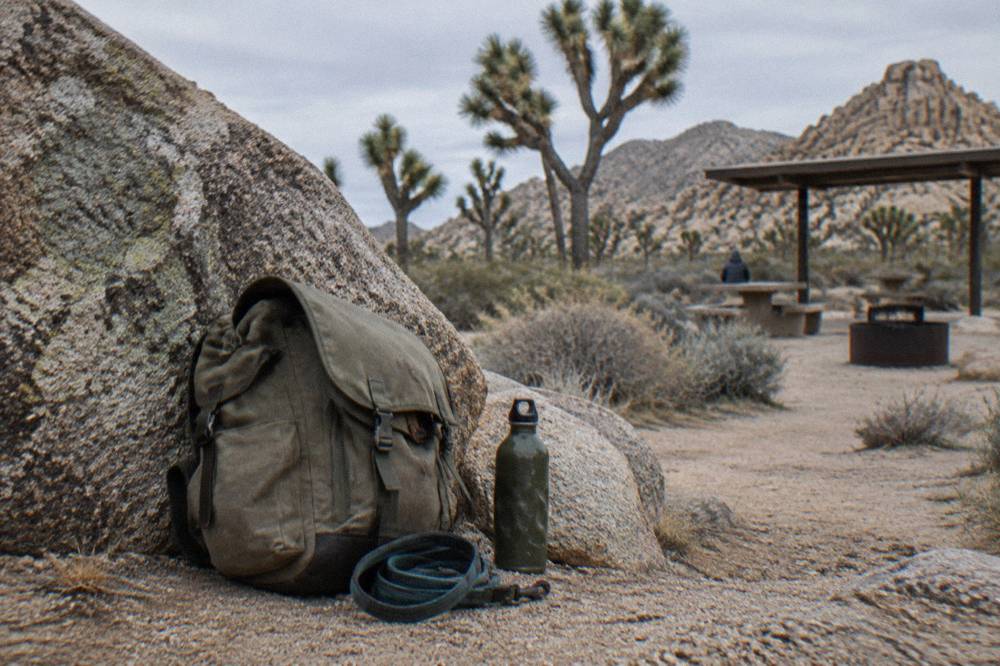
One rule that catches dog owners: pets are not allowed on trails, in the backcountry or in park buildings, even carried, and must stay within 100 ft of roads, parking areas and campgrounds on a leash of 6 ft or less. The park's pets page states it plainly. If the trip is built around a dog, the plan needs to be a driving tour with short paved stops, not a hiking day.
Where Do You Park And Do You Need A Reservation?
No reservation is needed to enter the park or to hike any of these trails. Entry costs $30 per private vehicle for 7 days, $25 per motorcycle, or $15 per person on foot or bicycle, and children under 16 need no pass. The catch is parking, not paperwork: the popular trailhead lots fill on weekends from October through May, and there is no overflow except the next lot down the road.
The park is open 24 hours a day, year-round, and the fee booth is sometimes closed, in which case you may be asked to show a pass or pay on the way out. Passes can be bought at the visitor centers, at the North and West Entrance Stations by card, or online through recreation.gov, and digital passes must be printed or saved to the phone before arriving because connectivity inside the park is limited. The full fee and pass breakdown, including the $55 park annual pass and the fee-free days, is in the Joshua Tree entrance fee and passes guide.
| Entry type | Fee | Valid |
|---|---|---|
| Private vehicle | $30 | 7 days, all passengers |
| Motorcycle | $25 | 7 days, up to 2 motorcycles |
| Person on foot or bicycle | $15 | 7 days, 16 and older |
| Guided-tour guest | $15 per person | Or your own valid pass |
| Park annual pass | $55 | 12 months |
The parking reality is why timing and trail choice are really one decision. Arriving early enough to park at Hidden Valley usually means you are also early enough to do Ryan Mountain afterward in decent conditions. Arriving at eleven on an October Saturday means the walk you get is whichever trail still has a space, which is a fine way to discover Barker Dam but a frustrating way to miss Ryan Mountain. For the hardest end of the park's walking, and how to plan around it, the piece on the hardest hike in Joshua Tree is the companion read. The breakdown of Joshua Tree's most demanding hikes by effort type covers the trail that closes for summer heat, the park's rock scrambles, and the longest guided walks on the schedule, so you can judge what you are taking on before you pick a start time.
Can You Combine Hikes In One Day?
Yes, and most visitors should. Hidden Valley, Barker Dam and Skull Rock sit close together along the main road, so a morning Hidden Valley loop, a midday Barker Dam walk and a Skull Rock stop is a realistic single day. Ryan Mountain is the exception: the climb plus recovery eats half a day on its own, so pair it with one short trail, not three.
The geography does the work here. The northern park is compact, and the driving between these trailheads is minutes rather than hours on the paved loop. A practical day looks like an early start at Ryan Mountain while it is cool, a slow middle of the day at Barker Dam or Hidden Valley, and Skull Rock whenever the light is good for photographs. Winter days around 60 F make this easy; summer does not, and in summer the honest version of a combined day is two short early walks and then the car.
Visitors building a full day around walking have two guided routes. The full-day guided hike, from $409 per person, spends seven hours on the park's trails with a guide who adjusts the plan to the group, and it is the only format on this site that reaches the quieter zones in a single outing. For a lighter combined day, the sightseeing adventure tour, from $99 per person and rated 4.9 across 178 reviews, drives the highlights with a guide and bottled water included, leaving the walking optional at each stop.
Jack, a guest on the sightseeing tour, described a guide who "had knowledge of the park and the terrain, flora and fauna and geographic features," which is the interpretation layer a self-driven day lacks. The trade is simple: driving yourself is cheaper and fully flexible, and a guided day converts the same hours into a curated version with no navigation, no parking strategy and no heat-timing decisions on your plate. The longer comparison, including the van-based options, is in guided tours of the park versus driving yourself.
What About Hiking At Night Or At Dawn?
Dawn is one of the best hiking windows in the park and needs no special arrangement beyond an early alarm, since the park is open 24 hours and entry is allowed at any time. Night hiking is different: it is mainly a stargazing activity here, the park has four designated stargazing parking areas, and the park's night-sky rules ask for red light only and for staying within 20 ft of your vehicle at those lots.
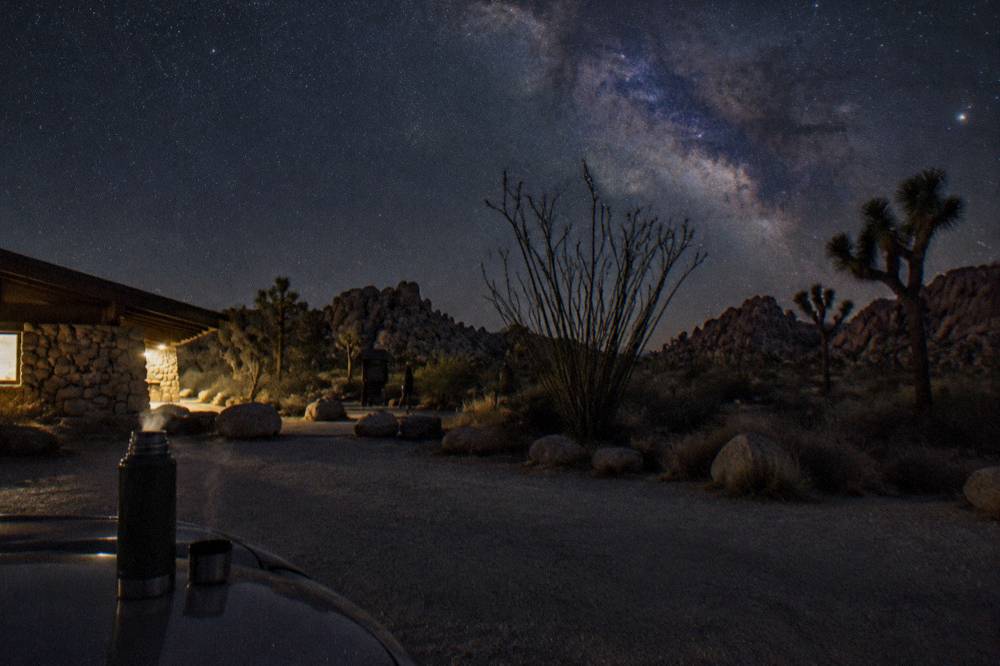
The four designated stargazing areas are the parking lots at Quail Springs, Hidden Valley, Cap Rock and Ryan Mountain, three of which are the same lots this guide's trails start from. That overlap is worth exploiting: a late-afternoon Ryan Mountain climb followed by staying for dark turns one parking spot into a full day and evening. Eyes need 20 to 30 minutes to adapt to darkness, and the park asks visitors to avoid white flashlights, headlamps and phone screens, which reset that clock every time they come on.
The park is a designated International Dark Sky Park, and the darkest skies among the campgrounds are at Cottonwood, with the pullouts along Pinto Basin Road between the Cholla Cactus Garden and Cottonwood offering the least traffic and darkest roadside viewing. The full picture, including moonless-night planning, is in the Joshua Tree stargazing guide. For a guided version, the starlight hike, from $95 per person for 2 hours, covers trailhead access inside the park at night, while the two private-land stargazing sessions in Yucca Valley, from $189 and $200 per person, run outside the park boundary and need no park pass at all.
Common Questions About Hiking In Joshua Tree National Park
What Are The Best Hikes In Joshua Tree National Park?
Hidden Valley, Ryan Mountain, Barker Dam and Skull Rock are the four that come up most. Hidden Valley and Barker Dam are moderate loops suited to most visitors, Ryan Mountain is the park's signature summit climb, and Skull Rock is a roadside formation with freeform scrambling behind it.
Do I Need A Reservation To Hike In Joshua Tree?
No. The park requires no timed entry or advance reservation for entrance or for any of these trails. You need an entrance pass, $30 per vehicle for 7 days, and parking at popular trailheads is first come, first served.
How Much Does A Guided Hike In Joshua Tree Cost?
The half-day guided hike starts at $335 per person and the full-day version at $409 per person. Both include a daypack and bottled water, and both exclude the park entrance fee, which is $15 per person or your own valid pass.
Is It Too Hot To Hike In Joshua Tree In Summer?
Typical summer highs run around 100 F or more, and the park advises avoiding midday activity, carrying ample water and checking forecasts. Early morning hiking is possible; midday summer hiking on exposed trails is a bad idea. The 49 Palms Oasis Trail is closed June 1 to September 30 each year for heat.
Are Dogs Allowed On The Hikes?
No. Pets are not allowed on trails, in the backcountry or in park buildings, even carried. They must stay within 100 ft of roads, parking areas and campgrounds, on a leash of 6 ft or less.
Is There Water Available On The Trails?
No. There is no water in the park interior and no stores or restaurants inside the park. Carry everything you will drink, and the park's guidance says to carry more water than feels necessary.
The pattern across all of this is that the trail itself is rarely the hard part. Choosing the right trail for the season, starting at the right hour, parking before the lots fill and carrying enough water: those are the decisions that make the walk good or miserable, and they are exactly the decisions a guide takes off your plate. Whichever way you go, the park's own pages are the source for current trail conditions, and this site's Joshua Tree Park Tours roster covers the guided side if you would rather not make those calls yourself.