Can You Visit Joshua Tree In The Summer Heat?
Yes, you can visit Joshua Tree National Park in summer, with rules: heat timing, seasonal closures, and the evening tours that make hot months work.
Can You Visit Joshua Tree In The Summer Heat?
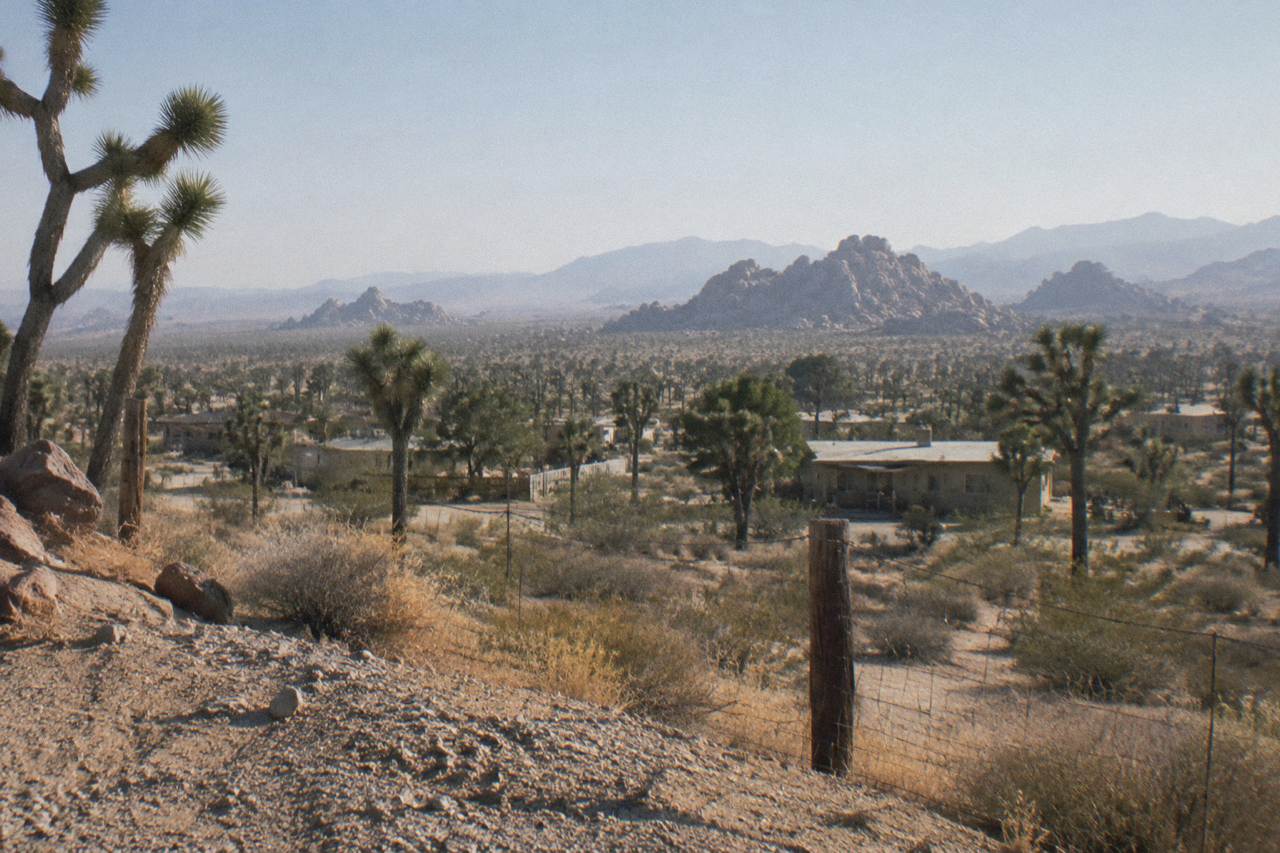
Yes, you can visit Joshua Tree National Park in summer, and the park never closes for heat, but the visit has to be built around it. Daytime highs typically sit around 100 F (38 C) or more, with lows near 75 F (24 C), and air quality can be poor. Two standing seasonal rules reshape a summer trip: the annual campfire ban runs June 15 to October 1, and the 49 Palms Oasis Trail is closed June 1 to September 30. Heat is only one piece of the risk, and our guide to what can go wrong in Joshua Tree covers the water, cell service, and pet rules you'll want to know before you go.
The honest framing is that summer is the park's shoulder season in reverse. Crowds thin because families and tour groups shift to October through May, which is the park's own published busy season. What you trade for that quiet is a sun that starts working on you by mid-morning and does not let up until well into the evening. Visitors who plan around it, short early outings, long midday breaks, and night sessions under the dark sky, tend to report good trips. Visitors who try to hike at noon in July tend not to.
The fee structure does not change with the seasons. A private vehicle pass is $30 for seven days, a motorcycle pass is $25, and entry on foot or bicycle is $15 per person, with children under 16 free, all listed on the park's fees page. No timed-entry or advance reservation is needed to enter, and the park is open 24 hours a day, so an evening or pre-dawn start costs nothing extra in logistics. If a summer trip appeals mainly for the night sky, the Joshua Tree Park Tours roster has a whole family of evening options, and this article looks at which ones earn their price in hot months.
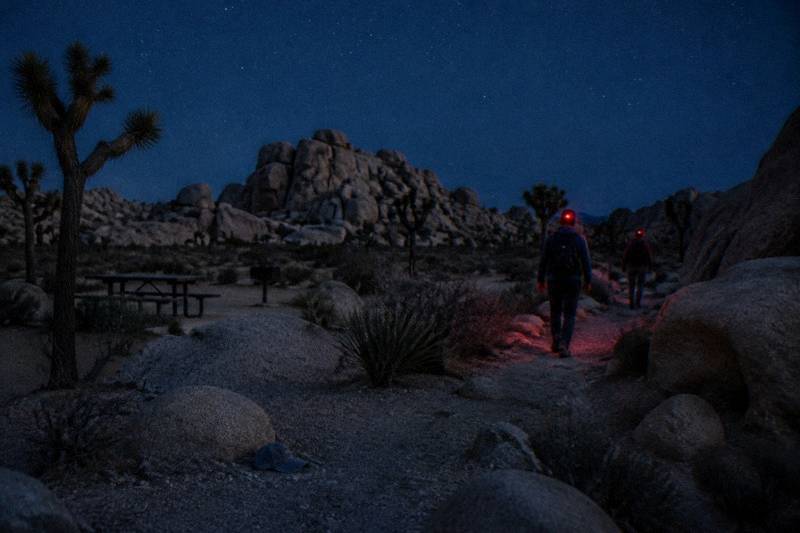
That matters because heat decides which products make sense. A two-hour stargazing session from $189 per person on private land outside Yucca Valley, the Stargazing Experience, begins after sunset, when the desert has already cooled. A 2-hour Starlight Hike from $95 per person works the same window from a trailhead inside the park. The daytime roster, from the $99 Sightseeing Adventure Tour in an air-conditioned van to the $249 Offroad 4x4 Park Tour, answers a different question: how to see the park in comfort when the thermometer is against you.
What Are Summer Temperatures Actually Like Inside The Park?
Summer days in Joshua Tree National Park typically reach around 100 F (38 C) or higher, and summer nights stay warm, near 75 F (24 C), which is the detail most first-time visitors underestimate. The park's own conditions guidance adds that air quality may be poor in summer. Elevation matters too: the park spans 536 ft to 5,814 ft at Quail Mountain, so the high country runs cooler than the Pinto Basin floor.
Those are typical park figures, published as seasonal norms rather than forecasts, on the park's conditions page. The practical reading is that there is no cool part of a July afternoon, only less hot parts. The relief comes at the edges of the day. Dawn and the hours after sunset are when the desert is at its most forgiving, and both windows are comfortably long in summer because the days are.
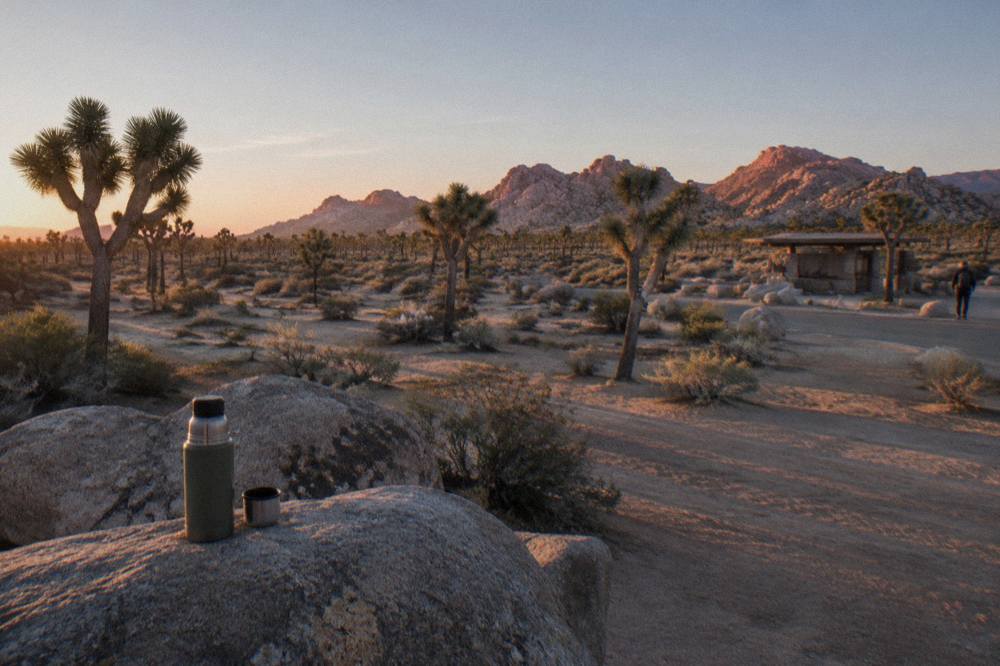
A guest named Lori, who took the Backroads Hummer H2 Tour in summer, put the numbers in plain terms: temperatures were above 100 degrees during her trip. Her account on that tour is useful for two reasons. First, she describes spending most of the time in the vehicle, with some walking, which is the correct summer shape for a daytime tour. Second, she names the small things that carry a hot day: a hat, sunscreen, and the granola bar and bottle of water the tour hands out. The tour itself starts from $159 per person and runs 3 to 5 hours.
The other summer reality is that the park has no water in its interior, no gas stations and no food sellers anywhere inside its boundaries, and cell reception is very limited. Whatever a summer visit needs, it comes in through the gate with the visitor. That single fact argues more strongly for guided products in summer than in any other season, because a professional guide arrives with water, snacks and a route plan already solved.
| Summer condition | Typical figure | What it means for a visit |
|---|---|---|
| Daytime high | Around 100 F (38 C) or more | Avoid unshaded hiking midday |
| Overnight low | Near 75 F (24 C) | Warm nights, good for evening tours |
| Air quality | May be poor in summer | Sensitive visitors should check before going |
| Elevation range | 536 ft to 5,814 ft | Higher areas run cooler than the basin |
| Water inside the park | None in the interior | Carry everything in |
Which Parts Of The Park Close Or Restrict In Summer?
Summer brings standing seasonal rules, not ad-hoc shutdowns. The park's annual campfire ban runs June 15 to October 1, when no campfires or open flames are allowed and gas stoves are the cooking option. The 49 Palms Oasis Trail is closed every year from June 1 to September 30 for heat. Some campgrounds and backcountry zones reduce operations or close in summer because demand drops, not because of danger.
These are published annual rules, listed on the park's summer seasonal restrictions page, so a visitor can plan around them months ahead. The campfire ban is the one that touches campers directly: fire rings sit empty all summer, and anyone picturing an evening campfire under the Milky Way in August needs to swap that picture for a camp chair and a red flashlight. Everything else about a summer night in the park still works.
The campground picture splits by reservation type. The reservable campgrounds, Black Rock at $35 per night with 99 sites, Cottonwood at $35, Indian Cove starting at $35, Jumbo Rocks at $30 and Ryan at $30, are booked on recreation.gov. The first-come, first-served sites at Hidden Valley, White Tank and Belle run $25 per night. In summer, beating the heat of the day matters less for scoring a site than it does in the October-to-May busy season, but reduced summer operations at some grounds mean checking availability before driving out.
For tour-goers, the closures barely bite. The 49 Palms Oasis Trail is a hiking destination, not a tour stop, and the guided products on the roster run from roads, trailheads and private land rather than the closed zones. The Paved Road Van Tour from $249 per person, rated 4.9 across 302 reviews, covers its ground on the park's paved network, which has no seasonal closure as a rule. The main takeaway is simpler: closures in this park are calendar rules you can read in advance, and the park's first-time visitors page plus its alerts feed carry anything time-sensitive that a planning article should not.
| Standing summer rule | Dates it applies | Who it affects |
|---|---|---|
| Campfire and open flame ban | June 15 to October 1 | Campers at every campground |
| 49 Palms Oasis Trail closure | June 1 to September 30 | Independent hikers |
| Reduced campground operations | Roughly June 1 to late August | Overnight visitors |
| Backcountry zone closures | Selected zones, June 1 to September 1 | Backpackers with permits |
Is It A Good Time To Go To Joshua Tree Now?
It depends on what the trip is for. Summer is a poor season for a full day of hiking, a strong season for stargazing, and a reasonable season for vehicle-based sightseeing, because the crowds of the October-to-May busy season are gone. The park itself frames holidays, weekends from October through May, and spring break as its crowded periods, which quietly makes summer the quiet one.
The trade is real, and it should be stated without romance. A visitor who wants the classic Joshua Tree experience, long walks among the rocks and trees, a picnic at a viewpoint, golden-hour photography, gets all of that in summer but compressed into the first and last two hours of daylight. A visitor whose main goal is the night sky gets the best version: mild nights, dry air, and sessions that can start comfortably late. The park's designation as an International Dark Sky Park does not take a summer holiday.
Cost behaves normally. Tour prices do not move with the thermometer on this roster; the Stargazing Experience stays from $189 per person and the Starlight Hike from $95 per person year-round, and entrance fees are fixed at $30 per vehicle for seven days. The fee-free days on the park's published 2026 list, including Aug 25 and Sep 17 in the summer window, waive entrance for US citizens and residents, which pairs neatly with an evening tour that same night. Our comparison of the listings found summer availability easier to book on short notice than the spring peak, though popular evening sessions still fill on weekends.
For a fuller treatment of the seasonal calculus, the guide on choosing the best time to visit Joshua Tree walks through the whole year. If the decision has already landed on a hot month, the rest of this article is about making that month work.
What Is The Best Time Of Day To Tour Joshua Tree In Summer?
Early morning and evening are the only comfortable windows for anything on foot, roughly the first two hours after sunrise and the last two before sunset, plus everything after dark. Midday belongs to air-conditioned vehicles or to leaving the park entirely. The park is open 24 hours a day, year-round, so there is no gate constraint on starting before dawn or finishing after midnight.
The morning window has a practical edge: trailhead parking is easy, the light is at its best for photographs, and the park's famous formations throw long shadows that make the landscape readable. The evening window has a second edge: it flows straight into the night-sky program, which is summer's strongest asset. Between them sits roughly eight hours of heat that a smart itinerary treats as a lunch, a pool, or a drive somewhere with air conditioning.
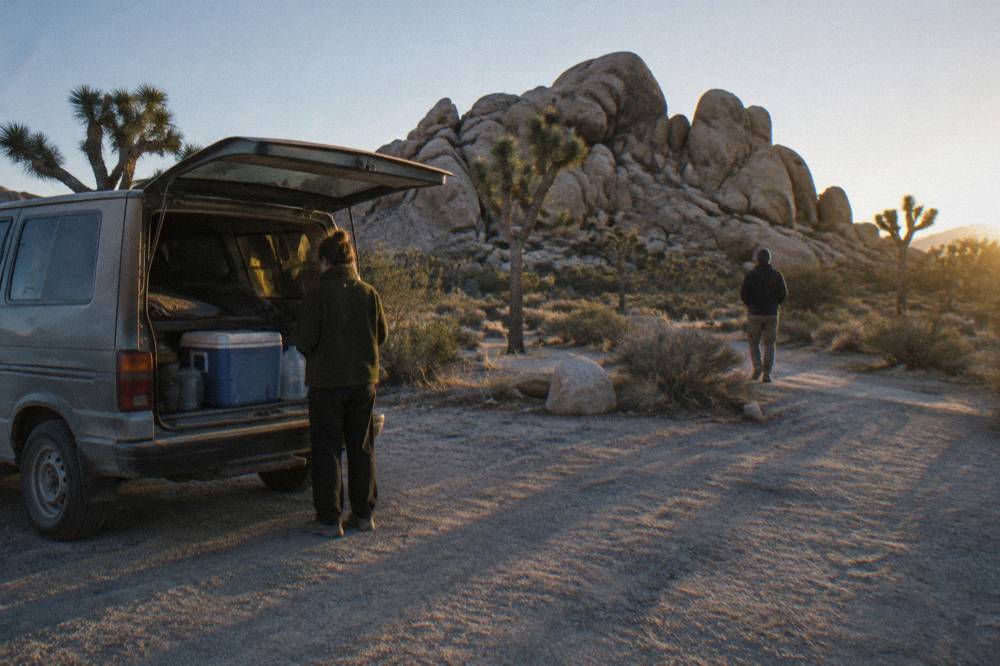
The daytime tours on the roster are built for exactly this constraint. The Paved Road Van Tour runs 5 hours with live commentary on board, bottled water and snacks included, meeting in the Palm Desert area. The Sightseeing Adventure Tour from $99 per person, rated 4.9 across 178 reviews, is another air-conditioned option, with a guide named in one guest review as texting arrival details ahead of time and stocking the van with water and granola bars. A guest named Jack described it exactly that way, which is the level of small logistics that decides whether a hot day feels managed or improvised.
One caution applies to the open-air products. The Open-Air Hummer Adventure from $179 per person and the electric motorbike tour from $169 per person put guests in moving air rather than conditioned air, which feels different at 10 a.m. than at 2 p.m. The Hummer listing runs 3 to 5 hours, and a guest named John described a run of just over three hours as the perfect length for experiencing the park without feeling rushed. In summer, booking the earlier departure of a flexible-duration tour is the single easiest comfort upgrade available.
Can You Stargaze In Joshua Tree During Summer?
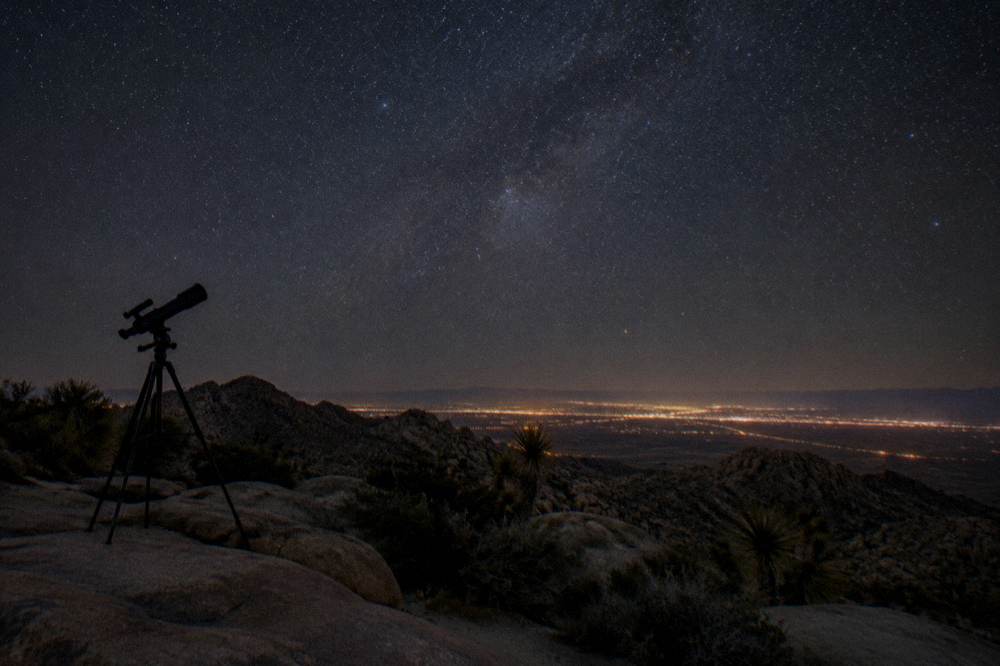
Yes, and summer is arguably the best season for it, because the Milky Way's galactic center is at its best on moonless summer nights, as the park's own stargazing guidance states. Nights are mild, skies are dry, and the park's four designated stargazing areas, Quail Springs, Hidden Valley, Cap Rock and Ryan Mountain, are open to anyone holding an entrance pass. The annual Night Sky Festival also falls in October, just past summer's edge.
The do-it-yourself version costs nothing beyond entry. The park asks night visitors to stay within 20 ft of their vehicle at the designated areas, to use red light only, and to give their eyes 20 to 30 minutes to adapt, and it prohibits the "paint with light" technique for night photography. Avoiding bright moonlight matters more than almost anything else; a full moon washes out the fainter stars, so the new moon windows are the ones to aim at. All of this is laid out on the park's stargazing page.
The guided version splits into two kinds, and the difference matters. The Professional Stargazing Night from $200 per person, rated 4.9 across 179 reviews, and the Stargazing Experience from $189 per person both run on private land just outside the park in Yucca Valley. That is not a euphemism and not a drawback, it is simply what they are: two-hour sessions with telescopes, an astronomer, blankets and hot drinks, no park pass required, no park entry implied. The Starlight Hike from $95 per person is the inside-the-park product, with access to a trailhead inside Joshua Tree National Park included in the listing and private transportation excluded.
For anyone weighing the guided evening against driving to a parking lot alone, the telescope and the astronomer are the product. The Stargazing Experience is the related tour for this article, and readers who want the full menu can browse the Joshua Tree stargazing tours hub. Its listing shows a small review pool, 11 reviews, too few for a star claim, which is worth knowing alongside the fact that its sister session carries 179 reviews at 4.9. Readers ready to look at dates can Check availability on the operator's live listing.
What Should You Wear And Pack For A Hot-Month Visit?
Pack for a desert that will hit 100 F and give you almost no shade: a wide-brimmed hat, sunscreen, loose long sleeves rather than bare skin, and more water than feels reasonable, with salty snacks to replace what sweat takes. Sturdy closed shoes matter on rock, and the evening kit flips entirely to layers, a chair, and a red flashlight for the stargazing areas. Nothing is sold inside the park.
The clothing logic runs against instinct. Loose, light-colored long sleeves keep a body cooler than exposed skin in dry heat, and the sun at elevation is fiercer than the temperature suggests. Lori's summer review of the Hummer H2 tour names exactly the kit the listing excludes, sunscreen chief among them, and her advice to bring a hat is the kind earned the warm way. The guided hikes from $335 per person for a half day and $409 for a full day include a daypack and bottled water but exclude lunch, so food stays the visitor's job.
Water deserves its own sentence, because the park publishes that there is none in the interior. A common planning figure among desert agencies is a gallon per person per day in summer heat, and the park's safety guidance stresses carrying ample water, avoiding midday exertion, and knowing the signs of heat illness. Any tour that hands you a bottle, as the van, Hummer and 4x4 listings all do, is covering the minimum, not the whole need.
How Do You Stay Safe From Heat On A Summer Visit?
Follow the park's own safety guidance: check the forecast before going, carry ample water, keep physical effort out of the midday hours, and know the early signs of heat illness. Stay on paved or designated routes in a vehicle with working air conditioning, keep fuel topped up because there are no gas stations inside the park, and treat flash-flood-prone washes with respect during summer storms. Monsoon-season rain can flood low areas even under blue sky upstream.
The vehicle rules help here. Street-legal vehicles, motorbikes and bicycles must stay on designated roads, and ATVs, UTVs, OHVs and dirt bikes are prohibited outright, which pushes most summer visitors toward ordinary cars and guided vans. Drones are prohibited too, so aerial photography plans need to be abandoned at the planning stage. Pets must stay within 100 ft of roads, parking and campgrounds, leashed at 6 ft or less, and are banned from trails entirely, which in practice means a summer visit is not a dog outing.
Guides earn their fee in this section of the calendar. Climbing guides on the roster, like the 4-Hour Guided Climbing from $255 per person, arrive as certified guides with wilderness first-responder training, and a guest named Alethea's review of that tour singles out a guide who was thorough in exactly the way heat demands. On the sightseeing side, a review of the Private Sightseeing Adventure from $550 per group praises a guide who knows the park inside and out, including the hidden spots, which in summer doubles as knowing where the shade and the timing line up. Current trail, road and weather status should always come from the park's own alerts and conditions pages, since any article stating a trail is open or closed today would be wrong within a season.
Which Day Trips Work For Summer Visitors Without A Car?
Visitors without a car can still reach the park in summer through the roster's pickup products. The Small-Group Day Trip from Los Angeles runs from $219 per person for 10 to 12 hours and includes park admission, a deli lunch, snacks and a professional guide. From Las Vegas, a 12-hour transfer tour to Los Angeles via the park starts from $150 per person. Both trade independence for air conditioning and a driver who handles the heat logistics.
The Los Angeles day trip deserves a summer-specific note. A 10-to-12-hour day in hot months is long, but the itinerary shape, guided photo stops with time to wander rather than a bus-window drive-by, is what one guest review singles out. The sunset-and-stargazing variant from LA, from $299 per person for the same 10-to-12-hour span, includes the park entrance fee and aims the whole day at the evening, which is the seasonally correct instinct. It currently shows no review count on its listing, so there is no rating to report.
For visitors already staying in the towns around the park, the no-pickup products all meet at defined points: Joshua Tree, Yucca Valley, Twentynine Palms, Palm Springs and the Palm Desert area (see Worth The Drive). The Local Expert Park Tour from $159 per person for 3 hours meets in the Yucca Valley area and carries only 2 reviews, too small a pool for any star claim, though a guest named Janice praised the operator's coverage of local history, culture, geology and foliage. Self-guided audio tours from $16.99 per person suit the driver who wants structure without a schedule, and that listing's 806 reviews at 4.5 make it the most-reviewed product on the whole roster.
Common Questions About Visiting Joshua Tree In The Summer
Can You Visit Joshua Tree In The Summer Heat?
Yes. The park stays open 24 hours a day all summer, with typical highs around 100 F and lows near 75 F. Plan around the heat: foot activities early or late, vehicles and evening sessions in between, and water carried in, since none is sold inside.
Is It A Good Time To Go To Joshua Tree Now?
For stargazing and quiet, yes: summer falls outside the park's October-to-May busy season and the Milky Way is at its best on moonless summer nights. For long daytime hikes, it is the wrong season, and the 49 Palms Oasis Trail is closed June 1 to September 30.
What Closes In Joshua Tree In Summer?
Campfires and open flames are banned June 15 to October 1, the 49 Palms Oasis Trail closes June 1 to September 30, and some campgrounds and backcountry zones reduce operations through late August. Roads and entrances do not close for heat as a rule.
Do Joshua Tree Tours Run In Summer?
Yes. Evening products like the Stargazing Experience from $189 per person and the Starlight Hike from $95 per person are the seasonal favorites, while daytime van and 4x4 tours from $99 to $249 per person run in air-conditioned or open-air comfort with water and snacks included.
Can You Stargaze In Joshua Tree In Summer?
Yes, and it is one of the best seasons for it. Use the designated stargazing areas at Quail Springs, Hidden Valley, Cap Rock and Ryan Mountain with red light only, or book a guided session; note the two main stargazing tours run on private land just outside the park in Yucca Valley.
What Should You Bring For A Summer Visit?
A hat, sunscreen, loose long sleeves, sturdy shoes, salty snacks and more water than feels reasonable, because the park has no water in its interior, plus gas in the tank and, for evenings, layers, a chair and a red flashlight.