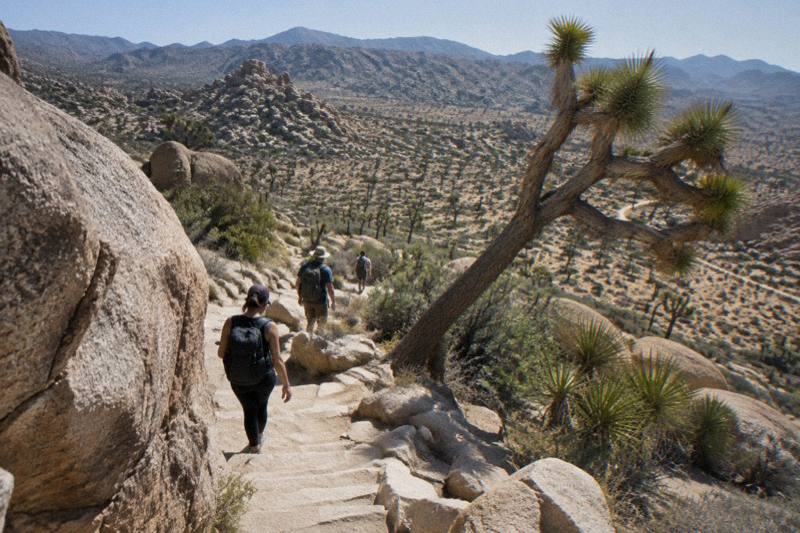
What Should You Be Careful Of In Joshua Tree?
The honest safety picture for Joshua Tree National Park: heat, no water inside the park, limited cell reception, pet and drone rules, and how a guide changes the risk.
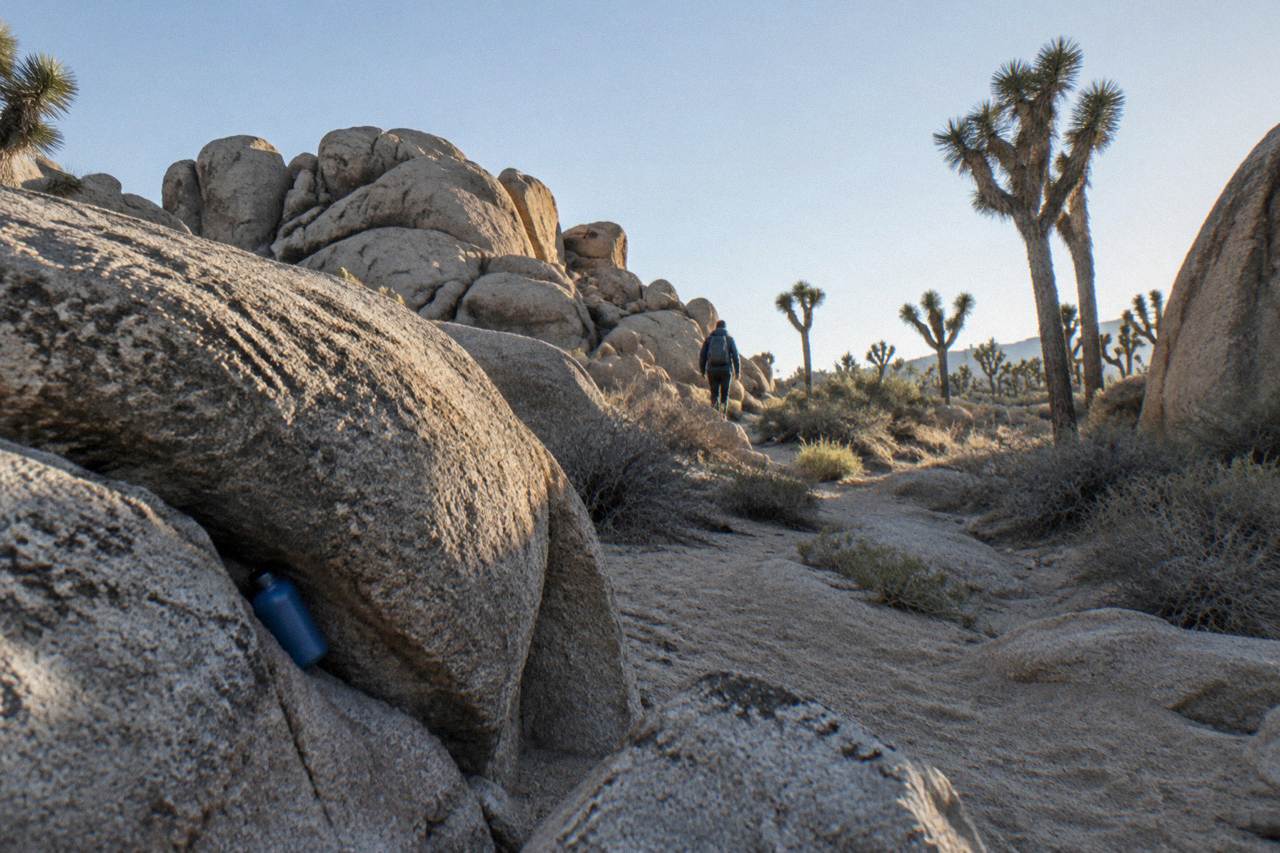
What Should You Be Careful Of In Joshua Tree?
The main dangers in Joshua Tree National Park are heat, dehydration, getting lost or stranded with almost no cell reception, and driving roads that demand more of a vehicle than people expect. The park has no water in its interior, no gas stations and no services of any kind. Most incidents trace back to visitors underestimating one of those four things, and each is avoidable with basic preparation. That preparation matters most on the park's toughest routes, so read our guide to Joshua Tree's most demanding hikes before you set out.
That is the short version. The longer version is that Joshua Tree punishes assumptions more than it punishes bad luck. People arrive expecting a gentle scenic park and find a high desert wilderness where the temperature swings forty degrees between afternoon and midnight, where the nearest water faucet may be an hour's drive away, and where a wrong turn onto a dirt road can turn a rental sedan into an expensive problem. The park's own guidance for visitors is blunt about all of this, and it is worth reading before a trip rather than after.
The park publishes its safety advice on its first-time visitors page, and the same points come up again and again in guest accounts of tours here. Lori, a guest on the Backroads Hummer H2 Tour, mentioned temperatures above 100 degrees on her summer visit and advised a hat and sunscreen; that is normal summer weather, not an anomaly. Safety worries are also, honestly, the single biggest reason travelers book a guide in this park rather than driving themselves, and that reasoning holds up well for certain kinds of trips.
For visitors who want that support, these three options cover the most common situations: a guided hike with route and heat decisions handled by a professional, a shorter local-expert tour, and a paved-road van tour that keeps the experience inside an air-conditioned vehicle.
Is Heat The Biggest Danger In Joshua Tree?
Yes, heat is the park's number one hazard, and it is not close. Summer highs typically run around 100 F or more, while nighttime lows stay near 75 F, so your body never gets a real cooldown window. Spring and fall are far milder, with highs of 70 to 85 F, but hikers still get into trouble on exposed trails with too little water. Check forecasts, carry ample water, and avoid midday activity in summer.
The seasonal pattern matters for planning. Winter days sit around 60 F with near-freezing nights and occasional snow at higher elevations, so the danger flips from heat exhaustion to cold exposure if you are caught out after dark without layers. Spring and fall, the busy seasons, are the months when visitors are most likely to overestimate themselves: the morning feels pleasant, the afternoon climbs, and a trail that seemed easy at 9 am becomes a different walk at 1 pm.
| Season | Typical Highs | Typical Lows | Main Concern |
|---|---|---|---|
| Summer | Around 100 F or more | Near 75 F | Heat illness, dehydration, no relief at night |
| Spring and fall | 70 to 85 F | Around 50 F | Afternoon heat on exposed trails, crowds |
| Winter | Around 60 F | Near or below freezing | Cold nights, occasional snow at elevation |
Two structural facts make heat worse here than the thermometer suggests. First, there is no water in the park interior: no faucets, no spigots at trailheads, nothing. Whatever you drink, you carry in. Second, the park's summer restrictions include an annual campfire ban from June 15 to October 1 and the seasonal closure of the 49 Palms Oasis Trail from June 1 to September 30, both direct responses to heat and fire risk. The park tracks current conditions on its conditions page, and checking it before a summer trip is the difference between a plan and a guess.
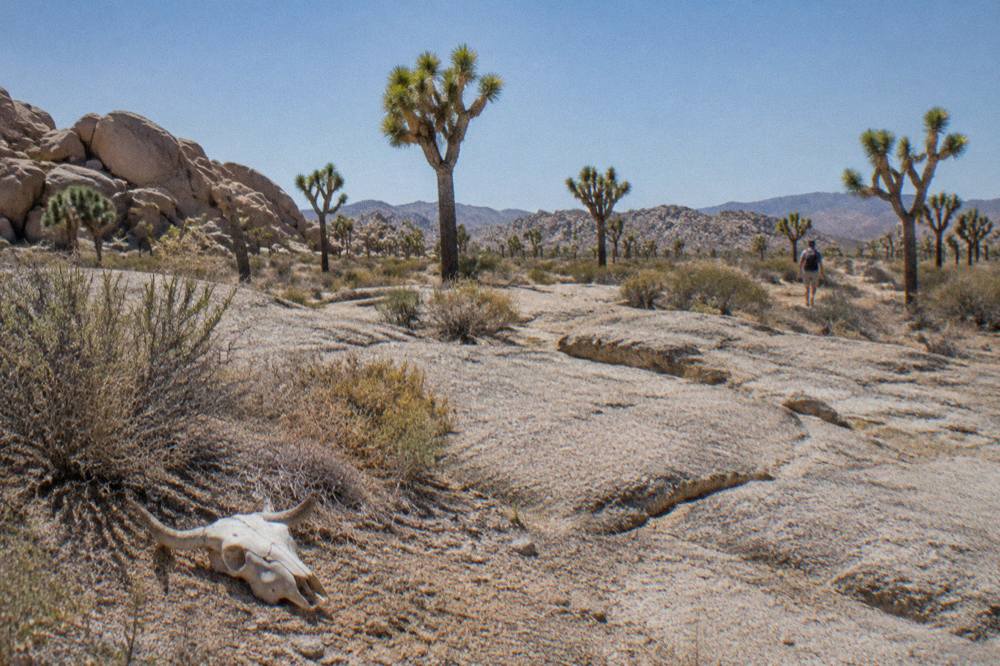
Guided options absorb much of this risk by design. The Half-Day Guided Hike from $335 per person includes daypacks and bottled water, and its guides choose trails that suit the group and the conditions; Cynthia, a guest on that hike, described her guide as knowing the trails and picking one that suited her group perfectly. The Paved Road Van Tour from $249 per person, rated 4.9 across 302 reviews, keeps the whole experience in an air-conditioned vehicle with water and snacks on board. Neither removes the desert, but both move the heat-timing and route decisions onto someone who makes them daily.
Is There Cell Service And Water Inside The Park?
No, and this surprises people. Cell reception inside Joshua Tree National Park is very limited, and there is no water available anywhere in the park interior. There are also no gas stations, restaurants, grocery stores or hotels inside the boundary. Whatever you need for the day, fuel, food and water, you bring with you or you do without it until you exit.
The practical consequence is that a small problem can compound. A dead battery, a twisted ankle on a quiet trail or an empty fuel tank all become bigger deals when you cannot call for help immediately and the nearest service is a drive back to the towns of Joshua Tree, Twentynine Palms or Yucca Valley. Rangers patrol, but the park is large and traffic on the back roads is thin, especially midweek and in the hotter months when visitor numbers drop.
The preparation list is short and non-negotiable:
- Water, more than feels reasonable, especially in warm months
- Food and salty snacks
- A full fuel tank before entering
- A paper map or an offline map downloaded in advance
- Layers for the temperature swing between afternoon and night
This is one of the clearest cases where a guide adds real value rather than convenience. A guided tour brings a vehicle with a professional driver, water and snacks on board, and someone who knows the terrain and can summon help through channels a solo visitor does not have. The Local Expert Park Tour from $159 per person includes snacks, WiFi on board and an air-conditioned vehicle, and the Sightseeing Adventure Tour from $99 per person, rated 4.9 across 178 reviews, includes private transportation, bottled water and a guide. Jack, a guest on that tour, described the guide texting all the tour information in advance and stocking the van with water bottles and granola bars.
Is The Drive To Joshua Tree Hard?
The drive itself is not difficult, the approach roads are paved highways, but driving inside the park catches people out. Vehicles must stay on designated roads, and some of the park's dirt roads, such as the unpaved routes beyond the main scenic drives, require high clearance and are genuinely rough. ATVs, UTVs and dirt bikes are prohibited outright, and street-legal vehicles that stray off designated roads face damage and citations.
The main routes through the park, Park Boulevard and Pinto Basin Road, are paved and manageable in any car. The trap is the unpaved network: roads like Black Eagle Mine Road look inviting on a map and are shown as 4x4 routes for a reason. Rental sedans bottom out on washboard and embedded rock, and a puncture twenty miles from pavement with no cell signal is a bad afternoon. The rule from the park is simple and worth repeating: if a road is not clearly a designated road, do not drive it.
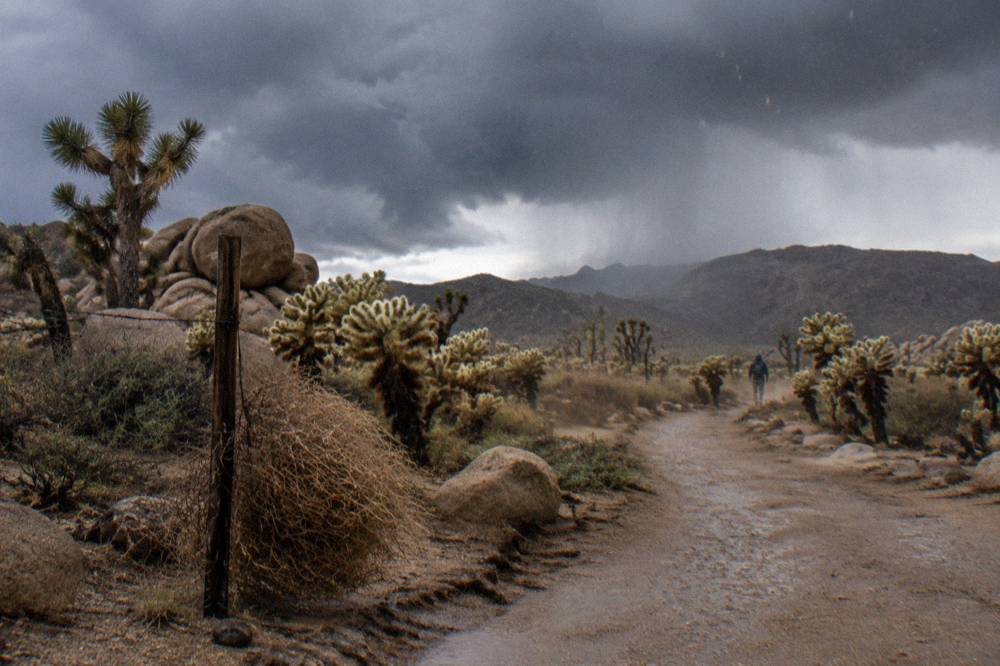
Weather adds a second layer. Flash flooding is possible from monsoon storms and other heavy rain events, and the park advises monitoring weather and avoiding low-lying areas and washes when storms are around. Wind in the desert also kicks up blowing dust that can cut visibility on the open stretches. None of this makes the drive dangerous for a prepared driver, but it does mean checking conditions rather than assuming.
For visitors who would rather not think about any of this, vehicle-based tours solve it completely. The Offroad 4x4 Park Tour from $249 per person, rated 4.9 across 471 reviews, takes the unpaved network in a proper vehicle with a professional guide and live commentary, and Kelly, a guest on that tour, recommended it specifically for people unfamiliar with the park who want to make the most of limited time. At the other end of the spectrum, the Paved Road Van Tour stays entirely on the sealed scenic roads.
What Animals And Plants Should You Avoid In Joshua Tree?
In Joshua Tree, the animals and plants to avoid are rattlesnakes, cactus, and spiny yucca. Rattlesnakes live in the desert, so watch where you place your hands and feet on rocks, while cactus and spiny yucca cause far more injuries than any animal. The park also asks visitors never to approach or feed wildlife, and sturdy closed shoes plus attention on trail solve most of it.
What the official sources do say is behavioral. Pets and wildlife interactions are regulated, feeding animals is prohibited, and the desert's sharp vegetation is a constant minor hazard for anyone scrambling on the boulders that make the park famous. Climbers know this best: the rock here is coarse granite, and the guided climbing programs all include helmets and safety equipment for good reason. The Beginner Group Climbing tour from $240 per person, rated 5.0 across 71 reviews, provides all necessary safety and climbing equipment, and Calista, a guest, described feeling secure and safe throughout a family session. Once the sun goes down, the hazards shift from sharp rock to darkness, cold, and dead cell zones, so read our guide to Joshua Tree safety after dark before planning any nighttime visit.
The honest framing is that plants hurt more visitors than animals do. A fall onto a cholla cactus is a common first-aid story in this desert, and the spines are barbed and unpleasant to remove. Tweezers belong in a daypack here. For hikers who want the reassurance of company and local knowledge on the trails, the park's visitor guidance and a licensed guide cover the same ground; the overview of Joshua Tree guided hikes and park tours lists the options that put a professional on the trail with you.
Can You Bring A Dog Or Fly A Drone In Joshua Tree?
No to drones, and mostly no to dogs on trails. Flying drones is prohibited in the park. Pets must stay within 100 feet of roads, parking areas and campgrounds, must be leashed at six feet or less, and are not allowed on trails, in the backcountry or in park buildings, even carried. Visitors bringing a dog should plan a car-and-picnic trip, not a hiking trip, and never leave a pet unattended in a vehicle in desert heat.
These are the two rules that most often catch visitors by surprise, because both are stricter than at many other parks. The pet rules in particular mean that a family arriving with a dog cannot simply walk the popular trails; the animal stays at the campground or in the vehicle near the road, and the hike happens without it. Heat makes leaving a pet in a parked car genuinely dangerous for much of the year, so the practical answer is to plan around it or leave the dog at home. The details are on the park's pets page.
| Rule | What The Park Says | What It Means For You |
|---|---|---|
| Drones | Launching and operating prohibited | Leave it home; no drone photography in the park |
| Pets on trails | Not allowed, even carried | Dogs stay within 100 ft of roads and campgrounds |
| Leash | 6 ft or less, attended at all times | No tying up and walking off |
| Campfires | Designated fire rings only | No ground fires, ever; seasonal bans apply |
| Off-road driving | Vehicles stay on designated roads | ATVs, UTVs and dirt bikes prohibited |
The campfire rule deserves its own sentence: fires are allowed only in park-provided fire rings, and the annual summer restrictions ban campfires and open flames entirely from June 15 to October 1, with gas stoves still allowed. Anyone camping should confirm the current restriction level on the park's pages before packing firewood, because hauling wood in for a banned fire is a common and avoidable disappointment.
Is Joshua Tree Safe At Night?
Yes, Joshua Tree is generally safe at night for prepared visitors, since the park stays open 24 hours and allows entry even when the fee booth is closed, but the main after-dark risks are disorientation on unlit roads, vehicle trouble with no cell signal, and sharp temperature drops, from around 50 F in shoulder seasons to near freezing in winter. If you want a fuller picture of after-dark hazards, our guide to night safety in Joshua Tree covers the vehicle rules, red-light etiquette, and when a guided stargazing session makes sense.
The night sky is one of the park's main attractions, and it draws people to stay after sunset at the designated stargazing areas: the parking lots at Quail Springs, Hidden Valley, Cap Rock and Ryan Mountain. The park's etiquette there is specific and worth following: red lights only, because eyes need 20 to 30 minutes to adapt to the dark, no bright flashlights or phone screens, and stay awake and within 20 feet of your vehicle. More detail on all of this is in our guide to stargazing in the park.
Two safety notes specific to night visits. First, the unpaved roads that are merely rough in daylight become genuinely hard to read after dark; if you are staying for stars, plan the drive out on a paved route. Second, the commercial stargazing sessions in the area run on private land just outside the park in Yucca Valley, not inside the national park, which is worth knowing when comparing options. The Professional Stargazing Night from $200 per person, rated 4.9 across 179 reviews, includes telescopes, an astronomer, blankets and hot drinks on that private land.
When Is The Riskiest Time To Visit Joshua Tree?
Summer is the riskiest season, by a wide margin. Daytime heat typically exceeds 100 F, the 49 Palms Oasis Trail is closed from June 1 to September 30 for heat reasons, several campgrounds and backcountry zones reduce or close operations over the summer, and the annual campfire ban runs June 15 to October 1. The park is emptier then, which also means fewer people around if something goes wrong. If you're curious which routes ask the most of you, this ranking of Joshua Tree's toughest hikes sorts them by the kind of effort each one demands.
The shoulder seasons carry their own, smaller risks. The busy period runs from October through May, with holidays, weekends and spring break in March to mid-April being the crowded times. Crowds are not a safety hazard in themselves, but they bring full parking lots at popular trailheads and slower emergency response simply through congestion. Winter brings the cold-end risks already covered, and occasional snow at higher elevations that can make boulder scrambling treacherous.
Timing a visit around these rules is straightforward: October through May for comfort, early starts in every season, and a check of the park's alerts before setting out for anything current. For travelers locked into summer dates, a guide becomes less of a luxury. A guided hike moves the heat judgment to a professional, and a van tour removes the exposure almost entirely. Our piece on visiting the park in summer goes deeper on what is realistic in those months.
Should You Take A Guided Tour For Safety In Joshua Tree?
A guide does not make the desert safe, but a good one removes the three decisions where most incidents begin: which trail, at what time, with how much water. Guided tours here include water and snacks on the vehicle, guides who work in the park daily, and a group so you are never alone if something goes wrong. For families, first-time visitors and anyone uneasy about heat or navigation, that trade is worth the price.
The comparison is not between a guide and danger; independent hikers prepared with water, a map and an early start are perfectly safe on the main trails. The comparison is between carrying the full risk yourself and sharing it with someone whose job is that risk. Bailey, a guest on the Full-Day Guided Hike from $409 per person, described learning about both the wonders and the hazards of the park from a guide who was attentive to her group's needs and expectations. That is the service being sold: hazard awareness applied to your specific group on that specific day.
The roster covers a range of risk appetites and budgets. The Half-Day Guided Hike from $335 per person, rated 5.0 across 122 reviews, is the purest version: a professional picks the trail and carries the water. The Local Expert Park Tour from $159 per person is a shorter, vehicle-based introduction, and Janice, a guest, praised the operator for covering local history, culture, geology and foliage. The Paved Road Van Tour from $249 per person keeps everything on sealed roads in an air-conditioned van. For a fuller run-down of the format differences, see our comparison of guided tours versus driving yourself.
One point worth making plainly, because this site sells tours: a guide is not a ranger and not a rescue service, and the park's commercial rules require operators to hold a Commercial Use Authorization to work inside the boundary. Guests on guided tours pay the park's $15 per person entrance fee or use their own valid pass, as the park publishes on its commercial use page. The value is in preparation and judgment, not in immunity.
However you visit, the core safety list is short: water, fuel, layers, a downloaded map, an early start in warm months, and a check of the park's own conditions and alerts pages before you go. Handle those and Joshua Tree rewards attention rather than punishing it, which is exactly what Joshua Tree Park Tours exists to help with.
If any of this has you leaning toward handing the route and the heat timing to someone who does it daily, these are the three options that best fit a safety-first visit.
Common Questions About Staying Safe In Joshua Tree
What Should You Be Careful Of In Joshua Tree?
Heat, dehydration, very limited cell reception, no water or services inside the park, and driving on roads beyond your vehicle's capability. Add the strict rules on pets, drones, campfires and off-road driving, and the picture is complete: a park that is safe for prepared visitors and unforgiving to assumptions.
What To Be Careful Of In Joshua Tree?
The same list, prioritized: carry more water than seems reasonable, never rely on cell service, keep to designated roads, start early in warm months, and know that the park interior has no water, gas or food for sale. Weather swings and flash flooding in washes round out the standing hazards.
Is The Drive To Joshua Tree Hard?
No, the approach is paved highway and the main park roads are sealed. The difficulty is inside the park's unpaved network, where some dirt roads require high clearance and rough surfaces damage ordinary sedans. ATVs, UTVs and dirt bikes are prohibited, and all vehicles must stay on designated roads.
Can You Drink The Water In Joshua Tree National Park?
There is no water to drink, because there is no water available in the park interior at all. Visitors carry in everything they will drink during the day. Tour operators typically supply bottled water on their vehicles, but independent visitors need to bring their own supply.
Are There Snakes In Joshua Tree?
The desert supports rattlesnakes, and the sensible precautions are watching where you place hands and feet on rocks, staying on trails and giving any snake a wide berth. The park does not publish wildlife statistics, and no reliable claim beyond basic caution is warranted. Sturdy closed shoes are the best defense.
Is It Safe To Hike Alone In Joshua Tree?
Prepared solo hikers use the main trails without incident, but the park's very limited cell reception and lack of water mean a solo problem can escalate quickly. Tell someone your route, carry ample water, start early and stay on recognized trails, or join a guided hike where the guide carries the route decisions and the group provides company.