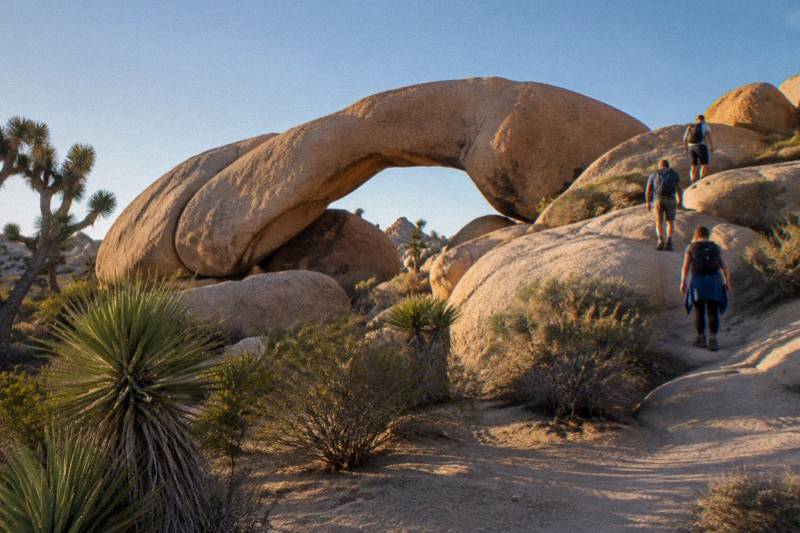
What Is The Hardest Hike In Joshua Tree?
The hardest hike in Joshua Tree National Park, ranked by effort type: the heat-closed 49 Palms Oasis Trail, the park's rock scrambles, and the longest guided hikes on the roster.
What Is The Hardest Hike In Joshua Tree?
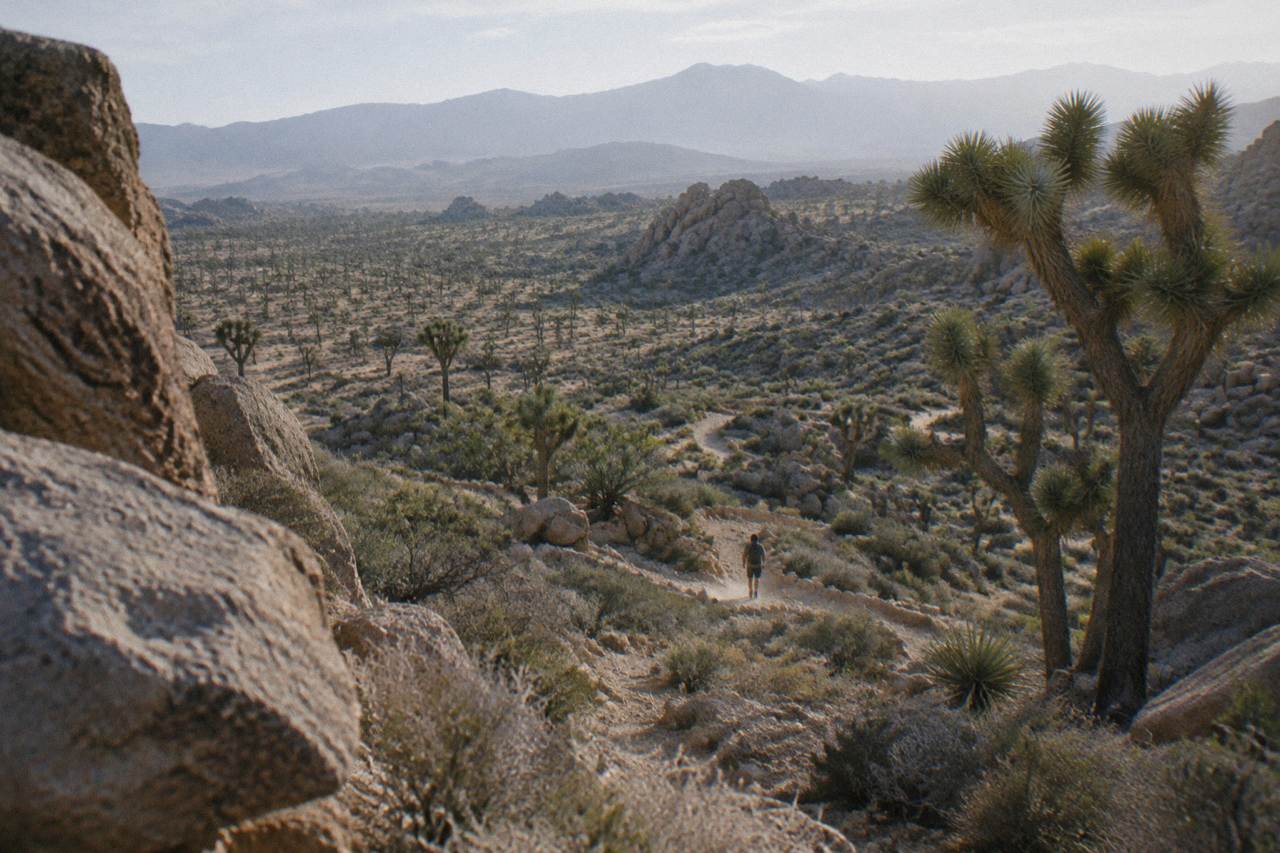
The hardest hike in Joshua Tree National Park is the 49 Palms Oasis Trail, the only trail the park closes every year from June 1 to September 30 because heat alone makes it unsafe. Beyond that, difficulty in this park splits by effort type: long desert traverses, vertical rock scrambles through boulder piles, and guided full-day hikes that run 7 hours on the listing. The park publishes no official difficulty ranking, so this guide compares the routes by what actually makes them hard: heat exposure, terrain, and time on your feet. Once you know which trails will push you hardest, the guide to the park's most beautiful hike helps you weigh whether the scenery justifies the sweat.
The 49 Palms Oasis Trail earns its reputation in a way no other route in the park does. The park's own seasonal restrictions page names it as the one trail shut down every summer, from the first of June through the end of September, purely on heat grounds. That is a signal worth reading carefully. Other trails stay open through the summer heat advisory season; this one does not, because the combination of exposure, climbing, and distance from water pushes it past what the park considers a manageable risk. The trail leads to a rare desert fan palm oasis, one of the few standing water features in the park, and the reward is real, but so is the cost of getting there.
Difficulty in Joshua Tree is a different animal from difficulty in the Sierra or the Appalachians. There are no alpine passes and no river crossings. What the park has instead is granite boulder piles, thin soil, almost no shade, and summer highs that typically run around 100 F or more with nighttime lows near 75 F. The park's own guidance for hard conditions is blunt: check the forecast, carry ample water, and avoid midday activity in summer. A trail that feels moderate in March can become the hardest thing you have done all year by July, on the same path.
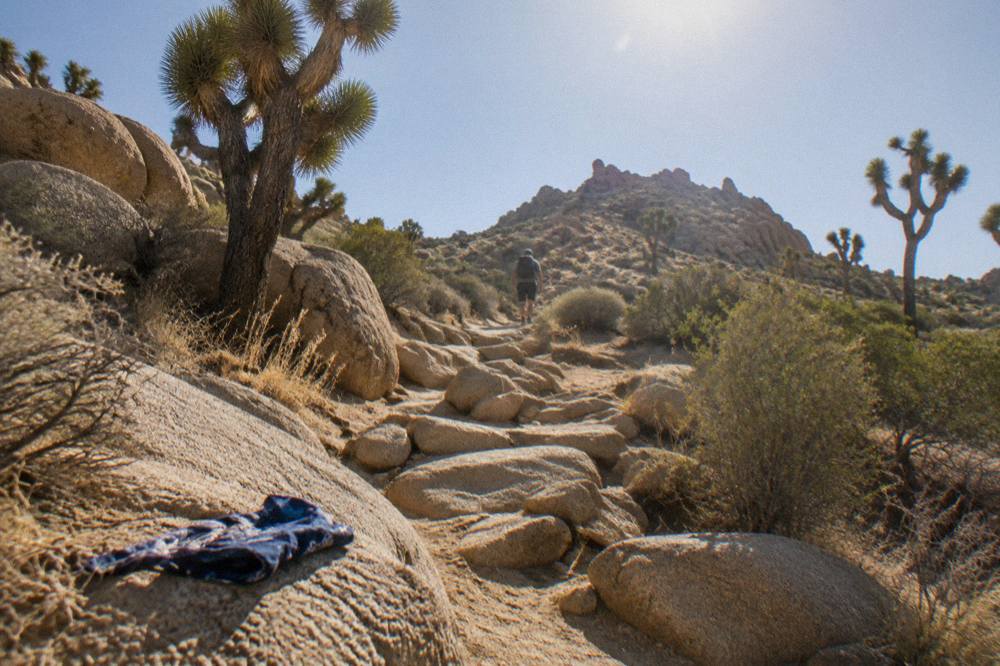
For hikers who want the hardest experience the park offers with structure around it, three guided products on this site's roster come closest: the Full-Day Guided Hike at 7 hours, the Caves and Corridors Scramble, which is a 4-hour boulder problem rather than a walk, and the guided rock climbing trips, which take the same granite vertical. You can compare all of them on the Joshua Tree guided hikes and park tours hub, and the climbing-side options on the Joshua Tree rock climbing tours hub.
Why Is The 49 Palms Oasis Trail The Park's Toughest Test?
The 49 Palms Oasis Trail is the only hike in Joshua Tree National Park that closes every year, from June 1 to September 30, specifically because of heat. That seasonal shutdown reflects how demanding the route is: it climbs steadily with little shade, and the park considers the conditions risky enough that hikers are kept off it entirely during the hottest months. That seasonal closure is the park's own verdict on which trail punishes bodies hardest. The route climbs through exposed terrain to a fan palm oasis, and the park treats it as serious enough that it simply removes it from the menu each summer rather than warn people and leave it open, as it does with every other trail.
The closure tells you three things at once. First, exposure: the trail offers little shade, and the park's summer guidance notes that daytime temperatures typically exceed 100 F. Second, isolation: there is no water in the park interior, so everything you drink you carry, and the park's safety guidance is explicit about carrying ample water and recognizing the signs of heat illness. Third, commitment: once you are partway up, the way out is the way back, under the same sun.
Outside the closure window the trail is a legitimate challenge rather than a hazard. Spring and fall bring typical highs of 70 to 85 F with lows around 50 F, which is the window the park itself points hikers toward. Winter days run around 60 F with near-freezing nights and occasional snow at higher elevations, which swaps the heat problem for a traction and layering problem (see Winter In Joshua Tree). The park's elevation range runs from 536 ft to 5,814 ft at Quail Mountain, and trails at the upper end of that range can hold snow when the low desert is warm.
The honest way to attempt this trail, if you want a guide rather than a solo test, is the longest guided hike on the roster. The Full-Day Guided Hike runs 7 hours from the Joshua Tree area, from $409 per person, with a daypack and bottled water included and the park entrance fee excluded. It carries a 5.0 rating across a small pool of 26 reviews, too few for a broad star claim but consistent in what guests say. Bailey, a guest on that hike, described it as "very personalized, informative, and allowed us to learn more about the wonders, and hazards, that Joshua Tree National Park has to offer," and credited the guide with opening up "an area of the park we would not have experienced without her expertise."
What Actually Makes A Hike Hard In Joshua Tree?
The three biggest factors, ranked by how often they cause trouble, are heat, terrain, and time. Joshua Tree offers almost no shade, so high temperatures drain hikers faster than they expect. The terrain is rough and rocky, demanding steady footing and constant attention. And because trails are often poorly marked, hikers routinely spend longer on the trail than planned, compounding both problems at once. Heat is the dominant one. Summer highs typically run around 100 F or more, the park interior has no water, and the park's own safety guidance centers on checking forecasts, carrying ample water, avoiding midday exertion in summer, and knowing the signs of heat illness. Terrain is second: the park's signature granite monoliths and boulder piles mean routes that ask you to scramble on all fours. Time on feet is third, and it compounds the other two.
The heat factor deserves the most respect because it is the least visible in a photo. A trail that looks like a pleasant walk through Joshua trees in March becomes a different proposition in August, and the park's seasonal closures reflect that. Beyond the 49 Palms closure, the park also runs an annual campfire ban from June 15 to October 1, closes certain backcountry zones from June 1 to September 1, and reduces operations at several campgrounds through late August. Those are all heat-driven rules, and together they sketch the park's own picture of its hardest season.
| Difficulty factor | What it looks like | When it bites hardest | How to manage it |
|---|---|---|---|
| Heat exposure | Little to no shade, no water in the park interior | Summer, typically 100 F or more | Hike early, carry ample water, skip midday |
| Rock terrain | Granite boulder piles requiring scrambling | Any season, worse when rock is wet or cold | Proper footwear, hands-free pack, a guide for first-timers |
| Time on feet | Long routes with no services and very limited cell reception | Midday through afternoon | Start at dawn, turn around at a fixed time |
Terrain is where Joshua Tree surprises hikers who come from forest parks. The rock here is coarse granite that grips well when dry, but the routes between formations are often informal, and the park's rules require vehicles, motorbikes, and bicycles to stay on designated roads while leaving hikers free to range. That freedom is exactly why the scrambling routes feel hard: there is no graded tread, just rock. The Caves and Corridors Scramble, a guided 4-hour trip from $195 per person, exists precisely because that terrain rewards someone who knows the corridors. It has a single review on the listing, too few to characterize, but its inclusions tell the story: a professional certified guide, all safety equipment including a helmet and harness if needed, and route selection tailored to your group.
Time on feet is the quiet multiplier. The park's guidance on crowding notes that the busy season runs from October through May, which is also when daylight is shortest. A long route that starts late runs into darkness, and the park, while open 24 hours a day, has very limited cell reception and no services inside its boundaries. The hardest version of any Joshua Tree hike is the one that was supposed to finish in daylight and did not.
Is Rock Scrambling Harder Than Hiking In Joshua Tree?
For most experienced hikers, yes: rock scrambling in Joshua Tree is harder than hiking, because the park's boulder routes demand upper-body strength, careful route-finding across featureless granite, and comfort with exposure, all at the same time, while ordinary trails simply require steady footing and endurance over sandy or rocky ground. A scramble is not a trail. It is a climbing problem with consequences, and the park's granite piles offer an entire graduate curriculum of them. The guided products built around this terrain are the closest thing the park has to a hardest-hike answer that is bookable.
The distinction matters for how you train and what you book. A hard walk tests your legs and your water discipline. A hard scramble tests your grip, your nerve, and your ability to look at a rock face and pick the line that goes. Guests on the beginner group climbing trips, which run 4 hours from $240 per person and carry a 5.0 rating across 71 reviews, describe exactly that shift. Calista, a guest on one such trip, wrote that "all four of us pushed thru what we thought might be our 'limits'" and that the family "always felt secure and safe" with the instructor.
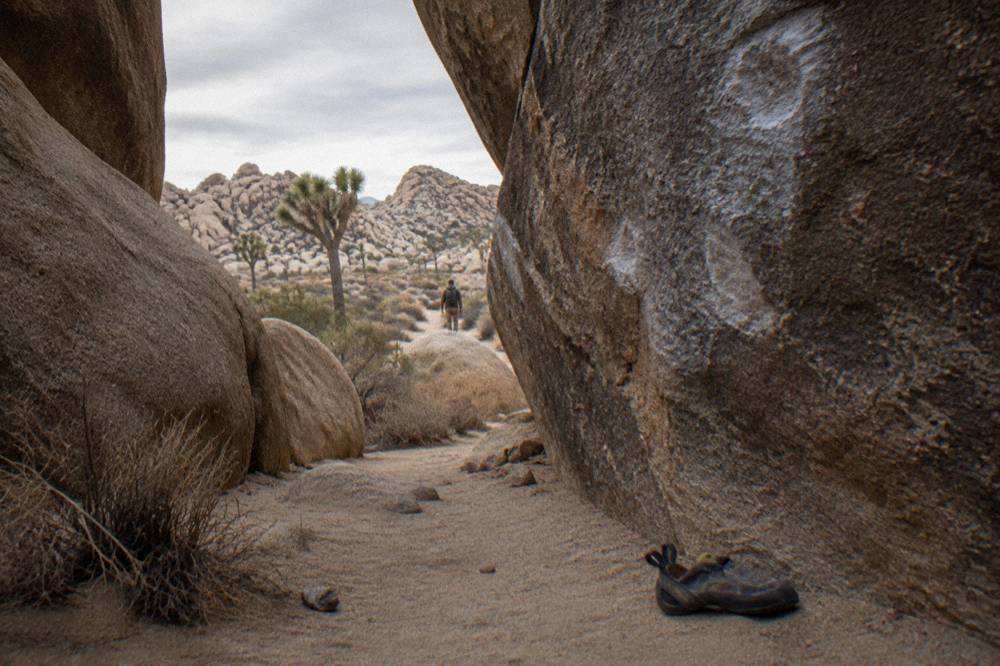
The purest expression of this on the roster is the Caves and Corridors Scramble, mentioned above, which threads the boulder piles rather than summiting them. For hikers who want the vertical version, the guided climbing products go further: the 4-Hour Guided Climbing trip runs from $255 per person with a 5.0 rating across 60 reviews, and the Guided Climbing Trip runs from $200 per person with no reviews on the listing yet. The climbing trips list professionally certified guides, and one specifies wilderness first responder credentials, and both exclude the national park entrance fee.
The park's own rules frame all of this. Climbing is permitted, bolting requires a permit, and guides must be permitted to work in the park, per the park's climbing page. For a visitor comparing options, the practical read is that the hardest scrambling and climbing terrain sits behind a knowledge barrier, and the guided products on the roster are how most people cross it. A solo attempt at a hard boulder route is legal and common, but the park's safety guidance on carrying water and telling people your plans applies doubly when the terrain itself can stop you.
How Hard Is The Full-Day Guided Hike?
The Full-Day Guided Hike is the hardest walking option on this site's roster. It runs 7 hours, costs from $409 per person, and meets in the Joshua Tree area with no pickup provided, so you should arrive prepared for a long, demanding day on the trail. It is rated 5.0 across a small pool of 26 reviews, which is too few for a broad claim but enough to show consistency. It includes a daypack and bottled water, and it excludes private transportation, the park entrance fee, lunch, and snacks, which the park publishes as $15 per person for guided-tour guests or a guest's own valid pass. Since the tour only hands you a daypack and bottled water, the guide to what you should wear and pack for Joshua Tree explains the layers, sun protection, and extra water worth bringing yourself.
Seven hours is a different proposition from the park's other guided walks. The Half-Day Guided Hike runs 4 hours 30 minutes from $335 per person, rated 5.0 across 122 reviews, and even that length is enough for Cynthia, a guest, to call it "like taking a masters class in one of the most beautiful places in the US." The full-day version doubles the time on feet, and in a park with no water in the interior and very limited cell reception, time is the variable that turns a hike into an expedition.
What the full-day format buys you is terrain selection. A guide who knows the park can put a strong group onto routes that a first-time visitor would never find, let alone attempt, and the guest reviews bear that out. The trade is straightforward: you pay more, you walk longer, and you get access to the park's harder corners with someone who carries the route knowledge and the water plan. The park's commercial rules require guides to hold a Commercial Use Authorization for guided hiking, which is the permit structure behind every guided product on this roster.
For hikers weighing the hardest guided walk against the hardest self-guided one, the honest comparison is this: the 49 Palms Oasis Trail is the park's own hardest test, and the full-day guided hike is the hardest structured version of a day in this park. They are not the same product. One is a trail with a name and a seasonal closure; the other is 7 hours of terrain chosen to match your legs.
What Should You Carry On The Hardest Routes?
Carry water, electrolytes, sun protection, and a real plan as your non-negotiables on the hardest routes. The park has no water in its interior, no gas stations, no restaurants, and very limited cell reception, so whatever you need must come with you from the start of your hike. The park's own safety guidance is the authority here: check the forecast, carry ample water, avoid midday activity in summer, and know the signs of heat illness. On the hardest routes, every one of those four is a hard rule rather than advice.
The clothing list follows the season. Spring and fall, with typical highs of 70 to 85 F and lows around 50 F, call for layers, because a 30-degree swing between afternoon and evening is normal. Winter, with highs around 60 F and nights at or below freezing, plus occasional snow at higher elevations, calls for insulation and traction-minded footwear. Summer, with highs around 100 F or more, calls for starting before dawn and being off the trail by midday, full stop.
| Item | Why the hardest routes demand it | Park-sourced context |
|---|---|---|
| Ample water | No water in the park interior; heat illness is the primary hazard | Park safety guidance: carry ample water, know heat illness signs |
| Electrolytes | Sweating in desert heat depletes salts even when drinking well | Summer lows near 75 F mean little overnight recovery |
| Sun protection | Little shade on the hardest trails; exposure is constant | Spring and fall highs 70 to 85 F in full sun |
| Layers | Large day-to-night temperature swings | Winter nights near or below freezing, occasional snow at elevation |
| A time plan | Very limited cell reception and no services inside the park | Park open 24 hours, but help is far away on foot |
One detail that separates prepared hikers from the rest: the park's guidance on digital passes notes that connectivity inside the park is limited enough that passes must be printed or saved to a phone before arriving. The same logic applies to maps and route plans. A phone with no signal and no offline map is a brick on the hardest trails, and the park's own first-time-visitor guidance says so in plainer terms than most guidebooks manage.
The guided products absorb some of this planning for you. The full-day and half-day guided hikes both include bottled water and a daypack; the climbing trips include all safety equipment; the Caves and Corridors trip explicitly tells guests to bring their own food and water, since neither is included. Reading the includes and excludes lines on a listing is the fastest way to know which logistics you still own.
When Is The Hardest Hike Unsafe To Attempt?
The park's own seasonal rules draw the line: from June 1 to September 30 the 49 Palms Oasis Trail is closed for heat, and the broader summer season, with typical highs of 100 F or more, makes every hard route in the park a heat-illness risk by midday. The park publishes these as standing annual rules, not one-off advisories, and its current conditions page is the place to check before any hard hike. Outside summer, the risks shift to cold nights, wet rock, and shorter daylight.
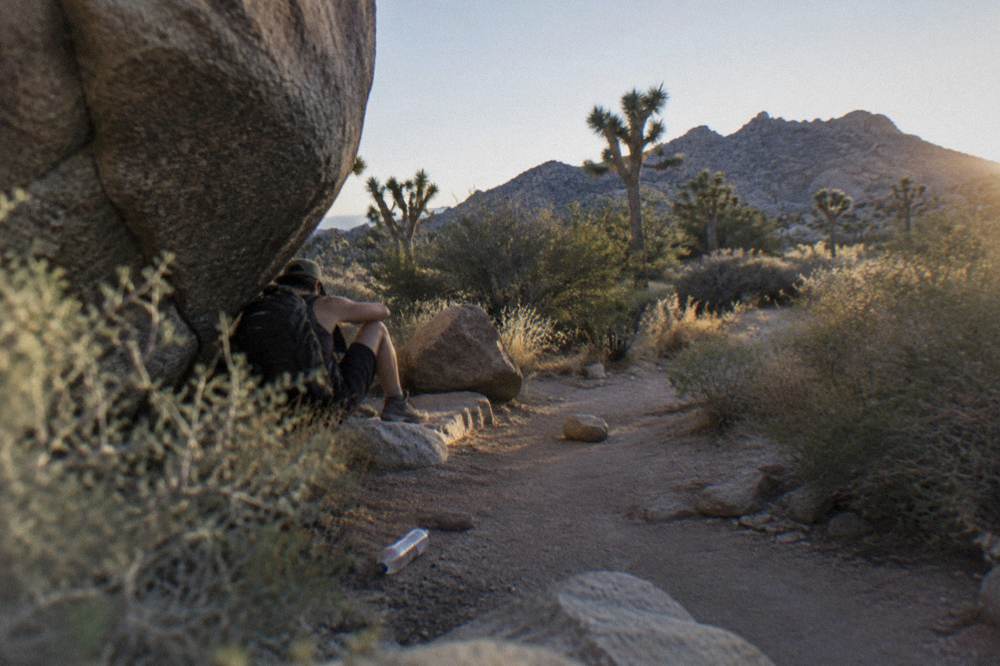
The summer restrictions are broader than one trail. The park's annual rules include a campfire ban from June 15 to October 1, seasonal closures of certain backcountry zones from June 1 to September 1, and reduced operations at several campgrounds through late August. Read together, they describe a park that formally scales back its hardest offerings every summer. A hiker who ignores that pattern is not being tough; they are hiking against the park's own risk assessment.
The shoulder seasons are the window, and they are also the crowded window. The park flags holidays, weekends from October through May, and spring break from March to mid-April as its busiest periods, which matters on hard routes because parking at remote trailheads fills first. A dawn start solves both problems: cooler hours and empty lots. The park is open 24 hours a day, 365 days a year, and entering early is entirely within the rules.
Winter flips the risk profile. Highs around 60 F are close to ideal for hard effort, but nights fall to or below freezing, and snow occasionally lands at higher elevations, with the park topping out at 5,814 ft on Quail Mountain. Wet or icy granite is far more dangerous than dry granite, and the park's conditions page is the reference to check on the day.
Should You Attempt The Hardest Routes Alone Or With A Guide?
On the hardest terrain, a guide changes the risk more than any piece of gear does, because permitted guides carry route knowledge, water planning, and the park's own Commercial Use Authorization, which the park requires for anyone guiding hiking or climbing for pay. The park's rules are clear that climbing guides must be permitted to work in the park, and its commercial use page spells out the insurance and fee structure behind that permit. For a visitor, the practical translation is simple: check that your guide holds a park permit, then choose by terrain and price.
The solo case is real and worth stating fairly. The park requires no reservation or permit to enter, no timed entry, and no advance booking for a day hike. A fit, prepared hiker with ample water, an early start, and a route plan can legally and sensibly hike hard routes alone in the right season. The park's own first-time-visitor guidance assumes exactly that visitor. The hardest routes simply raise the price of a mistake, because cell reception is very limited and there are no services inside the park.
The guided case rests on three things the reviews consistently name: terrain selection, pacing, and safety coverage. The climbing trips on the roster all include professionally certified guides who hold wilderness first responder credentials, and the guided hikes include water and daypacks. Those inclusions map directly onto the park's own hazard list for hard routes: heat, terrain, and isolation.
Between the two, the decision usually comes down to terrain type rather than philosophy. If the hardest thing you want to do is a long walk on defined trails, solo is reasonable with the right preparation, and the park's guidance covers what that preparation looks like. If the hardest thing you want to do is scramble, climb, or push deep into unfamiliar terrain, the roster's guided options, from the 4-hour climbing trips to the 7-hour full-day hike, are built for exactly that. For a fuller comparison of the two approaches, the guide on guided tours versus driving yourself breaks down the trade-offs in detail, and this site, Joshua Tree Park Tours, exists to make that choice easier.
What Is The Hardest Hike In Joshua Tree For Your Fitness Level?
Match the route to your weakest link, not your strongest: heat-hardened hikers should target the 49 Palms Oasis Trail in cooler months, strong scramblers should target the boulder corridors, and endurance hikers should target the 7-hour full-day guided format. The park publishes no difficulty ratings, so the honest method is to sort its hardest experiences by the physical system each one taxes and pick the one you can feed.
For most visitors the binding constraint is heat tolerance, not leg strength. A hiker who comfortably covers long distances in a temperate forest can find a Joshua Tree route crushing in June, on terrain they would jog in April. The park's guidance to avoid midday activity in summer is not aimed at beginners; it is aimed at everyone. The fittest visitor in the park is still carrying every drop of water they will drink, and the park interior has none.
| If your strength is... | The hardest option that fits | What it costs | What to watch |
|---|---|---|---|
| Endurance | Full-Day Guided Hike, 7 hours | From $409 per person, entrance fee excluded | Small review pool of 26, book early for cool months |
| Scrambling and grip | Caves and Corridors Scramble, 4 hours | From $195 per person, bring your own food and water | One review on the listing, guide-led only |
| Vertical strength | Guided Climbing Trip, 4 hours | From $200 per person, no reviews yet | Entrance fee excluded, equipment included |
| Heat discipline | 49 Palms Oasis Trail, self-guided | $15 per person park entry or a valid pass | Closed June 1 to September 30 every year |
The table above is the practical answer to the question this article asks, and it is worth reading twice. The hardest hike in this park is not a single trail with a plaque; it is whichever of these four matches the effort type you are worst at. That is also why the guided products exist in the shape they do. The park's terrain is varied enough that no single product covers it, and the roster reflects that variety in duration, price, and format.
One last planning note that applies to all four rows: the park's entrance fee for guided-tour guests is $15 per person, or a guest's own valid pass, and a private vehicle entering on its own pays $30 for a 7-day permit. The park's fees page is the reference for current figures and the annual pass options, including the $55 Joshua Tree annual pass and the America the Beautiful passes the park honors.
Common Questions About The Hardest Hike In Joshua Tree
What Is The Hardest Hike In Joshua Tree?
The 49 Palms Oasis Trail is the park's hardest hike by the park's own measure: it is the only trail closed every summer, from June 1 to September 30, purely because of heat. For guided alternatives, the hardest options on the roster are the 7-hour Full-Day Guided Hike, the 4-hour Caves and Corridors Scramble, and the guided rock climbing trips.
Is The Hardest Hike In Joshua Tree Closed In Summer?
Yes. The 49 Palms Oasis Trail is closed from June 1 to September 30 every year due to heat. The park also closes certain backcountry zones from June 1 to September 1 and runs a campfire ban from June 15 to October 1. Check the park's conditions page before any summer visit.
Do I Need A Permit To Hike Hard Trails In Joshua Tree?
No permit or reservation is needed to enter the park or hike its trails. You need an entrance pass: $30 per private vehicle for 7 days, $25 per motorcycle, or $15 per person on foot or bicycle. Children under 16 need no pass. Guides, however, must hold a park permit to lead trips commercially.
How Much Water Should I Carry On A Hard Joshua Tree Hike?
The park's guidance says to carry ample water without specifying a quantity, and it emphasizes knowing the signs of heat illness and avoiding midday activity in summer. There is no water in the park interior, so plan to carry everything you will drink, plus a margin, and add electrolytes for hot days.
Is Rock Scrambling Or Hiking Harder In Joshua Tree?
For most experienced hikers, scrambling is harder. The park's boulder piles demand upper-body strength, route-finding on featureless granite, and comfort with exposure, which is why the scramble-based guided products, like the Caves and Corridors trip, include helmets and certified guides.
Can A Guide Take Me On The Hardest Routes?
Yes. The Full-Day Guided Hike runs 7 hours with a guide who selects terrain to match the group, from $409 per person. The guided climbing and scrambling trips cover the vertical side of the park's hardest terrain. All guiding in the park requires a Commercial Use Authorization, so check that your guide holds one.