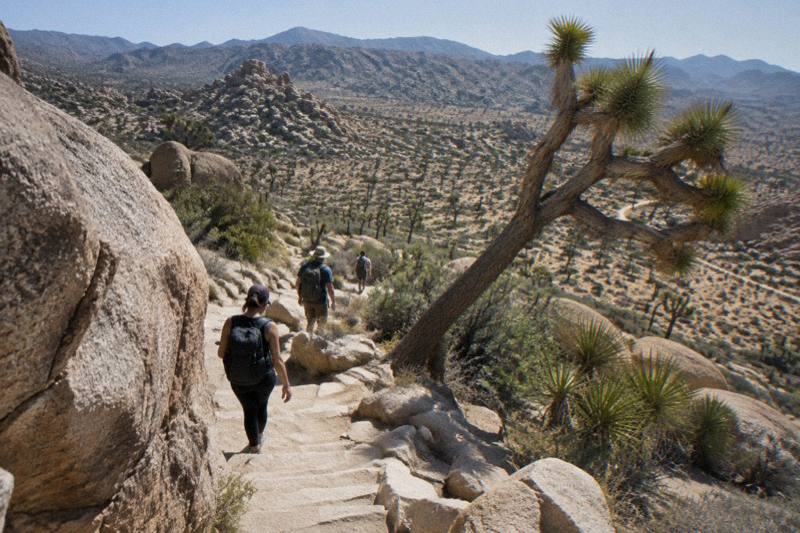
What Should You Wear And Pack For Joshua Tree?
A season-by-season packing and clothing guide for Joshua Tree National Park: water, layers, sun protection, red lights, and what the guided tours already supply.
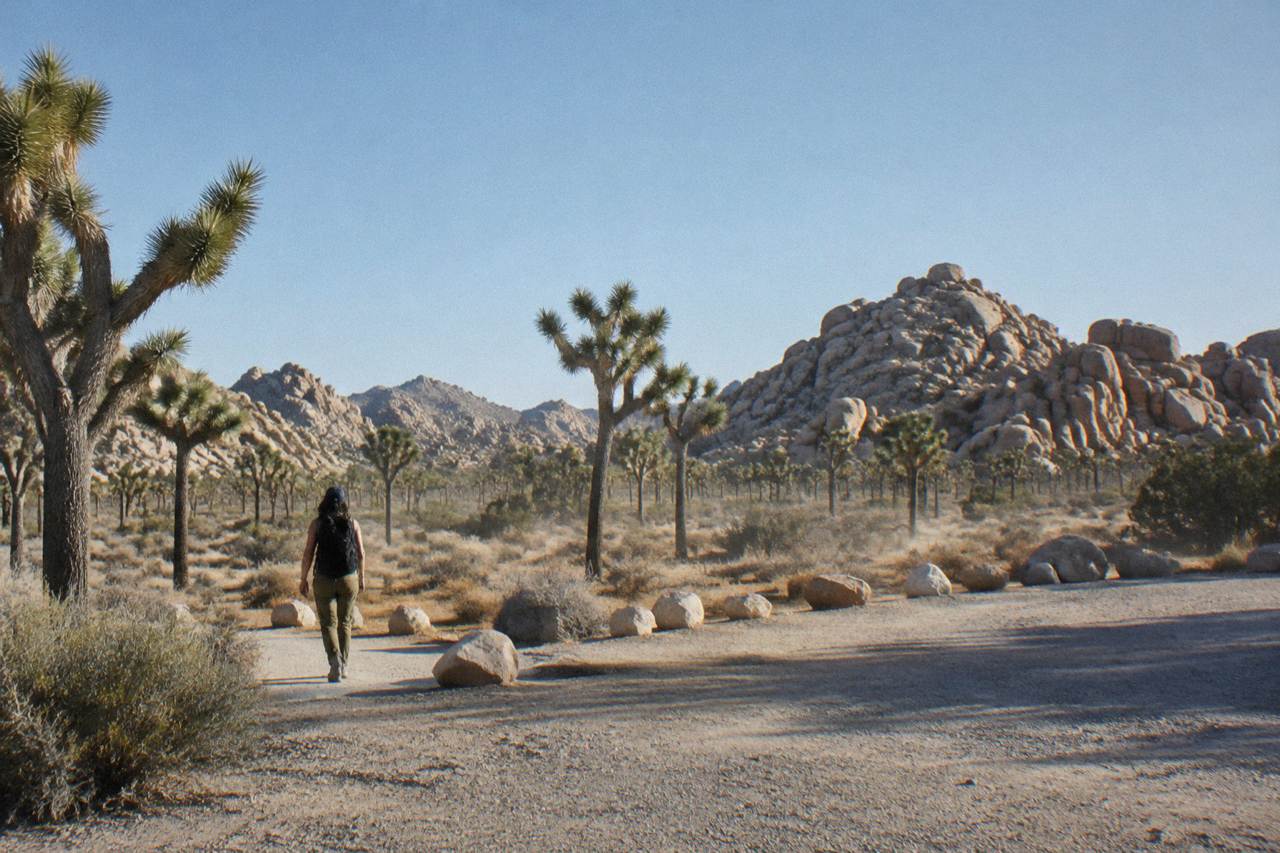
What Should You Wear And Pack For Joshua Tree?
You need three things above all else: more water than feels reasonable, layers for a temperature swing that can exceed 30 degrees in a single day, and serious sun protection. The park has no water in its interior, no gas stations, no restaurants and no stores, so what is in your car at the entrance station is everything you will have. Beyond that, pack a red light for night viewing and a printed or phone-saved entrance pass.
That is the short version. The long version depends on when you are going, because Joshua Tree National Park in April and Joshua Tree National Park in August are effectively two different destinations wearing the same name (see Drive Through Joshua Tree). Spring and fall days typically run 70 to 85 F with nights near 50 F. Winter days sit around 60 F and the thermometer can drop below freezing after dark. Summer highs reach about 100 F or more, with nights that only fall to around 75 F, according to the park's own conditions guidance.
There is a planning wrinkle worth naming early: many visitors arrive on a guided product rather than driving themselves in. That changes the packing list, because several tours supply basics themselves. The Half-Day Guided Hike includes a daypack and bottled water. The Sightseeing Adventure Tour carries bottled water in an air-conditioned van, and the Backroads Hummer H2 Tour adds snacks plus general admission to the roster line. If a guide is handling your water, your packing problem shrinks to clothing, sun and night gear.
The whole question of when to go folds into the same decision, and the companion piece on the best months to visit Joshua Tree breaks the calendar down stop by stop. Read on below for the season-by-season kit.
| Season | Typical day / night | Clothing core | Extra pack items |
|---|---|---|---|
| Spring and fall | 70-85 F / near 50 F | Sun shirt, long pants, fleece for evening, brimmed hat | 1 liter water per hour of hiking, electrolytes |
| Summer | 100 F or more / near 75 F | Loose long sleeves, wide-brim hat, lightweight trousers | Double water, frozen bottle, salty snacks |
| Winter | Near 60 F / freezing possible | Insulated jacket, warm hat, gloves, boots | Chair and blankets for stargazing, extra layers |
What Should You Wear And Pack For Joshua Tree In Spring And Fall?
Spring and fall are the forgiving seasons, and the standard kit is a sun shirt or breathable long sleeve, long pants for scrambling on granite, a warm insulating layer for evening, a brimmed hat and closed-toe shoes with real tread. Daytime highs typically sit between 70 and 85 F while nights fall to around 50 F, so the same outfit needs to survive both ends without a hotel run.
These are also the crowded months, and the park says so plainly: weekends from October through May, holidays and the spring break window of March to mid-April are the busy periods. Crowding is a packing issue in one specific way. If you arrive late, you may park far from a trailhead and walk further than planned, in whatever you wore for the car. Shoes that can handle a gravel shoulder and a rocky trail are worth the suitcase space.
Long pants deserve a defense, because almost nobody brings them on a first desert trip. The granite in the park is coarse, and the classic scrambles through boulder formations will tear up bare knees fast. Cactus spines and sharp yucca leaves do the rest of the argument. Convertible trousers solve both problems, and they weigh nothing.
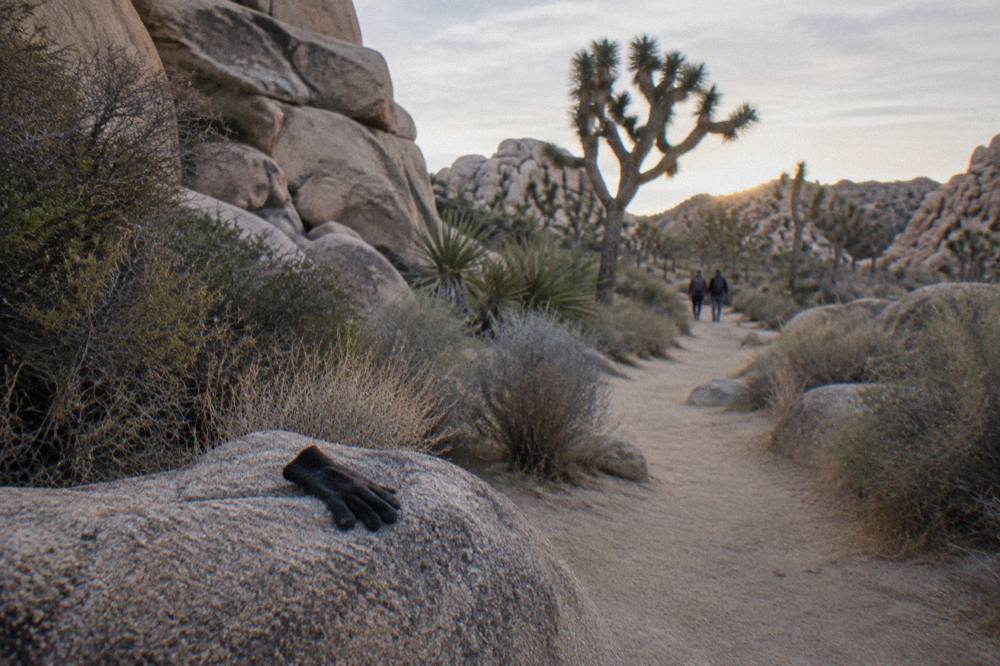
The layer question trips people up more than anything else. Fifty degrees feels pleasant at noon after an 80-degree morning, then genuinely cold once the sun drops behind a rock ridge. A fleece or light puffy jacket is the single most-forgotten item in lost-and-found bins at visitor centers, and the pattern repeats every season.
If a guided format appeals, this is the season where the roster gives you the most options. The E-Bike Rental, from $100 per person for 4 hours out of Twentynine Palms, turns distance that would eat your water budget into a quick ride, though you still pack the sun protection yourself. Joshua Tree guided hikes and park tours in the small-group format, like the Half-Day Guided Hike at from $335 per person for 4 hours 30 minutes, hand you a daypack and bottled water at the trailhead so your own pack stays light.
How Much Water Do You Actually Need To Carry?
There is no water available anywhere in the park interior, so the container in your hand at the entrance is your entire supply. The park's heat safety guidance is to carry ample water, check the forecast before going, and skip midday exertion in the hotter months. A working planning figure for the desert southwest is one gallon per person per day for general touring, and about one liter per hour for actual hiking.
Bottles beat bladders for one unglamorous reason: you can see how much is left. Bladders encourage optimistic sipping and then surprise you at the two-thirds point of a trail. Two one-liter bottles plus a larger jug in the car is a better system than one hidden three-liter reservoir, because the jug refills the bottles at a trailhead and acts as a visual gauge of the day.
The tours mostly solve this for you, which is worth reading the roster lines for. The Paved Road Van Tour from $249 per person includes bottled water and snacks. The Offroad 4x4 Park Tour at from $249 per person does the same across its 5 hours. The E-Bike Rental line lists no water, so bring your own for that one. The point is not that tours replace your planning; it is that the roster lines tell you exactly where the handoff happens.
Electrolytes belong in the list even though the park does not print them anywhere. Plain water in quantity, drunk fast on a hot day, can leave you feeling worse than mild dehydration. Salt tablets or a powdered mix add almost no weight and solve a problem that ruins more desert afternoons than any wildlife encounter.
One more note on containers: freeze a bottle the night before in summer. It thaws across the morning and keeps the second bottle cool in the same bag. It is the cheapest upgrade to a hot-day kit there is.
What Should You Wear And Pack For Joshua Tree In Summer?
Summer needs a full-coverage strategy, not less clothing: a loose long-sleeve sun shirt, a wide-brim hat, sunglasses, long lightweight trousers, and double the water you think you need. Highs typically reach 100 F or more with lows near 75 F, so nights give no real relief. The park's seasonal restrictions also apply, including the annual campfire ban from June 15 to October 1 and the 49 Palms Oasis Trail closure from June 1 to September 30.
The counterintuitive part is the long sleeves. Loose, light-colored, woven fabric shades skin and traps a layer of moving air that actually runs cooler than bare skin under direct sun. Anyone who has hiked in a sun shirt in August will not go back to a tank top. The same logic covers your legs and the back of your neck, which is where sunburn ends most summer visits early.
Footwear in summer is a ventilation question rather than a warmth one. Closed mesh trail shoes work; sandals do not, because the granite holds heat and the spines are at ankle height. Socks that wick matter more than the shoe brand.
Timing matters more than any fabric. The park advises avoiding midday activity in summer and watching for heat illness signs, and that guidance is on the first-time visitors page alongside the rulebook. A 6 am start and a finish by 11 am is the shape of a good summer day here. This is also where guided products earn their price: a guide who chooses the route and the hour has already made the decision that most visitors get wrong. The companion piece on when not to visit Joshua Tree covers the windows worth avoiding altogether.
If summer is your only window, the low-exertion formats hold up better than self-guided heroics. The Self-Driving Audio Tour at from $16.99 per person keeps you in an air-conditioned car with GPS-triggered stories, rated 4.5 across 806 reviews. An early-morning Half-Day Guided Hike, from $335 per person, puts the timing decision on a professional who does this daily in the heat.
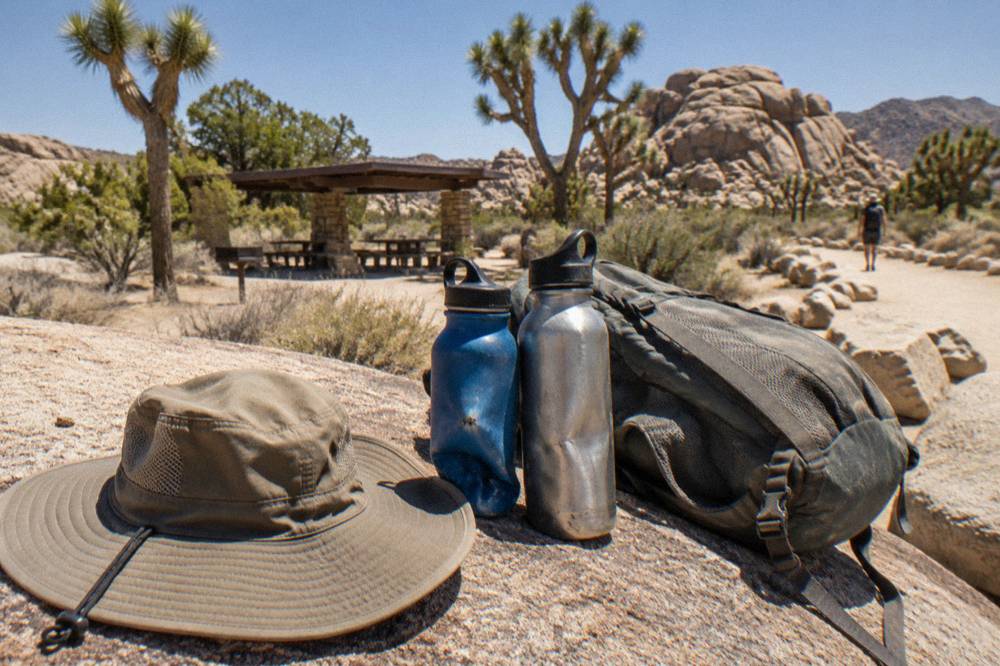
A word on what guides cannot carry for you: they bring the water and the daypack, but not the hat, not the sunscreen and not the right shirt. Cynthia, a guest on the half-day hike, described her guide as someone who "knows the trails, and chose one that suited us perfectly," which is the service you are buying. The clothing layer stays your job.
What Does A Winter Packing List Look Like?
Winter swaps the sun problem for a cold problem: dress for 60 F afternoons and near-freezing nights, with a real insulated jacket, a warm hat, gloves for evening stargazing, and boots that handle occasional snow at higher elevations. The park's elevation runs from 536 ft to 5,814 ft at Quail Mountain, so the temperature you feel depends heavily on where in the park you are standing.
Elevation is the detail most packing guides miss. The low desert along Pinto Basin Road and the high country near Black Rock can differ by ten degrees or more on the same afternoon, and snow can dust the upper reaches while cactus gardens below stay dry. A winter day trip that starts in shorts weather at the south entrance can end in gloves at Keys View. Layers are not optional; they are the whole strategy.
Winter is also stargazing season in practice, because darkness arrives before dinner. Night kit matters here: a red-light headlamp or flashlight, a camp chair, blankets, and warm clothes you would wear standing still for two hours. The park's stargazing guidance says eyes need 20 to 30 minutes to adapt and that white light, including phone screens, resets that clock every time you check it.
For winter nights specifically, the Professional Stargazing Night at from $200 per person supplies telescopes, an astronomer, astro-binoculars, blankets, loungers and hot drinks on private land just outside the park in Yucca Valley, rated 4.9 across 179 reviews. That blanket list is exactly what you would otherwise be hauling yourself. The Starlight Hike from $95 per person goes the other direction, inside the park at night, and lists trailhead access but no gear, so your warm layers do the work.
What Should Go In The Pack For A Night In The Park?
Night kit is short and specific: a red-light headlamp, a folding chair, warm layers, blankets, water, and a plan that keeps you within 20 ft of your vehicle at the four designated stargazing areas, Quail Springs, Hidden Valley, Cap Rock and Ryan Mountain. The park asks visitors to stay awake and close to the car at these spots, and it prohibits painting with light for night photography.
The red light rule sounds fussy until you have been on the receiving end. One white headlamp across a parking lot resets the dark adaptation of twenty strangers simultaneously, and the park's stargazing page asks for red lights only for exactly that reason. Most headlamps have a red mode built in; learn where the button is before you leave the car.
For darkness quality, the park names its own winners: Cottonwood Campground has the darkest skies of the campgrounds, and the pullouts along Pinto Basin Road between the Cholla Cactus Garden and Cottonwood see the least traffic. Moonlight is the enemy, so plan around it rather than against it; a bright moon genuinely reduces the stars you can see.
Camping changes the list scale, not the list logic. Most campgrounds require reservations through recreation.gov, bookable same day up to six months ahead, at $35 for Black Rock, Cottonwood and Indian Cove, $30 for Jumbo Rocks and Ryan, and $25 for the first-come Hidden Valley, White Tank and Belle. Fires are allowed only in park-provided fire rings, and the annual restrictions run June 15 to October 1.
Where To Eat When Visiting Joshua Tree?
There is no food, no restaurant, no grocery store and no gas station anywhere inside the park, so every meal and snack you will want crosses the boundary with you. Pack a cooler with more than you think you need, plan a lunch stop at a picnic area rather than a cafe, and treat the gateway towns of Joshua Tree, Twentynine Palms and Yucca Valley as your resupply points before and after.
The cooler is the piece of gear that quietly upgrades a Joshua Tree day. Shade is scarce at many pullouts, a car interior in the sun behaves like an oven in every season, and a warm sandwich at Cap Rock is a worse meal than the same sandwich cold from a cooler with ice. Salty snacks belong beside the sandwiches, because replacing salt matters as much as replacing water on hot days.
The tours handle food unevenly, and the roster lines are honest about it. The Small-Group Day Trip from LA includes a deli lunch plus snacks and the park admission, from $219 per person. The Las Vegas to LA via Joshua Tree transfer includes unlimited snacks and drinks but excludes lunch. The climbing trips, from $195 to $255 per person, generally exclude food and ask you to bring your own water. Reading the includes and excludes columns before you shop is the whole trick.
Trash is the other half of the food question. There are no bins in the interior to speak of, and everything you carry in leaves with you. A spare zip bag for wrappers costs nothing and solves the problem of snack debris rolling around a rental car for a week.
What Should You Wear And Pack For Joshua Tree On A Tour Versus Alone?
On most guided tours the operator supplies transport, water and often snacks, so your personal list narrows to clothing, sun protection, sturdy shoes and your entrance fee or pass, since the roster lines show several tours exclude the $15 per person park entrance fee. Self-guided visitors carry everything themselves, including navigation, because cell reception in the park is very limited and offline maps are the only maps.
The entrance fee split is the detail people miss at checkout. Both Hummer tours include park admission; Offroad 4x4 guests pay the $15 per person entrance fee separately, while the hiking products and the Local Expert Park Tour list the park's $15 per person entrance as excluded, payable at the booth or covered by your own pass. A pass held by one traveler covers four people on a sightseeing tour, per the sightseeing tour's own listing note. The park's fees page has the full pass menu, including the $55 park annual pass and the America the Beautiful options.
What you wear does not change between formats, and this is the part worth internalizing. A guide can carry your water but not your hat. Closed-toe shoes, long pants for rock contact, a warm layer and sun protection travel with you on every roster product, from the $16.99 audio tour to the $1,180 private day trip from Los Angeles. The cheapest and the most expensive tours on Joshua Tree Park Tours share the same clothing requirement, because the park sets it, not the operator.
What Do People Forget Most Often?
The four recurring misses are the warm evening layer, the red light, the printed or saved entrance pass, and enough water for the return drive. Each one fails in the same direction: the visitor packs for the postcard version of the desert and meets the real one. Nights drop near 50 F even in the good seasons, the pass gate areas have poor connectivity, and the nearest services sit outside the boundaries in the gateway towns.
The pass problem deserves its own sentence. Digital passes must be printed or saved to the phone before you arrive, and the park states this directly because cell service will not reliably fetch a confirmation email at the entrance. Screenshot it, download it, or print it at the hotel. The same logic applies to maps: download offline maps before you lose signal, and carry a paper map as backup, since the park sells good ones at every visitor center.
The evening layer fails by degrees. A family that had a lovely 80-degree afternoon at Skull Rock and then stays for sunset discovers that a 30-degree swing is not a statistic, it is a personal experience. Lori, a guest on the Backroads Hummer H2 Tour, noted the heat was above 100 degrees on her summer trip and recommended a hat and suntan lotion; the same advice inverts for winter evenings but the principle holds, dress for the hour you will be standing still.
Chairs and blankets are forgotten because they feel like camping gear rather than park gear. Anyone staying past dark for the sky, which is the single best free thing to do once inside, will be standing or sitting still for an hour or more. A $15 folding chair beats a rock, and a blanket beats a chair for looking up.
Sunscreen falls off lists in winter, which is a mistake; the desert sun at 60 F burns unprotected skin just as efficiently. A small tube lives in the pack year-round. The Hummer tour roster even lists sunscreen under its exclusives, a quiet reminder that even a from-$159 guided ride does not hand you everything.
Common Questions About Packing For Joshua Tree
What Should You Wear And Pack For Joshua Tree?
Wear long, loose layers, a brimmed hat and closed-toe shoes, and pack more water than feels reasonable, a warm layer for evening, sun protection, a red light if you will stay after dark, and a printed or saved entrance pass. The exact mix shifts by season: full sun coverage in summer, real insulation in winter.
Can I Drink The Water In Joshua Tree National Park?
There is no water available in the park interior at all, no fountains and no fill stations, so you cannot drink, buy or refill anything once inside. Carry everything you will drink, and bring extra for the car. Guided tours that list bottled water as included solve this for their own hours only.
Do I Need Hiking Boots For Joshua Tree?
Sturdy closed-toe shoes with good tread are enough for most trails and scrambles; heavy boots are optional. Sandals are not workable because the granite is coarse and abrasive, and cactus and yucca sit at ankle height. If you plan to climb or scramble through boulder formations, stiff-soled shoes help on the edges.
Why Do I Need A Red Flashlight?
The park asks for red lights only at night because white light resets everyone's dark adaptation, and eyes need 20 to 30 minutes to adjust to the dark. The rule applies at the four designated stargazing areas, Quail Springs, Hidden Valley, Cap Rock and Ryan Mountain, and it covers phone screens too. Most headlamps have a red mode.
What Should I Pack For Stargazing In Joshua Tree?
Warm layers for standing still, a folding chair, blankets, water, a red-light headlamp, and binoculars if you own them. The park names Cottonwood Campground and the Pinto Basin Road pullouts as its darkest spots, and the guided stargazing sessions on private land outside the park in Yucca Valley supply telescopes, blankets and hot drinks for you.
Where To Eat When Visiting Joshua Tree?
Nowhere inside the park: there are no restaurants, stores or gas stations within the boundaries. Pack a cooler with lunch and salty snacks, use the picnic areas, and resupply in the gateway towns of Joshua Tree, Twentynine Palms or Yucca Valley. Some guided day trips include a deli lunch in the ticket price.