When Not To Visit Joshua Tree?
The times to avoid Joshua Tree National Park: summer heat, spring break crowds and holiday weekends, plus the seasonal rules that limit a visit and who should go anyway.
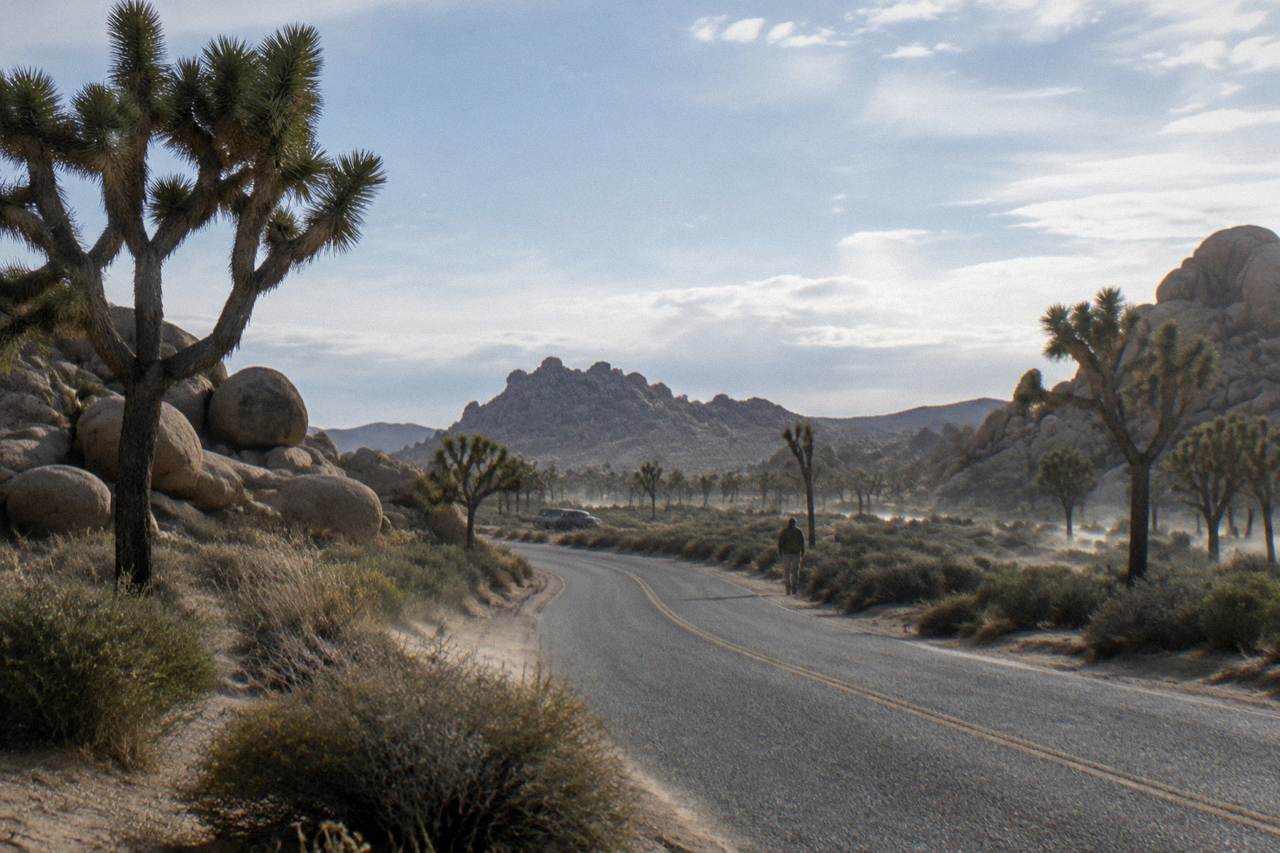
The honest answer to this question is not a single month. It is three separate windows that fail for three separate reasons: summer heat that regularly pushes past 100 F, the spring break rush from March to mid-April, and the holiday weekends that pack the park between October and May. Each has a workaround, and each has visitors who should ignore the advice entirely.
That nuance matters because the park never closes for weather. Joshua Tree National Park is open 24 hours a day, every day of the year, and no timed-entry reservation is needed to get in. The gate takes a pass at any hour. What changes between seasons is what the visit feels like: how much water you carry, whether you find parking, and whether the trail you wanted is even open under the park's published seasonal rules. Whenever you go, the safety precautions worth knowing in Joshua Tree covers what that always-open gate doesn't tell you, from heat to spotty cell service.
This page walks through the avoid-times one by one, with the park's own typical climate figures, the standing rules that apply in each window, and the tour formats that hold up when conditions turn. The short version: skip July and August unless you love heat, skip mid-March through mid-April unless you love company, and treat any three-day weekend between October and May as a planning problem rather than a dealbreaker.
When Not To Visit Joshua Tree?
Avoid Joshua Tree in the peak summer months of July and August, when daytime highs typically run around 100 F or more and nights barely drop below 75 F. Also avoid spring break, March to mid-April, and the holiday weekends from October through May, when crowds peak. Winter visits trade crowds for freezing nights and occasional snow at elevation.
Those are the three windows worth steering around, and they fail differently. Summer is a physiology problem: the park publishes heat guidance that tells visitors to carry ample water, skip midday activity, and know the signs of heat illness, because that guidance exists for a reason. Spring break and holiday weekends are logistics problems: parking lots fill, popular spots like Hidden Valley and Skull Rock get shoulder to shoulder, and a day can dissolve into circling for a space. Winter is the mildest problem of the three, and for many visitors it is not a problem at all, just a packing one.
The park's own guidance frames the crowd question plainly. It flags holidays, weekends from October through May, and spring break as the crowded periods, and it points everyone to check current conditions and alerts before traveling, because trail and road status can change for reasons no calendar predicts. That check, more than any month, is the real planning step.
For visitors who want the crowds handled for them, a guided format does the routing work. The Sightseeing Adventure Tour from $99 per person runs four to five hours with a guide who manages the stops, and it is rated 4.9 across 178 reviews. The full range of options, from hiking to van tours, is covered in the Joshua Tree guided hikes and park tours hub.
Is Summer The Worst Time To Visit Joshua Tree?
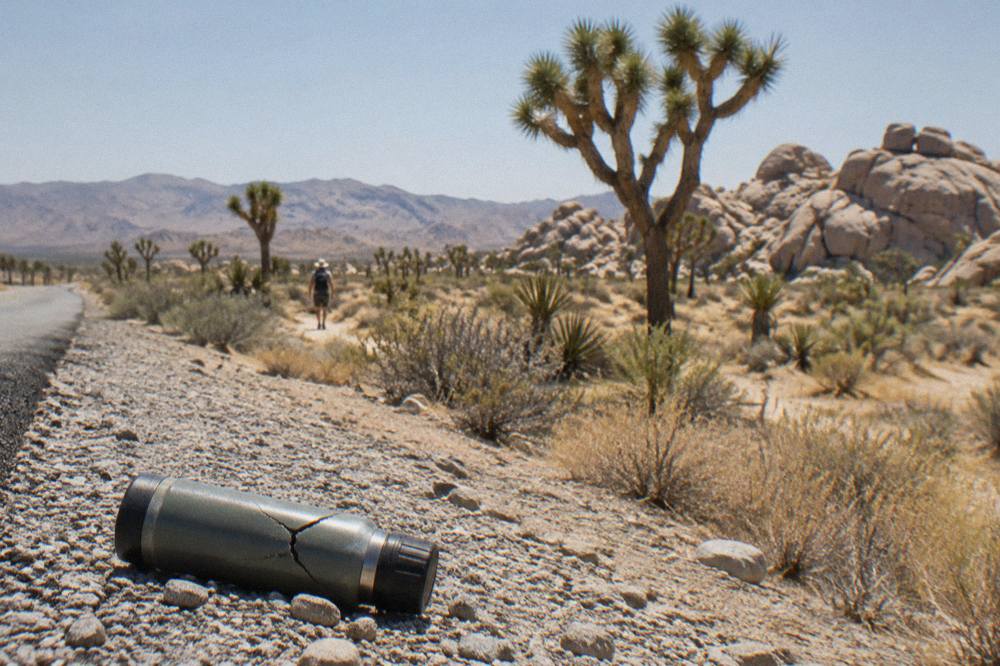
Yes, summer is the hardest season, and it is not close. Typical daytime highs run around 100 F or more from June through September, overnight lows sit near 75 F, and the park's own safety guidance tells visitors to avoid midday activity entirely. The saving graces are early mornings, nights, and the fact that the park never closes for heat.
The numbers come from the park's published climate figures, and they describe a desert that does not forgive improvisation. A high of 100 F means the middle six hours of the day belong to shade, air conditioning, or a swimming pool miles away. The park's heat safety guidance is direct about this: check the forecast, carry ample water, avoid midday activity, and recognize the signs of heat illness before you need to. Air quality can also be poor in summer, which compounds the misery for anyone with respiratory issues.
What summer does offer is emptiness and stars. The park is far quieter than in spring, and once the sun goes down the temperature drops fast. Nighttime is the one summer window that genuinely works, which is why the after-dark formats hold their appeal all season. The Professional Stargazing Night runs two hours from $200 per person with an astronomer, telescopes, blankets and hot drinks, rated 4.9 across 179 reviews, on private land just outside the park in Yucca Valley. The Starlight Hike, from $95 per person, uses a trailhead inside the park for a two-hour walk after dark.
The honest framing is that summer is not a "do not go" so much as a "go differently." A visitor who arrives at sunrise, does one thing, and is done by 10 a.m. has a good day. A visitor who arrives at noon with one bottle of water does not.
| Season | Typical daytime high | Typical night low | What to expect |
|---|---|---|---|
| Spring | 70 to 85 F | Around 50 F | Best weather, biggest crowds, spring break rush |
| Summer | Around 100 F or more | Near 75 F | Extreme heat, thin crowds, best night sky access |
| Fall | 70 to 85 F | Around 50 F | Prime season, busy weekends from October |
| Winter | Around 60 F | Near or below freezing | Quiet, cold nights, occasional snow at elevation |
The elevation range explains some of the variation. The park runs from 536 ft to 5,814 ft at Quail Mountain, so the high-country spots can feel meaningfully cooler than the low desert along Pinto Basin Road, and snow at elevation is a real winter possibility rather than a rumor.
For visitors set on a summer trip, the two formats built for the heat are the short morning outing and the after-dark session. The Electric Motorbike Tour from Twentynine Palms covers the second case and the first at once: two and a half hours, from $169 per person, rated 4.8 across 19 reviews, a small pool but a consistently positive one. Check availability
Is Spring Break A Bad Time To Visit Joshua Tree?
Spring break, roughly March through mid-April, is the park's most crowded stretch outside holiday weekends. The weather is close to perfect, with typical highs of 70 to 85 F, which is exactly why the parking lots, trails and campgrounds fill. It is a bad time only if solitude was the point of the trip.
The irony of spring break is that it punishes the park for being at its best. The same mild temperatures that make a long hike pleasant make everyone else's long hike pleasant too. The park's guidance names the crowded periods without euphemism: holidays, weekends from October through May, and spring break. Campgrounds compound the problem, because most of the roughly 500 sites are reservation-only and the busy season runs October through May, so a spring break traveler without a booking can find every reservable site gone and the first-come, first-served campgrounds full by mid-morning.
There are ways through it. Weekdays during the spring break window are dramatically quieter than weekends, and the park is open 24 hours, so an entry at dawn or a visit after dark sidesteps the peak. Going deep also helps: the farther a spot sits from Park Boulevard's greatest hits, the thinner the crowds get, and the Pinto Basin side of the park sees noticeably less pressure than the Joshua Tree and Hidden Valley corridor.
A guide also absorbs a surprising amount of the spring break friction. A guided format handles timing, parking strategy and route choice, which are the three things that actually break down when a park is busy. The Offroad 4x4 Park Tour, from $249 per person for five hours and rated 4.9 across 471 reviews, keeps the group moving through the backcountry rather than queuing at the marquee pullouts. Kelly, a guest on that tour, described a guide who "taught us a lot through the tour along with some good laughs" and recommended it to anyone who wants "to make the most of limited time inside the park."
The deeper comparison of seasons, month by month, lives in the best time to visit Joshua Tree guide. The short version for this question: if the dates are locked to spring break, go, but book early, go early, and expect company.
Are Holiday Weekends In Joshua Tree Worth Avoiding?
Holiday weekends between October and May are the park's busiest single days, and they combine spring-level crowds with peak-season campground pressure. They are worth avoiding for solitude seekers, but manageable for visitors who book everything in advance, arrive before 8 a.m., or join a guided tour that owns the logistics.
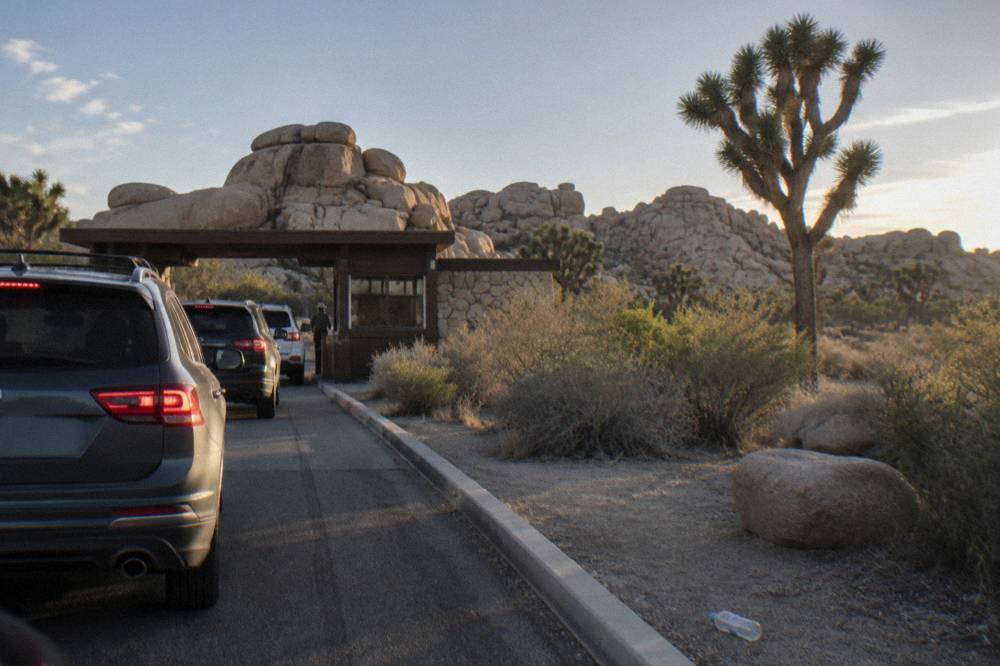
The pattern repeats every year. A three-day weekend in October through May pulls in the full weight of Southern California's weekend travel market, and the park's small road network was not built for it. The practical failures are predictable: full parking at the popular trailheads by mid-morning, slow traffic on Park Boulevard, and campgrounds that require a reservation secured well ahead on the official booking site. The park publishes this crowded-period pattern itself, so it is not folklore.
The fixes are boring and effective. Book a reservable campground months ahead rather than hoping, because sites can be booked same day up to six months in advance. Arrive at dawn, when the park is legally accessible around the clock and the lots are still empty. Or hand the day to someone who does this weekly: the Paved Road Van Tour from $249 per person, five hours, rated 4.9 across 302 reviews, keeps guests moving in an air-conditioned vehicle with a driver-guide handling the flow of the day. Maria, a guest on that tour, praised a guide "full of personal knowledge of the Palm Desert area and of our destination" with "a sense of humor" that made the day more enjoyable.
One fee note that belongs here rather than repeated later: park entry is $30 per private vehicle for seven days, $25 per motorcycle, or $15 per person on foot or bicycle, and guided-tour guests pay the $15 per person entrance fee or use their own valid pass unless the tour listing states otherwise. The details are on the park's fees page.
What Seasonal Rules Close Parts Of Joshua Tree In Summer?
The park publishes standing summer restrictions: a campfire ban runs June 15 to October 1 every year, the 49 Palms Oasis Trail closes June 1 to September 30 for heat, and several campgrounds and backcountry zones reduce or suspend operations over summer. These are annual rules, not one-off events, and they shape any hot-season visit.
The campfire ban is the one that surprises campers most. From June 15 to October 1, campfires and open flames are prohibited, with smoking restrictions and a charcoal ban in the mix, and gas stoves allowed. A visitor planning a summer night around a fire ring is planning around something that is not happening. The 49 Palms Oasis Trail closure is the one that surprises hikers: it shuts completely from June 1 to September 30, one of the park's beloved walks removed from the board for the hottest third of the year.
The campground picture matters too. In summer, Belle and White Tank close fully, Indian Cove, Black Rock and Cottonwood run partial operations, and several backcountry zones including Eagle Mountain East, Hexie Mountain, Pinto Mountain and Pleasant Valley close from June 1 to September 1. None of this is a surprise closure; the park publishes it as a seasonal pattern on its summer restrictions page, and checking it before booking a summer trip is the difference between a plan and a guess.
| Standing summer rule | Window | What it means for a visit |
|---|---|---|
| Campfire and open flame ban | June 15 to October 1 | No campfires or charcoal; gas stoves allowed |
| 49 Palms Oasis Trail closure | June 1 to September 30 | Popular trail fully closed for heat season |
| Belle and White Tank campgrounds | Summer season | Full closure, no first-come sites there |
| Indian Cove, Black Rock, Cottonwood | Summer season | Reduced or partial operations |
| Selected backcountry zones | June 1 to September 1 | Eagle Mountain East, Hexie Mountain, Pinto Mountain, Pleasant Valley closed |
The takeaway is not that summer is impossible. It is that summer removes options, and a visitor who does not know which ones is planning blind. The park's conditions page carries current status for anything beyond these standing rules.
Is Winter A Bad Time To Visit Joshua Tree?
Winter is the mildest of the avoid-times and for many visitors is not one at all. Typical highs sit around 60 F, crowds thin out, and the main costs are nights near or below freezing and occasional snow at higher elevations. It is a bad time only for visitors counting on warm evenings or swimming-pool weather.
The desert in winter is a different animal. Days of around 60 F are close to ideal for the park's longer walks, and the crowd pressure that defines October through May weekends eases noticeably once the nights get cold. The Half-Day Guided Hike, from $335 per person for four and a half hours and rated 5.0 across 122 reviews, becomes a genuinely pleasant proposition in this weather rather than an endurance event. Cynthia, a guest on that hike, called it "like taking a masters class in one of the most beautiful places in the US."
The trade-offs are real but manageable. Freezing nights mean real layers, and the packing question is covered in detail in the what to wear and pack for Joshua Tree post. Snow at elevation closes nothing by itself but can make the high-country roads and boulder scrambles briefly unpleasant. And winter nights are long, which for stargazers is a feature: darkness arrives early enough for a full night program without staying past midnight.
The fuller winter case, including what it feels like on the ground, is made in the Joshua Tree in winter guide. The short answer to this question: winter is a "know what you are signing up for" season, not an avoid season.
Who Should Visit Joshua Tree During The Avoid-Times Anyway?
Stargazers, photographers and heat-tolerant road-trippers should ignore most of this page. Summer nights offer the park's emptiest trails and its darkest access, spring break delivers the best wildflower odds, and winter weekends suit anyone whose schedule only opens on holidays. The avoid-times are averages, and individual priorities beat averages.
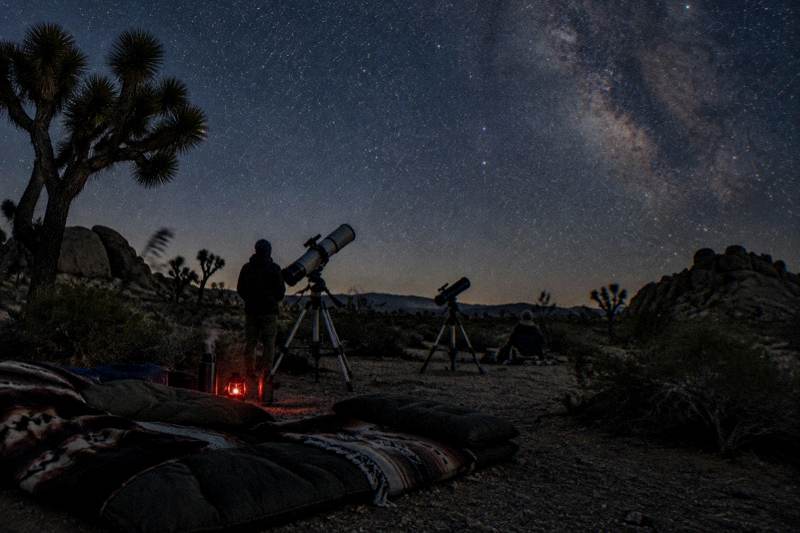
The stargazing case is the strongest. Joshua Tree National Park is an International Dark Sky Park, and summer's moonless nights are when the Milky Way's galactic center is at its best. A summer visit that skips the day entirely and runs from dusk onward gets the park's best product at the time of year everyone else avoids. The two professional stargazing sessions run on private land just outside the park in Yucca Valley; the Starlight Hike meets inside the park, which is worth knowing plainly: neither includes park entry, and no pass is needed for them. The Professional Stargazing Night, from $200 per person, supplies telescopes, an astronomer and loungers.
Photographers have a similar inversion. Spring break crowds are a daytime problem, and the light at dawn and after dark is unaffected by how many people were at Cap Rock at noon. Heat-tolerant visitors who genuinely like 100 F days, and they exist, get the park nearly to themselves in July and August, with the caveats from the seasonal rules section attached.
Then there is the schedule reality. Many visitors can only travel on holiday weekends, and "avoid" is useless advice to someone with no alternative. For them the answer is not to stay home but to structure the day: enter at dawn, pick one anchor activity, and let a guide own the parking and timing decisions. The Joshua Tree Park Tours roster exists largely for that traveler.
How Do You Time A Single Day Around Joshua Tree Heat?
Structure the day as two short windows with a long break between: activity from sunrise to about 10 a.m., shelter through midday, then a second window in the late afternoon or after dark. The park is open 24 hours, so an early entry is always available, and the park's own guidance says to avoid midday activity in summer outright.
The mechanics are simple. Sunrise entry beats both the heat and the crowds, and it works in every season, not just summer. By late morning the desert sun is the dominant force, and the park's heat guidance is unambiguous about midday. The break can be spent in one of the gateway towns, since there is no water, no food and no gas inside the park, a fact that catches out first-timers every single week. Then the evening window opens: the park stays accessible around the clock, and after dark the temperature falls toward that 75 F summer low, which reads as a relief rather than a number.
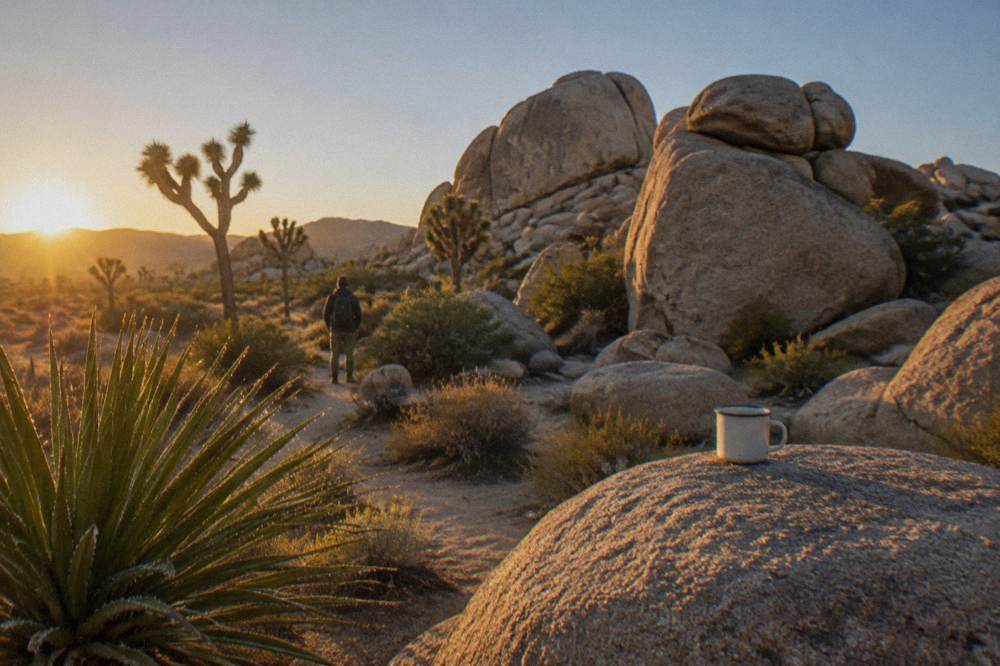
Tours already run on this clock, which is part of their value. The Electric Motorbike Tour's two and a half hours fits a morning slot cleanly, and its Twentynine Palms meeting point puts riders near an entrance for an early start. The E-Bike Rental, from $100 per person for four hours, hands the same timing decision to the rider. Lori, a guest on the Backroads Hummer H2 Tour, offered a useful data point in her review: she went in summer "and temperatures were above 100 degrees," and her advice was a hat, sunscreen and acceptance that most of the day is spent in the vehicle rather than on foot.
The one rule that overrides all scheduling cleverness: carry more water than feels reasonable. The park has no water in the interior, cell reception is very limited, and the nearest resupply is a drive back out through a gate. A dawn start with two liters per person is a plan. A noon start with a half-liter bottle is an incident report waiting for its date.
What Tours Work Best When Conditions Turn Against You?
For heat, pick short or vehicle-based formats: the Electric Motorbike Tour at two and a half hours, or the five-hour van and 4x4 tours with air conditioning. For crowds, pick guided formats that own parking and timing. For night, pick the stargazing sessions outside the park or the Starlight Hike inside it. Price is never the whole answer, but it frames the choice.
The comparison below pulls the from-prices straight from the listings, all per person, alongside the practical reason each format suits a difficult day. Ratings are printed with their review counts, and small pools are labeled as such rather than dressed up.
| Tour | From price | Duration | Why it suits a hard day |
|---|---|---|---|
| Sightseeing Adventure Tour | $99 per person | 4 to 5 hours | Air-conditioned van, guide manages stops in crowds, rated 4.9 across 178 reviews |
| Electric Motorbike Tour | $169 per person | 2 hours 30 minutes | Short morning format beats the heat, rated 4.8 across 19 reviews |
| Professional Stargazing Night | $200 per person | 2 hours | After-dark timing sidesteps heat entirely, rated 4.9 across 179 reviews |
| Paved Road Van Tour | $249 per person | 5 hours | Full-size vehicle comfort, rated 4.9 across 302 reviews |
| Half-Day Guided Hike | $335 per person | 4 hours 30 minutes | Guide picks terrain to match conditions, rated 5.0 across 122 reviews |
The pattern worth noticing is that duration, not price, is the heat variable. Two and a half hours on a motorbike at 8 a.m. is a different proposition from seven hours on foot at the same temperature, which is why the Full-Day Guided Hike, from $409 per person, belongs in the cool-season column of a mental spreadsheet. Bailey, a guest on that full-day hike, described a guide who was "very attentive to our needs and expectations," and that attentiveness is exactly what a long desert day demands.
For the crowd problem, the guide is the product. Jack, a guest on the Sightseeing Adventure Tour, described an operator who "personally texted us with all the information needed" and arrived with water and granola bars in the van, which is the difference between a managed day and a self-managed one when the lots are full.
For the night problem, the choice is between the private-land sessions outside the park and the in-park Starlight Hike. The Professional Stargazing Night brings telescopes, an astronomer, blankets and hot drinks for two hours from $200 per person, and it needs no park pass at all. James, a guest there, kept his review short: "Everyone was very awesome. Very knowledgeable and very nice."
The last planning note belongs to the calendar rather than the thermostat. The park publishes fee-free days each year for United States citizens and residents, days on which the entrance fee is waived, and they are listed on the fees page alongside the pass options. They are also, reliably, busy days, so a fee-free day trades $30 for company. Whether that trade is worth it depends entirely on which of this page's avoid-times the visitor tolerates best.
Common Questions About When Not To Visit Joshua Tree
When Not To Visit Joshua Tree?
Avoid peak summer in July and August, when highs typically run around 100 F or more, and avoid spring break from March to mid-April plus holiday weekends between October and May, when crowds peak. Winter is quieter but cold at night. Each window has workarounds, from dawn starts to after-dark tours.
Is Joshua Tree Too Hot To Visit In Summer?
Daytime, often yes: typical summer highs run around 100 F or more with lows near 75 F, and the park's guidance says to avoid midday activity. Early mornings and evenings work well, the park stays open 24 hours, and after-dark formats like the stargazing sessions run all summer.
Is Spring Break A Bad Time To Visit Joshua Tree?
It is the most crowded stretch of the year outside holiday weekends, roughly March through mid-April, with mild 70 to 85 F highs drawing big numbers. Weekdays, dawn entries and guided tours blunt the crowding, and campground reservations should be made well ahead.
Does Joshua Tree Close In Summer?
The park itself never closes for heat and is open 24 hours a day. But standing seasonal rules apply: the 49 Palms Oasis Trail closes June 1 to September 30, campfires are banned June 15 to October 1, and several campgrounds and backcountry zones reduce or suspend operations over summer.
What Is The Best Month To Visit Joshua Tree Instead?
Typical advice points to the shoulder windows: late April through May and late September through November, when highs run 70 to 85 F and the spring break rush has passed. October through May weekends remain busy, so weekdays in those months offer the best weather-to-crowd ratio.
Is Winter A Bad Time To Visit Joshua Tree?
Usually no. Winter brings highs around 60 F, thin crowds and freezing nights, with occasional snow at higher elevations. Visitors prepared for cold nights often find it the park's most underrated season, and the long nights suit stargazing.