Joshua Tree In Winter: Cold Nights, Clear Days And Snow
Winter strips the crowds out of the midweek park, drops nighttime temperatures to freezing or below, and hands visitors some of the clearest skies of the year. Here is what the season actually feels like, and which tours make the most of it.
Short answer
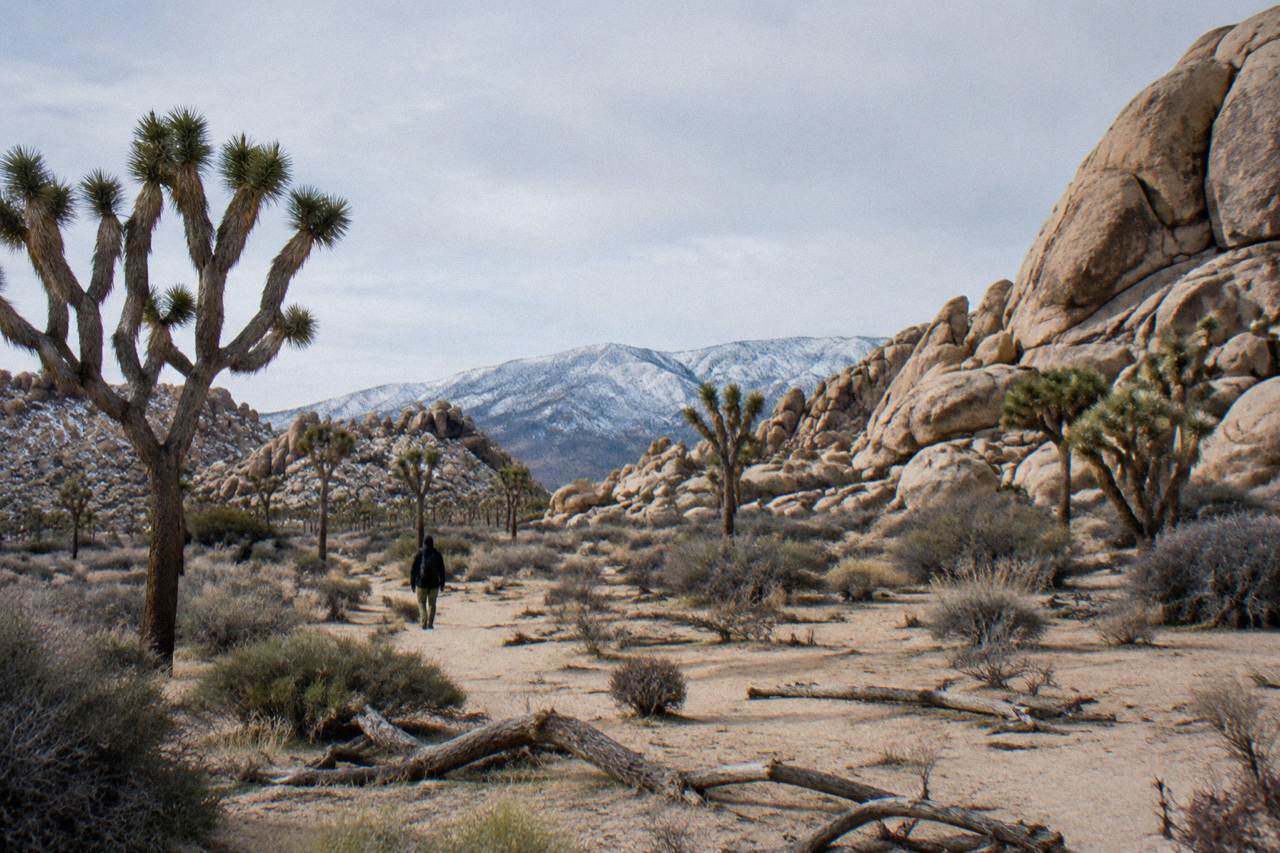
Winter in Joshua Tree National Park typically means daytime highs around 60 F and nights near or below freezing, with occasional snow at higher elevations. The park stays open 24 hours, weekends from October to May stay busy, and long, dark nights make it a strong season for stargazing tours.
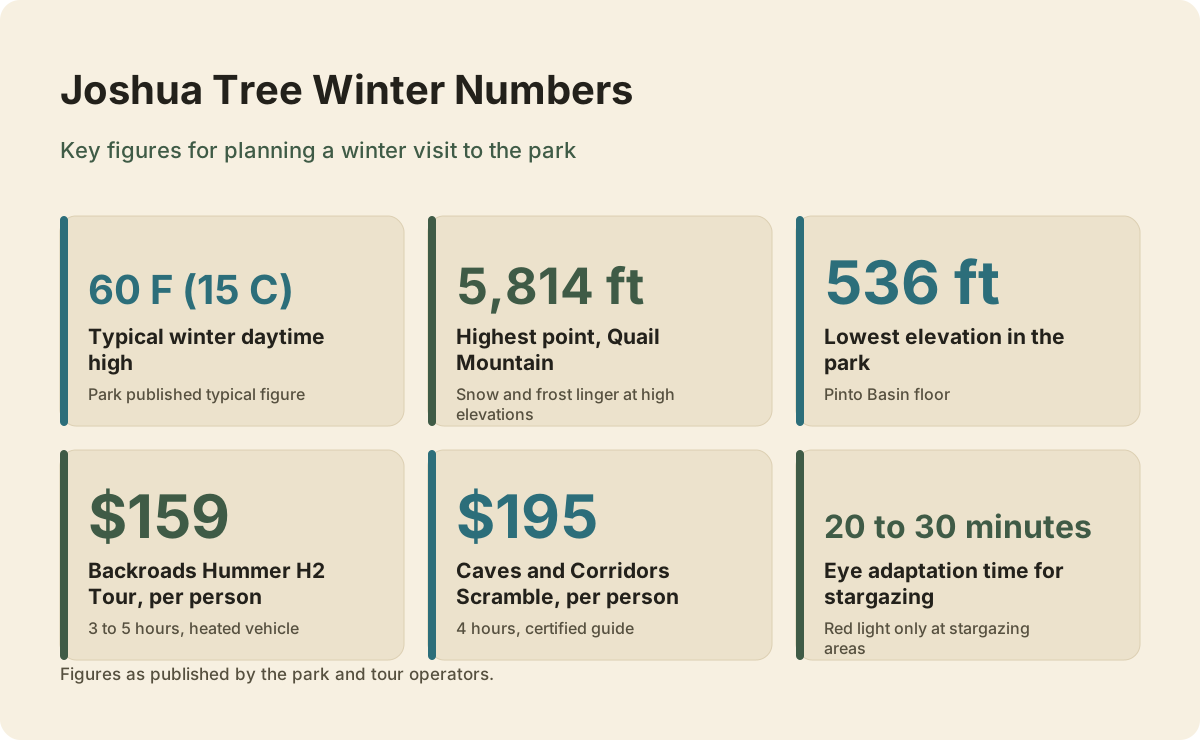
Winter is the season Joshua Tree National Park was built for, in a strange way. The desert heat that defines summer retreats, the daytime light turns soft and low, and the nights stretch long enough that the sky becomes the main event. The park publishes typical winter highs around 60 F (15 C) with nighttime temperatures near or below freezing, and occasional snow at the higher elevations. That combination, mild afternoons and genuinely cold, genuinely dark nights, is exactly what this guide covers: what the weather does, what to wear, how the crowds thin, and which tours earn their price between December and February.
The park spans elevations from 536 ft to 5,814 ft at Quail Mountain, which matters more in winter than at any other time of year. The Pinto Basin floor and the Cottonwood end can feel balmy on the same afternoon that the high country near Black Rock wears frost. Planning around that spread, rather than a single forecast number for "the park," is the difference between a comfortable visit and a cold one. This site's own Joshua Tree stargazing tours category exists largely because winter is when the night half of the park is at its best, and the pages below lean on that.
What Is Winter Weather Like In Joshua Tree?
Winter days in the park typically reach highs around 60 F (15 C), while nights fall to near or below freezing, with occasional snow at higher elevations. Those are the park's own published typical figures, not forecasts. The practical result is a desert that is comfortable for hiking by mid-morning and cold enough for a winter coat by the time the sun drops.
The swing between afternoon and night is the defining feature. A visitor starting a trail at 9 am in a fleece can be uncomfortably warm by noon and reaching for gloves at 5 pm, all on the same day and the same trail. The park advises checking forecasts and carrying ample water year round, and its conditions page is the right place to look before any winter trip, since it carries the park's own guidance on weather and seasonal hazards.
Elevation drives local variation. Quail Mountain tops out at 5,814 ft, and the Black Rock area sits high enough that frost and light snow linger there after the lower, eastern reaches of the park have cleared. Air quality, which the park notes can be poor in summer, is generally at its cleanest in winter. There are no gas stations, restaurants, grocery stores or hotels inside the park, and no water in the park interior, so a winter day trip means carrying everything, including more water than the cold air makes you feel like drinking.
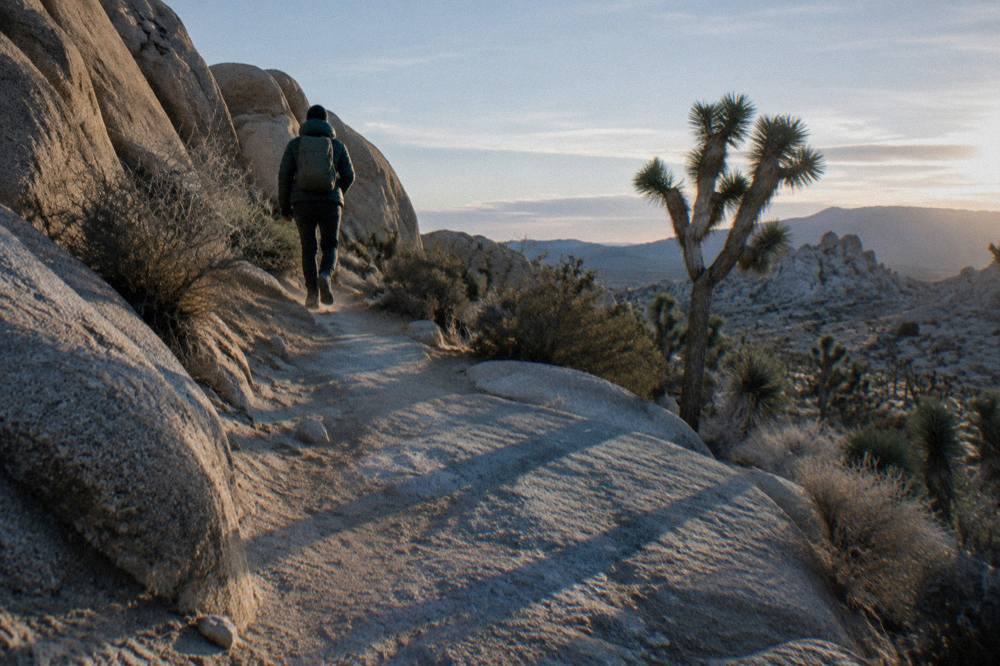
The short daylight is a planning factor that surprises people. Winter compresses the usable hiking window into roughly the middle of the day, which is also when the light is at its flattest for photography. The compensation is on the other side of sunset: darkness arrives early, the air is dry and stable, and the night sky session that would start at 9 pm in July can begin at a civilized early-evening hour in December. Tours reflect that. The Starlight Hike, from $95 per person for 2 hours, and the Professional Stargazing Night, from $200 per person for 2 hours, both run evening sessions that pair naturally with a winter schedule.
Does It Snow In Joshua Tree National Park?
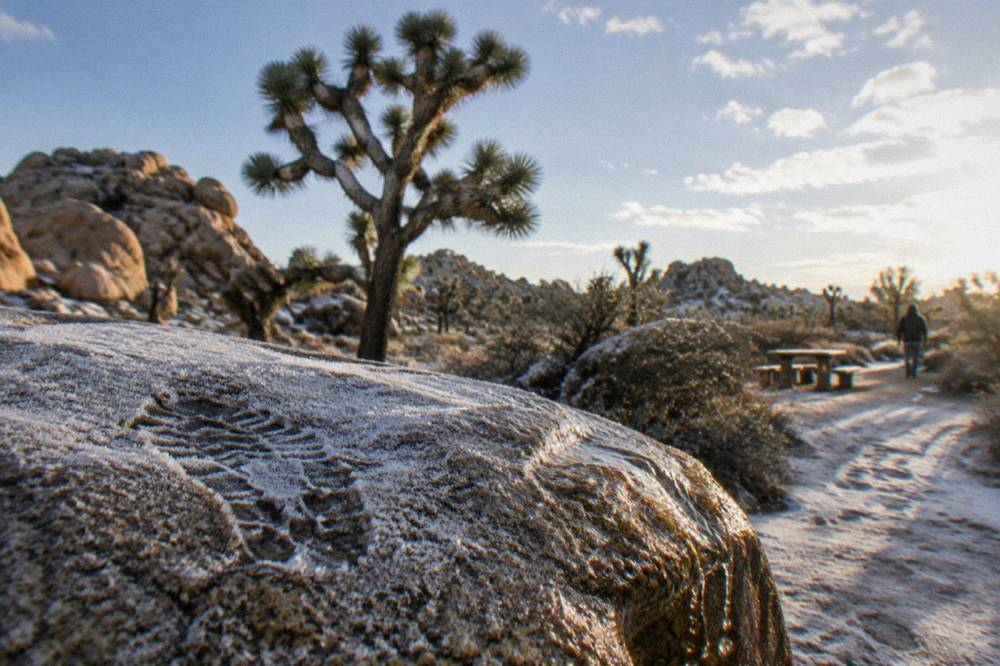
Yes, occasionally, and mostly at elevation. The park's own seasonal guidance lists occasional snow at higher elevations as a normal winter feature, not a rare event. Snow rarely closes the park outright, but it can make high-country trails and roads briefly slippery, and it melts fast once the sun climbs.
When snow does fall, it tends to favor the western, higher end of the park around Black Rock and the upper reaches near Quail Mountain, while the Pinto Basin and Cottonwood areas see it far less often. A dusting on the Joshua trees and granite boulders is one of the most photographed conditions in the park, and it usually lasts only hours to a day on exposed rock. The park does not publish a snow-season calendar for the obvious reason that there isn't one: it is a matter of individual storms.
The practical rules for a snow-possible visit come from the park's standing seasonal restrictions rather than any live report. The annual campfire ban runs June 15 to October 1, so winter fires are permitted in designated fire rings, subject to any additional restrictions the park posts. The 49 Palms Oasis Trail closes annually June 1 to September 30 for heat, so it is open in winter. For current trail and road status, the park's own alerts and conditions pages are the source to check, and no article, this one included, can honestly state what is open on any given winter morning.
A winter snowfall changes the tour picture very little. Operators of vehicle-based tours such as the Backroads Hummer H2 Tour, from $159 per person for 3 to 5 hours, run air-conditioned, heated vehicles, and guests on that tour report spending most of the time in the vehicle with some walking. A guide who is out in the park daily also knows which pullouts hold the best snow-lit views on the morning after a storm, which is a real advantage when the snow is already fading by noon.
What Should You Wear And Pack For A Winter Visit?
Dress in layers you can shed by late morning and put back on by late afternoon: a warm hat, gloves, an insulating layer and a windproof shell over a base layer, plus sun protection for the middle of the day. Winter sun at desert latitude is strong even at 60 F, and the park has no water and very limited cell reception inside.
The layering advice is not generic. Because the park's typical winter range runs from around 60 F daytime highs to freezing or below at night, a single outfit cannot cover both ends. A morning stargazing session that starts at the freezing point will be followed, eight hours later, by a hike in conditions warm enough for a t-shirt. The same packing logic applies to the evening tours: the Professional Stargazing Night includes blankets, telescopes, an astronomer, coffee or tea and loungers, from $200 per person, and it runs on private land just outside the park in Yucca Valley, not inside the national park, so no park pass is needed for that session.
| Item | Why It Matters In Winter | Notes |
|---|---|---|
| Warm hat and gloves | Nighttime temperatures near or below freezing | Essential for any evening tour |
| Insulating mid-layer | The 60 F afternoon to freezing night swing | Fleece or down, easy to stash |
| Windproof shell | Open desert wind on exposed rock and pullouts | Doubles as a windbreak at stargazing areas |
| Sunscreen and lip balm | Strong winter sun at desert latitude | Reapply midday |
| Water, more than feels necessary | No water in the park interior; cold suppresses thirst | Park guidance is ample water year round |
| Red-light headlamp or flashlight | Required etiquette at designated stargazing areas | White light ruins 20 to 30 minutes of eye adaptation |
Footwear deserves a specific winter note. Granite boulders hold frost in shaded pockets well into the morning, and a damp patch of rock that looks harmless is the most common slip hazard on a winter scramble. Closed shoes with grip matter more in winter than in any other season here. The Caves and Corridors Scramble, from $195 per person for 4 hours, sends guests over exactly that kind of terrain with a certified guide and all safety equipment, and it is a good example of a tour where footwear is not decoration.
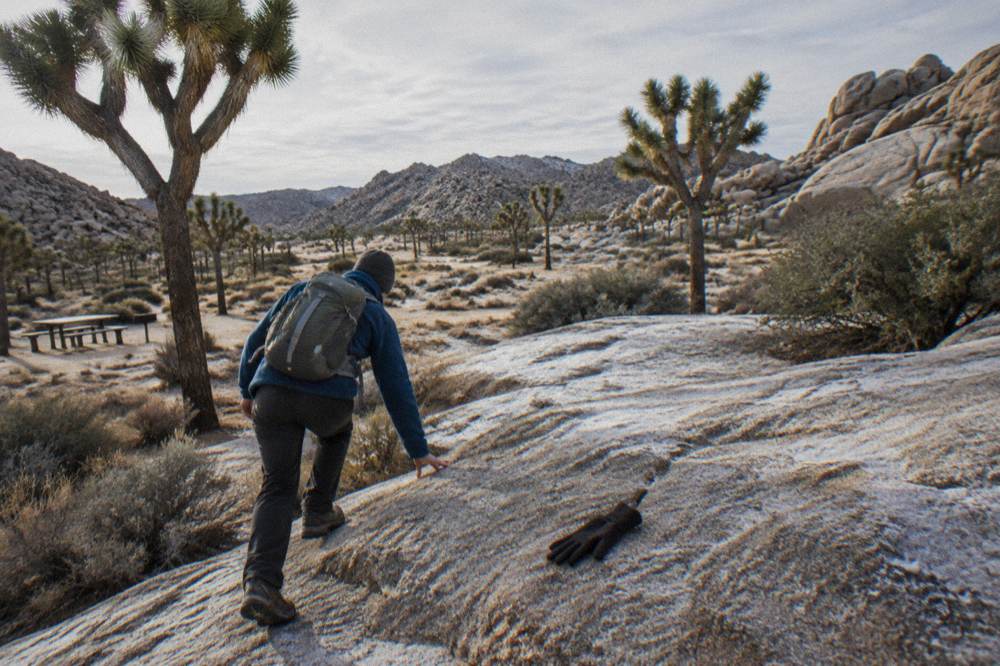
For readers who want the full seasonal picture, the site's guide to what to wear and pack for Joshua Tree goes into more detail, and the same logic applies to winter nights as to any cold desert.
Are Winter Nights Good For Stargazing In Joshua Tree?
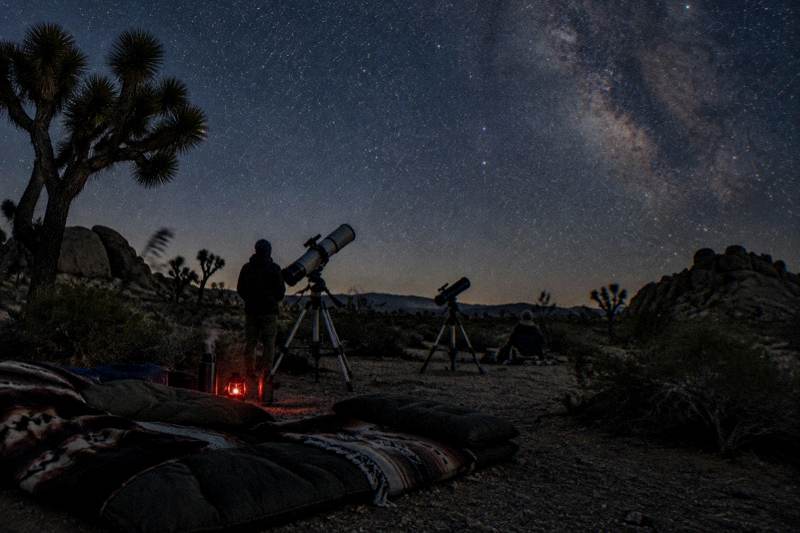
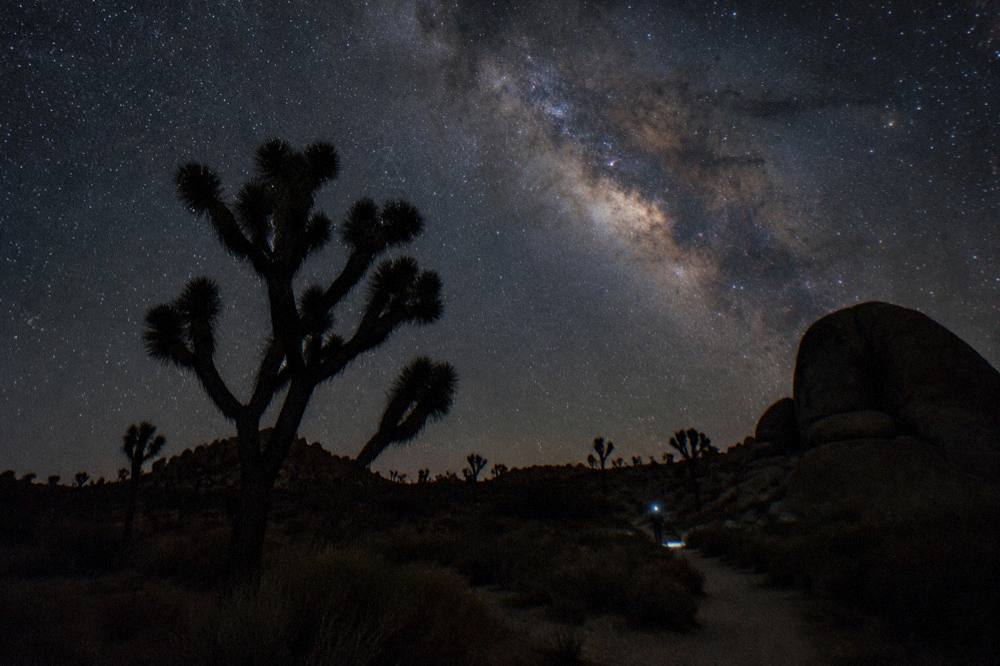
Yes, winter offers some of the year's best night skies over the park. The park is a designated International Dark Sky Park, and winter combines long hours of darkness, dry stable air and earlier session start times. The park's own stargazing guidance is to use red light only, since eyes need 20 to 30 minutes to adapt, and to avoid bright moonlight.
The park maintains four designated stargazing areas, the parking lots at Quail Springs, Hidden Valley, Cap Rock and Ryan Mountain, and asks visitors to stay within 20 ft of their vehicle while night viewing. Its stargazing page also identifies the darkest spots in the park: Cottonwood Campground, and the roadside pullouts along Pinto Basin Road between the Cholla Cactus Garden and Cottonwood, which see the least traffic. None of that requires a tour, and free dark-sky viewing at the designated areas is available to anyone who has paid entry or holds a pass, a point the site's free things to do in Joshua Tree guide covers alongside the entry-fee reality.
The guided winter options split into two kinds. The Starlight Hike, from $95 per person for 2 hours, includes access to a trailhead inside the park, so entry requirements apply. The two stargazing sessions run on private land just outside the park in Yucca Valley, which is worth stating plainly: no park entry and no park pass for those. The Professional Stargazing Night, from $200 per person, rated 4.9 across 179 reviews, supplies telescopes, an astronomer, astro-binoculars, blankets, loungers and hot drinks. James, a guest on that session, put it simply: "Everyone was very awesome. Very knowledgeable and very nice. We had a great time."
Which Tours Work Best In Joshua Tree In Winter?
Winter favors three kinds of tours: guided hikes, since mild afternoons are the best hiking conditions of the year; vehicle-based sightseeing, since heated transport handles the cold ends of the day; and night-sky tours, since darkness arrives early and the air is stable. Climbing and scrambling tours also work well, with grip notes for frosty morning rock.
The Half-Day Guided Hike, from $335 per person for 4 hours 30 minutes, rated 5.0 across 122 reviews, is arguably the season's best fit: a winter afternoon is the only time a long hike here avoids both heat and crowds. Cynthia, a guest on that hike, described her guide as someone who "knows the trails, and chose one that suited us perfectly." The Full-Day Guided Hike, from $409 per person, rated 5.0 across a small pool of 26 reviews, covers more ground for visitors who want a full winter daylight window.
| Tour | From Price | Duration | Winter Fit |
|---|---|---|---|
| Starlight Hike | $95 per person | 2 hours | Early darkness makes winter evenings easy |
| Sightseeing Adventure Tour | $99 per person | 4 to 5 hours | Heated van, mild afternoons |
| Backroads Hummer H2 Tour | $159 per person | 3 to 5 hours | Vehicle time suits cold mornings |
| Half-Day Guided Hike | $335 per person | 4 hours 30 minutes | Best hiking weather of the year |
| Professional Stargazing Night | $200 per person | 2 hours | Private land outside the park, no pass needed |
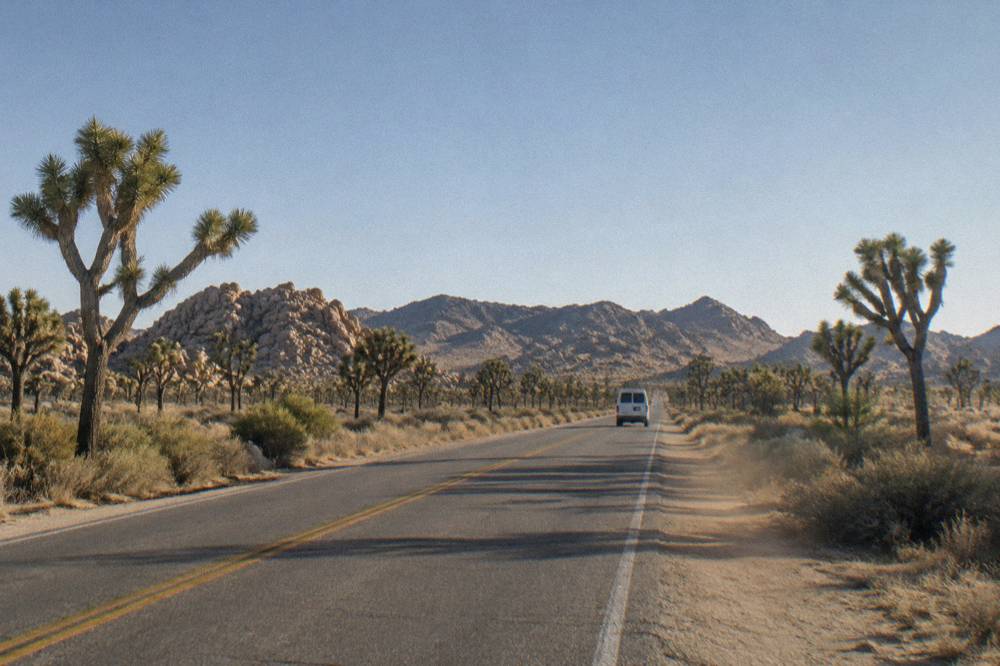
Vehicle tours earn their keep at the edges of the day. The Paved Road Van Tour, from $249 per person, rated 4.9 across 302 reviews, includes live commentary, water and snacks, and Maria, a guest, praised a guide "full of personal knowledge of the Palm Desert area and of our destination." The Offroad 4x4 Park Tour, from $249 per person, rated 4.9 across 471 reviews, adds the dirt-road country most visitors never see. Note that several of these roster lines exclude the park entrance fee, and the park publishes a $15 per person entrance fee for guided-tour guests unless they hold their own valid pass, a detail the site's entrance fee and passes guide breaks down fully.
Climbing tours deserve a winter mention too. Joshua Tree is a major winter climbing destination precisely because the rock is too hot to touch in summer. The Beginner Group Climbing session, from $240 per person, rated 5.0 across 71 reviews, supplies all safety and climbing equipment, and the site's Joshua Tree rock climbing tours hub covers the full range. The park permits climbing, requires a permit only for bolting, and requires guides to be permitted to work in the park, which is a fair question to ask of any operator before booking.
Is Winter A Quiet Time To Visit The Park?
Partly. The park publishes its busy season as October through May, so winter weekends still draw crowds, especially holiday periods. The quieter window is midweek winter: the same trails, the same pullouts, and noticeably fewer people than a spring break Saturday. No timed-entry or advance reservation is needed to enter at any time of year.
That last point is worth underlining because many parks have moved to reservation systems and visitors assume this one has too. The park states plainly that reservations are not required for entrance, that it is open 24 hours a day, 7 days a week, 365 days a year, and that if the fee booth is closed, visitors may be asked to show a pass or pay on the way out. The site's blog post on whether you need a reservation to enter Joshua Tree covers the details.
| Period | Typical Crowd Level | Notes |
|---|---|---|
| Winter midweek | Lowest of the busy season | Best combination of access and quiet |
| Winter weekends | Busy | Part of the Oct-May busy season the park publishes |
| Holiday weeks | Very busy | Plan trailhead arrival for early morning |
| Spring break, March to mid-April | Peak | The park's own listed crowded period |
| Summer midweek | Low crowds, extreme heat | Heat, not quiet, is the constraint |
Winter also changes the rhythm of a day. Sunrise-to-sunset sightseeing fits comfortably into the short daylight, and the long evening is free for the sky. A private group has another option: the Private Sightseeing Adventure, from $550 per group for 4 to 5 hours with pickup from Joshua Tree, rated 4.9 across 77 reviews, lets a family set its own pace between the morning cold and the evening stars.
What Are Winter Camping Conditions In The Park?
Winter is the heart of the camping season. Most of the park's roughly 500 sites require reservations through recreation.gov, bookable same day up to six months ahead, and the first-come, first-served sites fill early in the busy season. Nightly fees run $25 to $35 depending on the campground, and nights are near or below freezing.
The reservation campgrounds are Black Rock (99 sites, $35), Cottonwood (62 sites, $35), Indian Cove (101 sites, $35), Jumbo Rocks (124 sites, $30) and Ryan (31 sites, $30), with group sites from $55. The first-come, first-served options, at $25 per night and payment within an hour of setup, are Hidden Valley, White Tank and Belle. The park's campgrounds page carries the full breakdown, and recreation.gov handles the bookings.
| Campground | Sites | Nightly Fee | Booking |
|---|---|---|---|
| Black Rock | 99 | $35 | Reservation |
| Cottonwood | 62 | $35 | Reservation |
| Indian Cove | 101 | $35 | Reservation |
| Jumbo Rocks | 124 | $30 | Reservation |
| Ryan | 31 | $30 | Reservation |
| Hidden Valley, White Tank, Belle | varies | $25 | First-come, first-served |
For stargazers, the standout fact from the park's own stargazing guidance is that Cottonwood Campground has the darkest skies of the park's campgrounds. A winter night there, with temperatures near freezing, a proper sleeping bag and a red-light headlamp, is about as close to the desert night sky as a visitor can get without a telescope. Campfires in winter are allowed in designated fire rings, since the annual campfire ban covers June 15 to October 1 only, though the park can add restrictions at any time, so check its posted rules on arrival.
How Should You Plan A Full Winter Day In The Park?
Build the day around the temperature curve: a mid-morning start as the frost clears, the main hike or vehicle tour through the mild afternoon, and a night-sky session after the early sunset. Carry all water and food in, since the park has no services or water inside, and check the park's conditions page the morning of your visit.
A sample winter shape looks like this. Arrive at an entrance station mid-morning with a $30 private vehicle pass, valid 7 days, or an America the Beautiful or park annual pass. Spend the middle of the day on a guided hike or a sightseeing tour while the air sits near its 60 F daytime high. As the light flattens, drive out to Keys View or one of the pullouts, then return to a designated stargazing area after dark, or join an evening session such as the Starlight Hike, from $95 per person, which includes access to a trailhead inside the park.
The one figure worth repeating, because it surprises visitors who assumed tours bundle it: the park publishes a $15 per person entrance fee for guided-tour guests, or guests may use their own valid pass. Several roster lines state the entrance fee separately, and a few, such as the Backroads Hummer H2 Tour and the Small-Group Day Trip from LA, include general or park admission in the listing price. Reading the includes and excludes lines before booking is the single most useful minute a winter visitor can spend.
For visitors weighing the season against alternatives, the site's best time to visit Joshua Tree guide compares winter against spring and fall, and Joshua Tree Park Tours exists to help with exactly this kind of decision. The short version: winter wins on night skies, hiking comfort and midweek quiet, and concedes on long daylight and the possibility of snow disruption.
Common Questions About Visiting Joshua Tree In Winter
Is Joshua Tree National Park open in winter?
Yes. The park is open 24 hours a day, 7 days a week, 365 days a year, and no timed-entry or advance reservation is required to enter. If the fee booth is closed, visitors may be asked to show a pass or pay on the way out.
How cold does Joshua Tree get in winter?
The park publishes typical winter daytime highs around 60 F (15 C) with nights near or below freezing, and occasional snow at higher elevations. The elevation range runs from 536 ft to 5,814 ft, so higher areas like Black Rock run colder than the Pinto Basin.
Does it snow in Joshua Tree National Park?
Occasionally, mostly at the higher elevations in the western part of the park. Snow rarely closes the park, and it usually melts within hours to a day on exposed rock. Check the park's own conditions and alerts pages for current status.
Is winter a good time for stargazing in Joshua Tree?
Yes. The park is a designated International Dark Sky Park, and winter combines long hours of darkness with dry, stable air and early session start times. The park maintains four designated stargazing areas, and red light only is the rule, since eyes need 20 to 30 minutes to adapt.
What should I wear for a winter visit to Joshua Tree?
Layers: a warm hat, gloves, an insulating layer and a windproof shell over a base layer, plus sunscreen for the midday sun. Nights fall to freezing or below, so evening tours call for full winter kit even after a mild afternoon.
Do I need a park pass for a guided winter tour?
The park publishes a $15 per person entrance fee for guided-tour guests, or guests may use their own valid pass. Some tour listings include admission and some exclude it, so read the includes and excludes lines on the listing before booking.