Do I Need A Reservation To Enter Joshua Tree National Park?
No timed-entry reservation is needed to enter Joshua Tree National Park. Here is what you actually need at the gate, what does require a booking, and what it costs.
No timed-entry reservation stands between a visitor and the gate at Joshua Tree National Park. The park publishes this plainly: reservations are not required for entrance. What the gate does want is an entrance pass, bought in advance or at the booth, and beyond that the reservation picture splits sharply between entry, which is open, and campgrounds, which are mostly booked ahead on recreation.gov. That split is where most trip planning goes wrong.
This article lays out the whole entry logistics picture: what needs a reservation and what does not, what the pass costs, how payment works at the booth, and how guided-tour guests handle the fee. The park's own pages carry the details, and where a figure appears below it comes from those pages or from the tour listings on this site.
Do I Need A Reservation To Enter Joshua Tree National Park?
No. Joshua Tree National Park requires no timed-entry reservation, no day-use permit, and no advance booking of any kind to enter. The park is open 24 hours a day, 7 days a week, 365 days a year, and visitors simply buy or show an entrance pass. The park states this directly: reservations are not required for entrance, and there is no quota, lottery, or timed window at any of the three entrance stations.
That answer surprises visitors who have planned trips to other western parks in recent years, where timed entry has become common enough that "do I need a reservation" is a reasonable default assumption. Joshua Tree has never adopted that system. The park's first-time visitors page says it outright, and the permits and reservations page confirms the same thing for entry specifically.
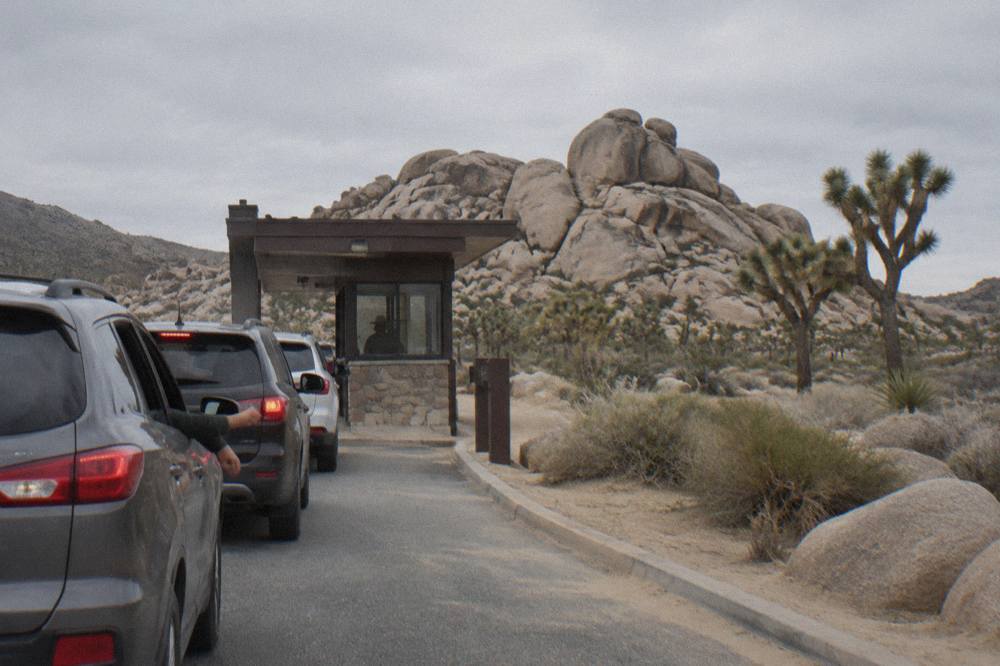
What the gate actually wants is a pass. A private vehicle pays $30 for a 7-day permit, a motorcycle pays $25, and a person arriving on foot or by bicycle pays $15, with children under 16 needing no pass at all. The pass can be bought at the North and West Entrance Stations, which take card only, at any of the park visitor centers, or online in advance. Anyone who has an America the Beautiful pass or the park's own $55 annual pass just shows it.
The distinction that matters for planning is entry versus overnight stays. Entry is open. Campgrounds are not. Most of the park's roughly 500 campsites are reservation-only, booked on recreation.gov anywhere from same day up to six months ahead, and the busy season runs October through May. A visitor who shows up on a spring weekend expecting to sleep in the park without a booking is the classic Joshua Tree planning failure, and it has nothing to do with the entrance gate.
For visitors who would rather not think about any of this, a guided option takes the logistics off the table. The trio below covers three ways to see the park with someone else handling the route and the timing.
Do I Need Tickets To Go To Joshua Tree?
No tickets exist for Joshua Tree National Park in the concert or theme-park sense. Entry works on an entrance pass, which is a receipt for a fee rather than a booked slot, and it cannot sell out. A visitor cannot be turned away at the gate because the park is full. The only things inside the park that resemble tickets are reserved campground bookings and the ranger-led Keys Ranch tour.
The word "tickets" trips people up because some parks have moved to systems where it functionally means a reservation. At Joshua Tree, the entrance pass is closer to a fishing license than a plane ticket: it grants access for a period, seven days in the standard case, and nobody is counting heads against a cap. Buy it at the booth, at a visitor center, at the California Welcome Center, or online at recreation.gov, print it or save it to a phone before arriving, and drive in.
One practical wrinkle is worth knowing. Connectivity inside the park is very limited, so a digital pass bought online needs to be printed or saved to the device before the trip, not pulled up at the gate. The park says so on its fees page, and it is the single most common small hiccup at the entrance stations.
The Keys Ranch tour is the one genuine exception to the no-reservation rule for day visits. The ranger-led tour of the historic ranch requires a reservation and costs $10 to $20 per visitor. It is the only ranger program in the park that needs a booking; all other ranger programs are free and need no reservation at all. Visitors can check schedules on park bulletin boards or at the visitor centers.
For a day visitor who wants structure without doing the driving, a guided van or small-group tour covers the same ground. The Sightseeing Adventure Tour runs 4 to 5 hours from the Joshua Tree area from $99 per person, rated 4.9 across 178 reviews, and it includes transportation and a guide. The Paved Road Van Tour runs 5 hours from the Palm Desert area from $249 per person, rated 4.9 across 302 reviews. The Sightseeing Adventure Tour meets you outside the park, but you still owe the $15 per person entrance fee yourself.
Is Joshua Tree Entrance Cash Only?
No, the opposite is closer to the truth. The North and West Entrance Stations take card only, according to the park's fees page, and passes bought at visitor centers and online are handled the same modern way. Cash is not the required method anywhere in the entry process. Visitors buying online at recreation.gov should print the pass or save it to a phone before arriving, because connectivity inside the park is very limited.
The card-only detail matters because desert travelers often arrive with cash specifically for rural fees and assume plastic is the risky option. At Joshua Tree the entrance stations have gone the other direction. The park lists its pass purchase points as the Joshua Tree Visitor Center, the Joshua Tree National Park Visitor Center in Twentynine Palms, Cottonwood Visitor Center, the North and West Entrance Stations, the California Welcome Center, Black Rock Nature Center, the park association's West Park Store, and online at recreation.gov.
The digital pass caveat deserves a second mention because it is the failure mode. A pass bought online that lives only in an email inbox, unopened and unloaded, is a problem at a gate with no signal. The park's guidance is to print it or save it to the phone before arriving. That is a planning step, not a reservation, but it plays the same role in a smooth arrival.
What about paying on the way out? The park addresses that too. The fee booth is sometimes closed, and the park is open around the clock, so visitors driving in when the booth is unattended may be asked to show a pass or pay on the way out. Night arrivals for stargazing, which the park actively encourages at its four designated stargazing areas, work exactly this way.
How Much Does It Cost To Get Into Joshua Tree National Park?
A private vehicle pays $30 for a 7-day pass covering everyone in the car, a motorcycle pays $25 for 7 days, and a person on foot or bicycle pays $15, with children under 16 free. The park's own annual pass is $55 for 12 months. America the Beautiful passes are honored, including the $80 Resident Annual, the $20 Senior Annual and $80 Senior Lifetime for visitors 62 and over, and free Military and Access passes.
The fee structure is per-vehicle or per-person, never both at once, and the 7-day window is generous for a park most visitors see in one or two days. A car of four people splits that $30 four ways, which is why the per-person math favors arriving by vehicle. The motorcycle pass covers up to two private motorcycles with up to four total passengers.
The fee-free days are worth a calendar check for anyone flexible on dates. The park's published list for the year includes February 16, May 25, June 14, July 3 to 5, August 25, September 17, October 27, and November 11, with free admission applying to US citizens and residents. Those days also draw crowds, and the park flags holidays, weekends from October through May, and spring break as its busiest periods, so a free day can cost time in a line.
Here is the fee picture in one place:
| Entry type | Price | What it covers |
|---|---|---|
| Private vehicle | $30 | 7 days, all passengers of one non-commercial vehicle |
| Motorcycle | $25 | 7 days, up to 2 motorcycles, up to 4 passengers |
| On foot or bicycle | $15 | 7 days, age 16 and up; children under 16 free |
| Park annual pass | $55 | 12 months from purchase month |
| America the Beautiful passes | Varies | Entrance covered, from free Access and Military to $80 Resident Annual |
A budget note for comparison shoppers: the cheapest guided product on this site, the Self-Driving Audio Tour at from $16.99 per person, costs less than a per-person entry, but it does not include the entrance fee, parking, or a car. The cheapest guided product that includes a guide in the vehicle is the Sightseeing Adventure Tour at from $99 per person. Entry fees sit on top of most tours, with a few exceptions, which is the next section's subject.
Can You Enter Joshua Tree For Free?
Not on a normal day, no. The park entrance is not free, and every visitor age 16 and up needs a pass or pays the fee. The genuine free routes are the park's published fee-free days, free ranger programs that need no reservation once you are inside, free trails once entry is paid, and free dark-sky viewing at the four designated stargazing areas for anyone who has paid entry or holds a pass.
The question gets asked because plenty of public land in the California desert is genuinely free to enter, and visitors assume a national park works the same way. It does not. The $30 vehicle fee or $15 per-person fee applies to everyone arriving without a pass, and there is no free entrance window, side gate, or walk-in loophole. The rest of the planning pages sit on Joshua Tree Park Tours.
What is free, honestly and completely:
| Genuinely free | The catch |
|---|---|
| Fee-free days, eight published dates per year | US citizens and residents only; crowds are heavy |
| Ranger programs | Entry fee still applies to get to them |
| All trails once inside | Entry fee or pass required |
| Stargazing at the four designated areas | Same, and the park asks visitors to stay within 20 ft of their vehicle |
| Children under 16 on foot or bicycle | Adults with them still pay |
The fee-free days are the closest thing to a free entrance, and they are a real planning lever. The trade is crowds: everyone else who read the same list is there too, and the park already flags weekends from October through May as busy. For a visitor whose priority is solitude over savings, a paid Tuesday in the same season beats a free Saturday.
A deeper look at the no-cost options, including how the fee-free calendar works, sits in the site's guide to free things to do in Joshua Tree. The short version: the park gives away a great deal once you are through the gate, and nothing at the gate itself.
What Needs A Reservation Inside The Park?
Campgrounds and one ranger tour. Most of the park's roughly 500 campsites are reservation-only on recreation.gov, bookable same day up to six months ahead, and the ranger-led Keys Ranch tour requires a booking at $10 to $20 per visitor. Everything else, including entry, all trails, all roads, and all other ranger programs, needs no reservation of any kind.
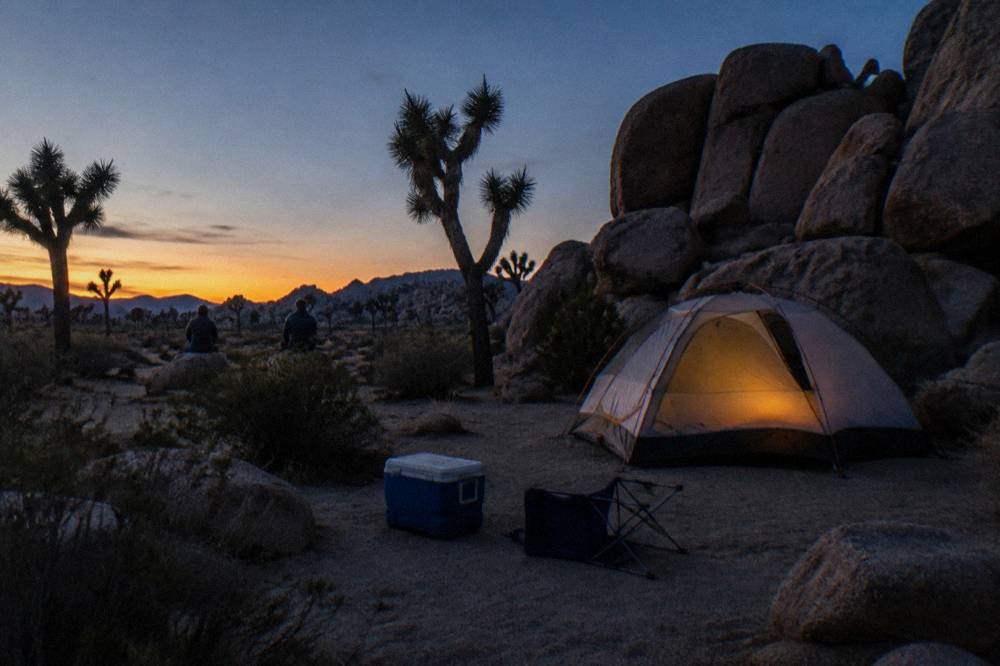
The campground system is where Joshua Tree's real reservation pressure lives. The park's campground page divides the sites into two groups. The reservation campgrounds, all booked through recreation.gov, are Black Rock with 99 sites at $35 per night, Cottonwood with 62 sites at $35, Indian Cove with 101 sites at $35, Jumbo Rocks with 124 sites at $30, Ryan with 31 sites at $30, and the group sites including Sheep Pass from $55. The first-come, first-served campgrounds are Hidden Valley, White Tank, and Belle, each $25 per night, paid within one hour of setup, and they fill early in the busy season from October through May.
Two seasonal rules shape the camping calendar and are worth knowing before booking. The park runs an annual campfire ban from June 15 to October 1, when campfires and open flames are prohibited and gas stoves are allowed. And summer brings reduced campground operations, with some sites and backcountry zones closing for the hot months, which the park publishes as standing seasonal rules on its summer restrictions page. Anyone booking a summer trip should check the park's own alerts and conditions pages for what is open, because this article, like every evergreen page, does not carry live status.
Here is the full reservation picture in one table:
| Activity | Reservation needed? | How it works |
|---|---|---|
| Park entry | No | Buy or show a pass at the gate, a visitor center, or online |
| Most campgrounds | Yes | recreation.gov, same day up to 6 months ahead |
| Hidden Valley, White Tank, Belle campgrounds | No | First-come, first-served, $25 paid within an hour of setup |
| Keys Ranch ranger tour | Yes | $10 to $20 per visitor, reserved ahead |
| Other ranger programs | No | Free, schedules at visitor centers and bulletin boards |
| Trails, roads, stargazing areas | No | Open with a valid pass, park open 24 hours |
The pattern to take away: day use is open, overnight use is booked. A visitor planning a day trip, including a sunrise or stargazing visit at odd hours, faces no reservation question at all. A visitor planning to sleep inside the park boundaries faces a competitive booking system six months deep in high season. The site's guide to the best time to visit Joshua Tree covers how those two calendars interact.
Do Guided Tours Handle The Entrance Fee?
Sometimes, and the roster is explicit about which. The park's rule for guided-tour guests is a $15 per person entrance fee or the guest's own valid pass. Some tours include park admission in the listed price, such as the Backroads Hummer H2 Tour and the Small-Group Day Trip from LA, while most others list the entrance fee as an exclusion the guest pays separately at the gate or in advance.
The $15 per person figure is the park's published commercial tour rule, stated on its commercial use authorization page, and it is what a guided-tour guest owes if the tour does not cover admission. Guests with an America the Beautiful pass or the park annual pass can use their own pass instead, which is a genuine saving for pass holders who booked a tour that excludes entry.
Reading the fine print on this site's own roster shows the split clearly. The Backroads Hummer H2 Tour, from $159 per person and rated 4.7 across 595 reviews, lists General Admission in its inclusions. The Open-Air Hummer Adventure, from $179 per person, does the same. The Small-Group Day Trip from LA, from $219 per person, includes Joshua Tree National Park admission outright, along with lunch and snacks. On the other side, the Offroad 4x4 Park Tour, from $249 per person and rated 4.9 across 471 reviews, lists the park entrance fee as an exclusion, as do the guided hikes and the climbing tours.
The practical advice: read the includes and excludes lines before booking anything, and budget the $15 per person unless the listing says otherwise. A guide who holds a park permit is running a permitted operation, and the park requires guides to be permitted to work inside its boundaries, which is a fair question to ask any operator before booking.
The Local Expert Park Tour is the article's featured example of a low-friction guided day. It runs 3 hours from the Yucca Valley area from $159 per person, with snacks, WiFi, and an air-conditioned vehicle included, and the park's $15 entry fee per person paid at the booth unless you hold a pass. The review pool is small, two reviews, so no rating claim is made here, but one guest, Janice, described the operator as considerate and said the tour covered a lot of local history, culture, geology, and foliage.
For a fuller comparison of guide-led options across every format, from short local-expert drives to half-day hikes and full-day van tours, the roster on this site lays out the whole range, and the deeper question of whether a guide beats driving yourself is covered in the site's guided tours versus driving yourself comparison.
What If The Fee Booth Is Closed?
Drive in anyway. The park is open 24 hours a day, every day of the year, and the park's own guidance is that visitors are welcome to drive in and out at any time, paying or showing a pass on the way out if the booth was unattended on arrival. This is not a loophole; it is the published system, and it is how night visits for stargazing are meant to work.
The 24-hour policy pairs with the park's Dark Sky Park status. Joshua Tree holds an International Dark Sky Park designation, and the park maintains four designated stargazing areas, the parking lots at Quail Springs, Hidden Valley, Cap Rock, and Ryan Mountain, where night visitors are asked to stay awake and within 20 ft of their vehicle. Arriving after the booth closes is the normal way to use them, and settling up on exit is the normal way to pay. The park's own stargazing page carries the details.
Night visitors should follow the park's etiquette rules, which are published and simple: red light only, because eyes need 20 to 30 minutes to adapt to darkness, no bright white flashlights or phone screens, and layer up, because desert nights drop sharply. The park also notes that bright moonlight reduces the stars you can see, so a moonless night is the better bet for the Milky Way. The site's Joshua Tree stargazing guide covers all of this in depth.
For visitors who want the night sky with equipment and an astronomer rather than a parking lot and a blanket, two bookable options run on private land just outside the park in Yucca Valley, which is worth stating plainly: they are not inside the national park and need no park pass. The Professional Stargazing Night runs 2 hours from $200 per person, rated 4.9 across 179 reviews, with telescopes, binoculars, blankets, and hot drinks included. The Stargazing Experience runs 2 hours from $189 per person from the Joshua Tree area, with a small review pool of 11, so no rating claim is made. Inside the park, the Starlight Hike runs 2 hours from $95 per person and includes trailhead access within the park, which means the entry pass question applies to it.
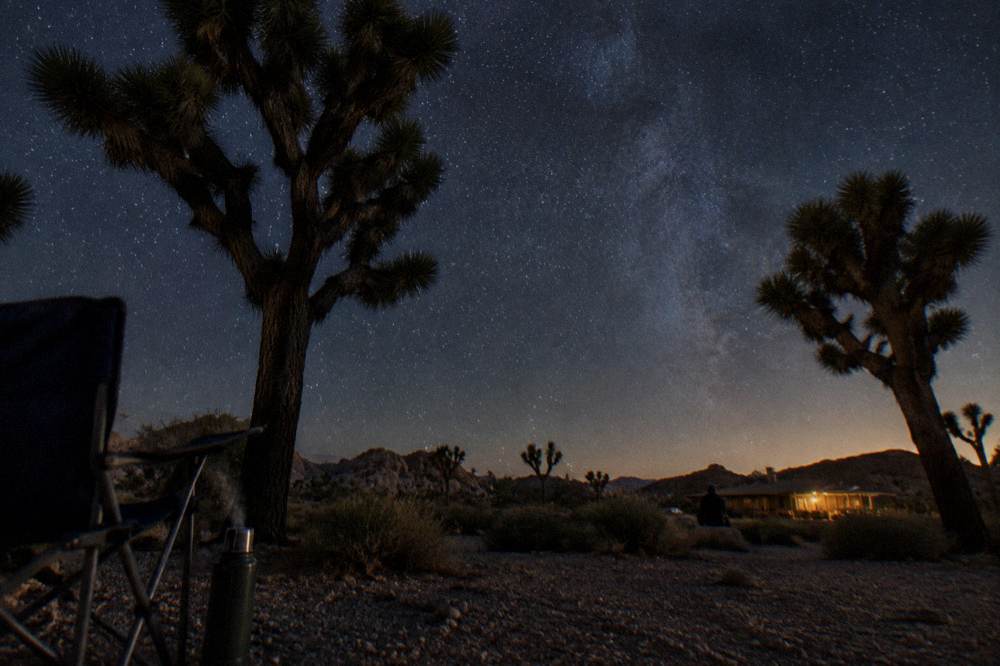
One caution for night drivers: roads inside the park are unlit, wildlife is active after dark, and cell reception is very limited. The park's conditions guidance applies at all hours. Check the park's own alerts and conditions pages before any night trip, since trail and road status can change and this article does not carry live status.
What Should You Sort Out Before You Arrive?
Three things, and none of them is an entry reservation. First, a pass: buy it online and save or print it, or plan to pay by card at the booth. Second, a campground booking on recreation.gov if you are staying overnight, made up to six months ahead in high season. Third, a Keys Ranch tour reservation if that ranger-led visit is on your list. Everything else, from trails to stargazing areas, is open with a pass in hand.
The pass step is the one worth doing from home. Buying at recreation.gov and saving the pass to a phone removes the booth line entirely, and the card-only entrance stations mean nobody should be counting cash on the drive in. The park sells passes at visitor centers too, and the Joshua Tree Visitor Center on Park Boulevard in the town of Joshua Tree opens at 7:30 in the morning, the earliest of the bunch, which suits a sunrise arrival.
Timing shapes the whole day more than any reservation does. The park flags holidays, weekends from October through May, and spring break as its crowded periods, and the entrance lines on those mornings are the park's worst logistics moment even though no reservation is required. An early start, a weekday, or an entrance on the quieter south side can matter more than any booking.
For visitors who would rather hand the whole question to someone else, a guided day does exactly that. The Sightseeing Adventure Tour meets in the Joshua Tree area and covers 4 to 5 hours from $99 per person, rated 4.9 across 178 reviews, with a guide who handles the route and the stops. One guest, Jack, described the guide as informative, helpful, patient, and friendly, noting that he texted the pickup details ahead of time and brought water and granola bars for the van.
The bottom line on the original question is short. No reservation is needed to enter Joshua Tree National Park, the gate wants a pass and nothing else, and the park never closes. The reservation machinery that does exist, campgrounds and one ranch tour, belongs to overnight and specialty planning, not to the drive through the gate. Sort the pass, book the campsite if you are sleeping in the park, and go.
Common Questions About Joshua Tree Entry Reservations
Do I Need A Reservation To Enter Joshua Tree?
No. The park requires no timed-entry reservation or advance booking of any kind to enter. It is open 24 hours a day, 365 days a year, and visitors simply buy or show an entrance pass. Reservations are only needed for most campgrounds and the Keys Ranch ranger tour.
Do I Need Tickets To Go To Joshua Tree?
No tickets exist for park entry. The entrance pass is a fee receipt, not a booked slot, and it cannot sell out. The only ticketed items inside the park are reserved campground bookings and the Keys Ranch tour at $10 to $20 per visitor.
Is Joshua Tree Entrance Cash Only?
No. The North and West Entrance Stations take card only. Passes can be bought with a card at entrance stations and visitor centers or online at recreation.gov. Digital passes should be printed or saved to a phone before arriving, since connectivity in the park is very limited.
How Much Does It Cost To Get Into Joshua Tree National Park?
A private vehicle pays $30 for 7 days, a motorcycle pays $25, and entry on foot or bicycle is $15 per person with children under 16 free. The park's annual pass is $55, and America the Beautiful passes are honored, including free Military and Access passes.
Can You Enter Joshua Tree For Free?
Not on a normal day. Entry requires a pass or fee for everyone 16 and up. The free routes are the park's published fee-free days, free ranger programs once inside, and free use of trails and the designated stargazing areas after paying entry or holding a pass.