What Is The Most Beautiful Hike In Joshua Tree?
One hike has to anchor your trip. This guide picks the most beautiful hike in Joshua Tree National Park, then breaks the verdict down by traveller type, season and scenery.
What Is The Most Beautiful Hike In Joshua Tree?
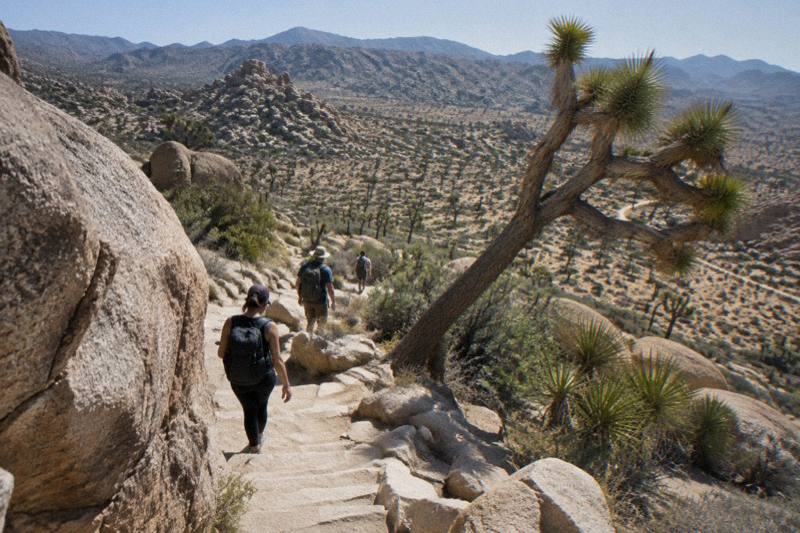
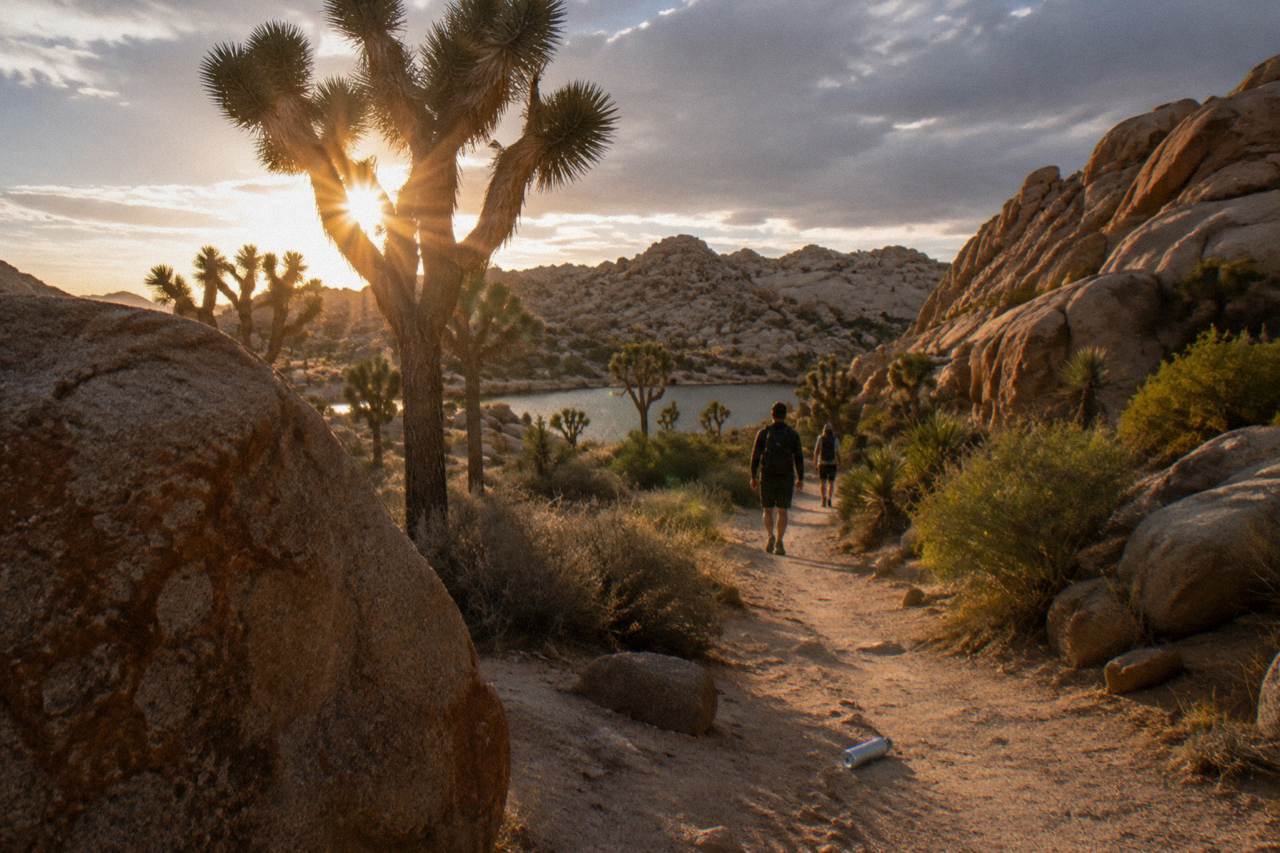
The Hidden Valley area is the most beautiful single hike in Joshua Tree National Park for most visitors: a self-contained ring of giant granite boulders, dense Joshua trees and shaded passages that delivers the park's signature scenery in a compact loop. It is the one trail where every element that makes the park famous, the trees, the rock, the light, appears together without a long approach. If this gentle loop leaves you wanting a real challenge, the ranked guide to Joshua Tree's hardest hikes by effort covers the scrambles and long treks that demand far more.
That verdict needs a caveat, and it is an honest one: beauty in this park is unusually tied to time of day and temperature. Hidden Valley in the soft light of early morning or late afternoon is a different place from Hidden Valley under a flat midday sun. The same holds for every candidate trail here. The park's own guidance is blunt about summer heat, with daytime highs typically around 100 F (38 C) or more from June through September, and the park's conditions page tells hikers to check forecasts and carry ample water before setting out.
Hidden Valley wins the overall pick because it compresses the most variety into the shortest effort. The valley sits inside a ring of monzogranite boulders that blocks the wind and holds a denser stand of Joshua trees than almost anywhere else in the park. Cattle rustlers reportedly used it as a hiding spot, and the enclosed feel is real: you step through a gap in the rocks and the outside desert disappears. For photographers, the boulder shapes give foreground interest in every direction. For first-timers, it is the fastest way to understand what the park is.
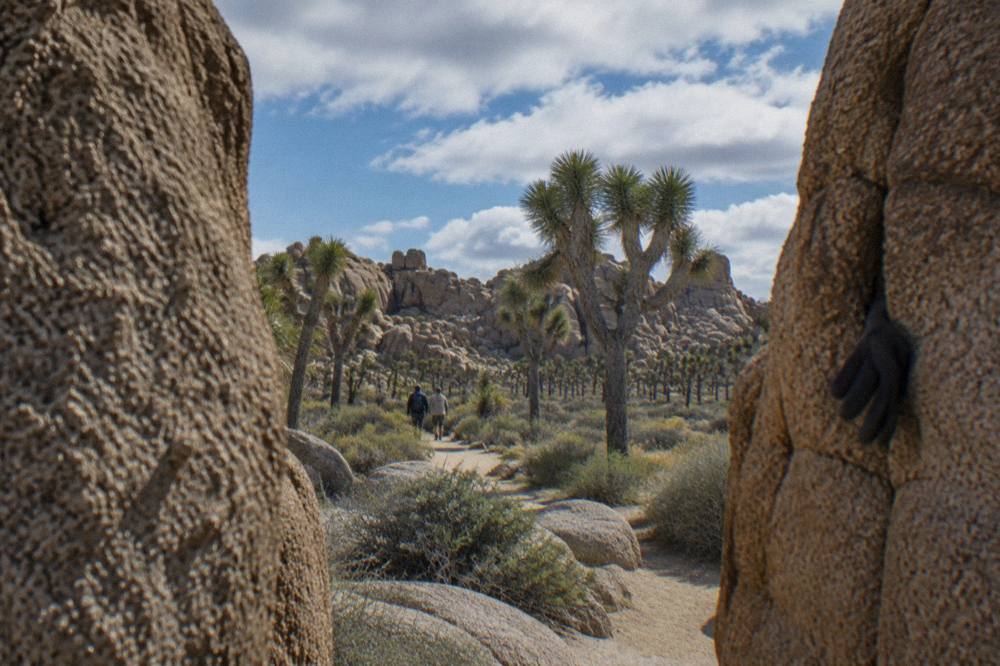
The honest competition is strong, and later sections break it down properly. Ryan Mountain gives the best big view. Barker Dam adds water and petroglyphs. The Cholla Cactus Garden, reached along Pinto Basin Road, is the best sunrise stop in the park even though the walk itself is short. If you want a deeper dive into all the options, the best trails in the park guide covers the full list.
There is also a case for not choosing alone. A guide who works these trails weekly will match a route to your fitness, the season and the light, which matters when the difference between a beautiful hike and a hot slog is a two-hour head start. The trio below spans that spectrum: a full-day guided hike, a half-day version, and a sightseeing tour for hikers who want the scenery without the mileage.
What Is The Best Hike In Joshua Tree?
"Best" depends on who is hiking. Hidden Valley is the best first hike, Ryan Mountain is the best view hike, Barker Dam is the best easy walk with variety, and the 49 Palms Oasis Trail is the best destination hike when it is open. For guided hiking, the Half-Day Guided Hike, rated 5.0 across 122 reviews, is the strongest-reviewed walking product on this site's roster.
The single most useful way to answer the question is by traveller type, because the park's trails reward different people differently. A photographer chasing golden light on boulders wants a different trail than a family with children or a heat-averse visitor in July. The table below gives the verdict for each.
| Traveller type | Best pick | Why |
|---|---|---|
| First-timer | Hidden Valley loop | Signature trees and boulders together, short and easy to follow |
| Photographer | Hidden Valley or Cap Rock area | Dense boulder foregrounds, strong morning and late light |
| View chaser | Ryan Mountain | The park's best panorama from a high summit |
| Sunset chaser | Cap Rock, then Keys View by car | Rocks glow at Cap Rock, then the sun drops over the desert from Keys View |
| Heat-averse summer visitor | Early Barker Dam, or a guided start | Shorter exposure, guide times the shade and the heat |
| Family with kids | Barker Dam | Variety, shade stops and a "treasure" at the end |
| Long-haul hiker | 49 Palms Oasis Trail (seasonal) | A real fan-palm oasis reward, closed in summer heat |
Two of those verdicts deserve a note. Ryan Mountain is the park's classic summit hike, and the reward is a sweeping panorama over the whole park, from the high Mojave side to the Colorado Desert below. It is also one of the designated stargazing parking areas, which the park's stargazing page lists alongside Quail Springs, Hidden Valley and Cap Rock. A sunset summit followed by staying for the stars is one of the best single evenings the park offers.
The 49 Palms Oasis Trail is the wildcard. It ends at a genuine fan-palm oasis, one of the few places in the park with standing water and deep shade, and that makes it the most beautiful destination even though the terrain along the way is scrubby. The catch: the park closes it every year from June 1 to September 30 because of heat, a standing seasonal rule published on the park's summer restrictions page. Time a spring or fall trip around it and you get a payoff most visitors never see.
For hikers who would rather have someone else make these calls, the guided options are worth the money precisely because route selection is the hard part. The Half-Day Guided Hike runs about 4 hours 30 minutes from the Joshua Tree area, includes a daypack and bottled water, and carries a 5.0 rating across 122 reviews, a large enough pool to take seriously (see Days In Joshua Tree). Cynthia, a guest on that hike, described her guide as someone who "knows the trails, and chose one that suited us perfectly."
What Is The Most Scenic Part Of Joshua Tree National Park?
The most scenic part of the park is the central corridor along Park Boulevard between Hidden Valley and Cap Rock, where the densest Joshua tree stands sit directly against the biggest boulder formations. Keys View adds the best overlook in the park, and the Cholla Cactus Garden on Pinto Basin Road is the best sunrise scenery, but the Hidden Valley to Cap Rock stretch is the scenic core.
Scenery in this park is not evenly spread. The western half, around Black Rock and Yucca Valley, is higher, cooler and greener, with big trees but fewer dramatic rocks. The central corridor is where the postcard images come from. The eastern side, down Pinto Basin Road toward Cottonwood, empties into the Colorado Desert, which trades trees for ocotillo, cholla and wide-open distance. Different beauty, different light.
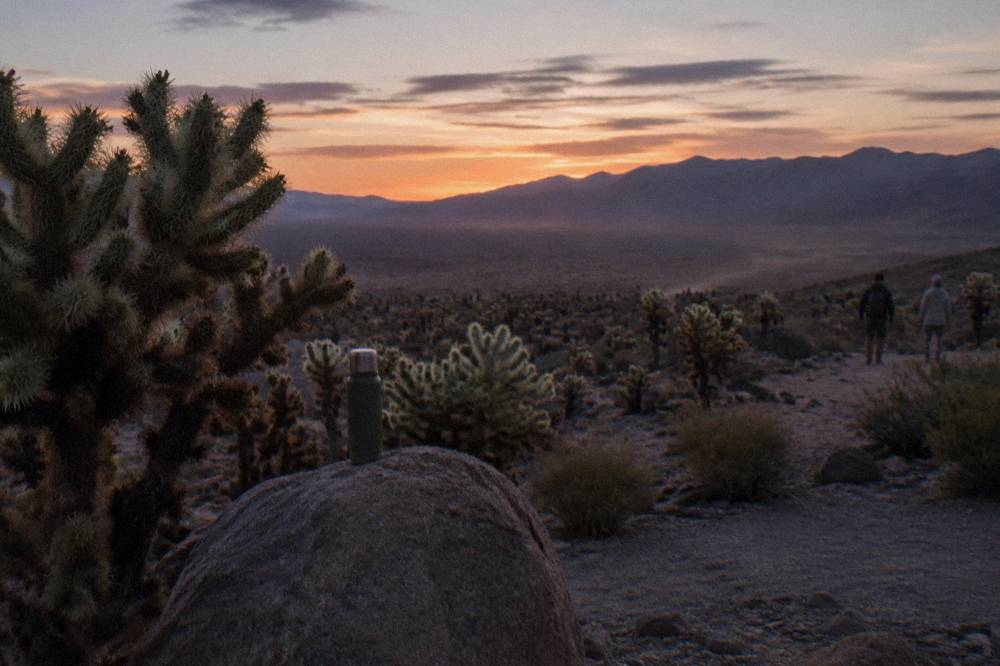
The practical way to use that geography is to match the scenic zone to the hour. Boulders and trees photograph best when the sun is low enough to rake across the rock, so Hidden Valley, Skull Rock and Cap Rock belong to early morning and late afternoon. Keys View faces west over the Coachella Valley and belongs to sunset. The Cholla Cactus Garden is famous for sunrise, when the needles of the teddy bear cholla back-light and glow; it is also a place to keep a respectful distance, because the spines attach to anything that brushes them.
Elevation plays a quiet role in all of this. The park runs from 536 ft (163 m) in the east to 5,814 ft (1,773 m) at Quail Mountain, and the temperature difference between the low and high end is real. A hot afternoon in the cholla garden can be a mild one at Black Rock. Hikers chasing the most beautiful conditions rather than the most beautiful trail can use that spread deliberately, starting low at sunrise and finishing high, or the reverse.
What Should I Not Miss In Joshua Tree?
Do not miss Hidden Valley, Skull Rock, Keys View and the Cholla Cactus Garden: those four deliver the park's essential scenery between them. Add Barker Dam if you have time for one more walk, and stay after dark at a designated stargazing area, because the park is an International Dark Sky Park and the night sky is part of the visit, not an afterthought.
Skull Rock needs no hike at all; it sits beside Park Boulevard and looks exactly like its name, a granite skull formed by millennia of water working the hollows. It is mobbed at midday and quiet at dawn, like everything here. Keys View is a short drive to an overlook that faces the Coachella Valley, the San Andreas Fault line and, on clear days, Mexico's Signal Mountain. Cap Rock is the quiet one, a split boulder with a gentle nature trail around it, and one of the four stargazing lots.
Barker Dam is the best "one more" walk. The dam itself is a historic stock-watering structure, and the loop around it passes petroglyphs, a small wetland when water is present, and a good mix of trees and rock. It shares the central corridor's scenery with less of a crowd than Hidden Valley.
The after-dark half of the answer deserves equal weight. The park holds an International Dark Sky Park designation, and the four designated stargazing areas, Quail Springs, Hidden Valley, Cap Rock and Ryan Mountain, are set up for it: stay within 20 ft (6 m) of your vehicle, use red light only, and give your eyes 20 to 30 minutes to adjust. The darkest skies in the park are around Cottonwood Campground and along Pinto Basin Road between the Cholla Cactus Garden and Cottonwood, where traffic is lightest. Visitors who want the full night-sky picture can read the park stargazing guide for moon timing and area details.
When Is The Wrong Time To Hike?
The wrong time to hike is midday in summer, when daytime highs typically run around 100 F (38 C) or more, and any afternoon in a monsoon storm, when flash flooding can sweep through washes. The park also closes certain areas by standing seasonal rule: the 49 Palms Oasis Trail shuts June 1 to September 30, and campfires are banned park-wide June 15 to October 1.
Those seasonal rules are published annually and apply every year, so they belong in any hike-planning answer. The heat guidance is equally standing advice: check the forecast, carry more water than feels reasonable, and avoid midday exertion in summer. Nights offer no real rescue in that season, since summer lows sit near 75 F (24 C). Spring and fall are the sweet spot, with typical highs of 70 to 85 F (21 to 29 C) and lows around 50 F (10 C), and winter brings highs around 60 F (15 C), near-freezing nights and occasional snow at higher elevations, which is its own kind of beautiful on the boulders.
| Season | Typical conditions | Best hiking plan |
|---|---|---|
| Spring | Highs 70-85 F (21-29 C), busiest season | Full days possible; book lodging and tours early |
| Summer | Highs near 100 F (38 C) or more | Start at or before dawn, finish by mid-morning |
| Fall | Highs 70-85 F (21-29 C), crowds return | Best all-round season, including 49 Palms Oasis |
| Winter | Highs around 60 F (15 C), freezing nights | Longest comfortable mileage; carry layers |
The crowd factor matters as much as the thermometer. The park publishes that its busy stretch runs from holidays and weekends in October through May, with spring break from March to mid-April the peak of the peak. A beautiful trail shared with a parking lot's worth of people is less beautiful, so the two levers that preserve the experience are timing and trail choice: dawn starts, weekdays, and the less famous walks like Cap Rock or the Barker Dam loop when Hidden Valley is full.
Heat-averse visitors do not have to give up on the park in the warmer months. The sightseeing options handle the heat problem structurally, with air-conditioned vehicles between stops and guides who time the short walks for shade. The Sightseeing Adventure Tour runs 4 to 5 hours from the Joshua Tree area, is rated 4.9 across 178 reviews, and includes private transportation, water and a guide, with the park's entrance fee either covered by a pass that admits four people or paid at the gate. Jack, a guest on that tour, noted the guide "had knowledge of the park and the terrain, flora and fauna and geographic features."
Does A Guide Change Which Hike You Pick?
Yes, materially. A permitted local guide can tailor the route to your legs, the season and the day's light, and can open parts of the park that first-time visitors rarely find alone. The trade-off is cost and schedule: guided hikes on this site's roster run from $335 per person for a half day to $409 per person for a full day, versus free trails once you have paid park entry. Whichever way you go, the Joshua Tree packing and clothing guide explains what to bring for each season and what the guided tours already cover.
The half-day and full-day guided hikes on the roster are both based in the Joshua Tree area, both include a daypack and bottled water, and neither includes park entry, which follows the park's published rule for guided-tour guests: a $15 per person entrance fee or your own valid pass. The half-day carries a 5.0 rating across 122 reviews. The full-day runs about 7 hours and has 26 reviews so far, a small pool, but the pattern in them is consistent: guides personalize the route. Bailey, a guest on the full-day hike, said the guide "provided us with an exceptional tour of an area of the park we would not have experienced without her expertise." Since the tours hand you a daypack and water but leave the rest to you, our guide to what to wear and pack for Joshua Tree walks through the layers, sun protection, and red lights worth bringing in every season.
That last phrase is the real argument. The park has no trail mileages worth trusting from memory, no signage-rich trailhead culture and very limited cell reception, and route-finding mistakes cost water and daylight. A guide also handles the seasonal judgment calls this article keeps circling: when the 49 Palms Oasis Trail is worth the heat, where the shade falls at 10 a.m., which pullout has the light at sunset. For a one-trip visitor anchoring the whole day around a single beautiful hike, that judgment is the product.
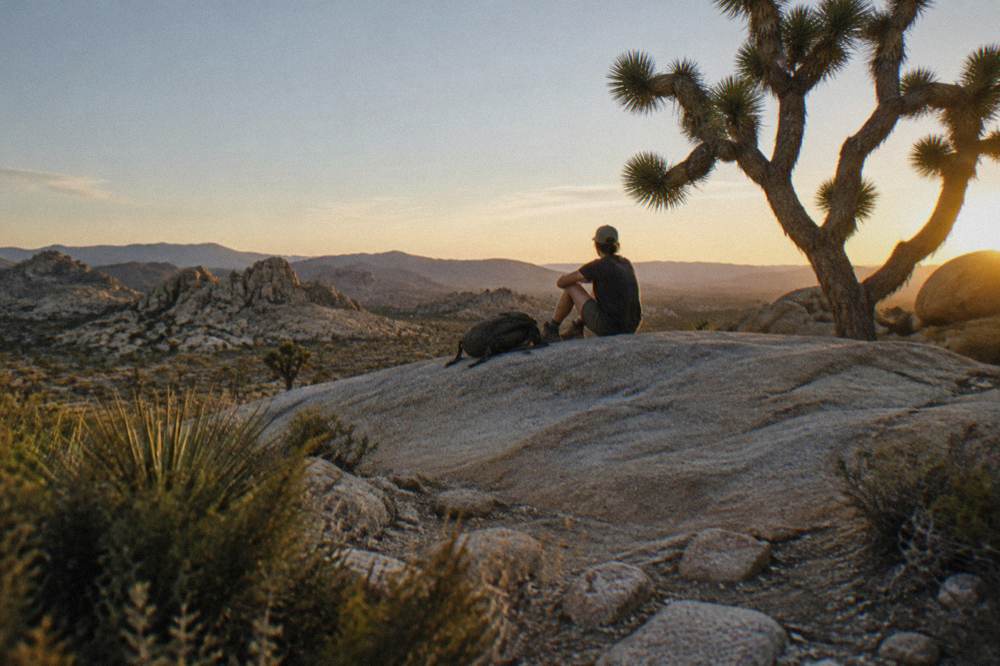
The middle path is the sightseeing-plus-short-walks format, which this site covers in depth through Joshua Tree guided hikes and park tours. It trades depth for coverage: you see Hidden Valley, Skull Rock, Keys View and the cholla garden in one loop, with short walks at each. Hikers who fall for one spot can come back on their own the next morning, pass in pocket, and give it the time it deserves. That two-day rhythm, guided overview first, self-guided deep dive second, is how a lot of photographers actually work the park.
For a decision this personal, the honest summary on Joshua Tree Park Tours is this: pick Hidden Valley if you want the sure thing, Ryan Mountain if you want the view, 49 Palms if your trip lands in spring or fall, and a guide if the choice itself is what is stressing you out. The full-day option below is the one to check first.
What Not To Miss In Joshua Tree National Park?
Beyond the trails, do not miss sunset at Keys View, sunrise at the Cholla Cactus Garden, and any clear night at a designated stargazing area. The Oasis of Mara near the Twentynine Palms entrance, a short paved walk to a spring-fed palm oasis, is the easy add-on most itineraries skip, and it sits steps from a visitor center.
The order of operations for a single perfect day is worth writing down. Start before sunrise at the Cholla Cactus Garden, when the spines glow and the Pinto Basin is still cool. Drive back up to the central corridor as the light hardens and walk Hidden Valley or Barker Dam in late morning. Spend the early afternoon out of the sun, then hit Skull Rock and Cap Rock as the angle softens. Finish at Keys View for sunset, and if the moon is not up, drive back to one of the stargazing lots and stay an hour.
The moon matters more than most first-time visitors realize. The park's own stargazing guidance tells visitors to avoid bright moonlight, which washes out the stars, and to plan around it. That single planning decision, new moon versus full, changes a Joshua Tree night more than almost any gear choice. It also explains why the park's stargazing lots fill on the dark weekends of October through spring.
Practical rules shape the day too. Drones are prohibited, pets are not allowed on trails or in the backcountry even carried, and there is no water, gas or food for sale anywhere inside the park boundaries, so everything comes in with you. The park is open 24 hours a day, year-round, and no reservation or timed entry is needed to get in, which is what makes the sunrise and stargazing bookends possible at all.
Common Questions About The Most Beautiful Hike In Joshua Tree
What Is The Most Beautiful Hike In Joshua Tree?
The Hidden Valley loop is the pick for most visitors: dense Joshua trees, giant granite boulders and shaded passages in one compact walk. Ryan Mountain is the best view hike and 49 Palms Oasis the best destination hike when it is open in spring and fall.
What Is The Best Hike In Joshua Tree?
It depends on the hiker. Hidden Valley suits first-timers, Ryan Mountain suits view chasers, Barker Dam suits families, and the Half-Day Guided Hike, rated 5.0 across 122 reviews, is the strongest-reviewed guided walk on this site's roster.
When Should I Not Hike In Joshua Tree?
Avoid midday exertion in summer, when highs typically run around 100 F (38 C) or more, and avoid washes when monsoon storms threaten flash flooding. The 49 Palms Oasis Trail is closed every year from June 1 to September 30 under the park's standing seasonal rules.
Do I Need A Reservation To Hike In Joshua Tree?
No timed entry or advance reservation is needed to enter the park. You buy or show an entrance pass, $30 per private vehicle for 7 days or $15 per person on foot or bicycle, and children under 16 need no pass.
Is It Better To Hike Alone Or With A Guide?
Alone is free once you have paid entry and suits confident hikers in cool seasons. A guide adds route selection matched to your fitness and the day's heat, from $335 per person for a half day to $409 per person for a full day, and handles the seasonal judgment calls that are easy to get wrong.