Skull Rock, Hidden Valley And Keys View: The Stops Most Routes Share
Three landmarks anchor almost every guided drive through Joshua Tree National Park. Here is what Skull Rock, Hidden Valley and Keys View each deliver, and how to pick the tour format that strings them together.
Short answer
Skull Rock, Hidden Valley and Keys View sit along or near the park's main paved loop, which is why guided drives, van tours and sightseeing routes all include them. Expect a roadside rock formation, a short-loop boulder valley, and a panorama over the Coachella Valley. Tours run from $99 to $249 per person.
Three names come up again and again on itineraries through Joshua Tree National Park: Skull Rock, Hidden Valley and Keys View (see Getting To Joshua Tree). They are not the park's only landmarks, but they are the ones a first visit is most likely to include, whether you drive yourself or ride with a guide. The reason is geography. All three sit on or near the paved roads that carry the bulk of the park's traffic, so any route built around a half day of driving naturally threads them together.
That shared geography shapes the tour market too. The operators listed on this site, from the Offroad 4x4 Park Tour at from $249 per person to the Sightseeing Adventure Tour at from $99 per person, are all working with the same road network and the same headline stops. What differs is the vehicle, the pace and how much walking each one builds in. This guide walks through what each landmark actually is, why routes cluster around them, and how to choose the format that fits.
What Are Skull Rock, Hidden Valley And Keys View?
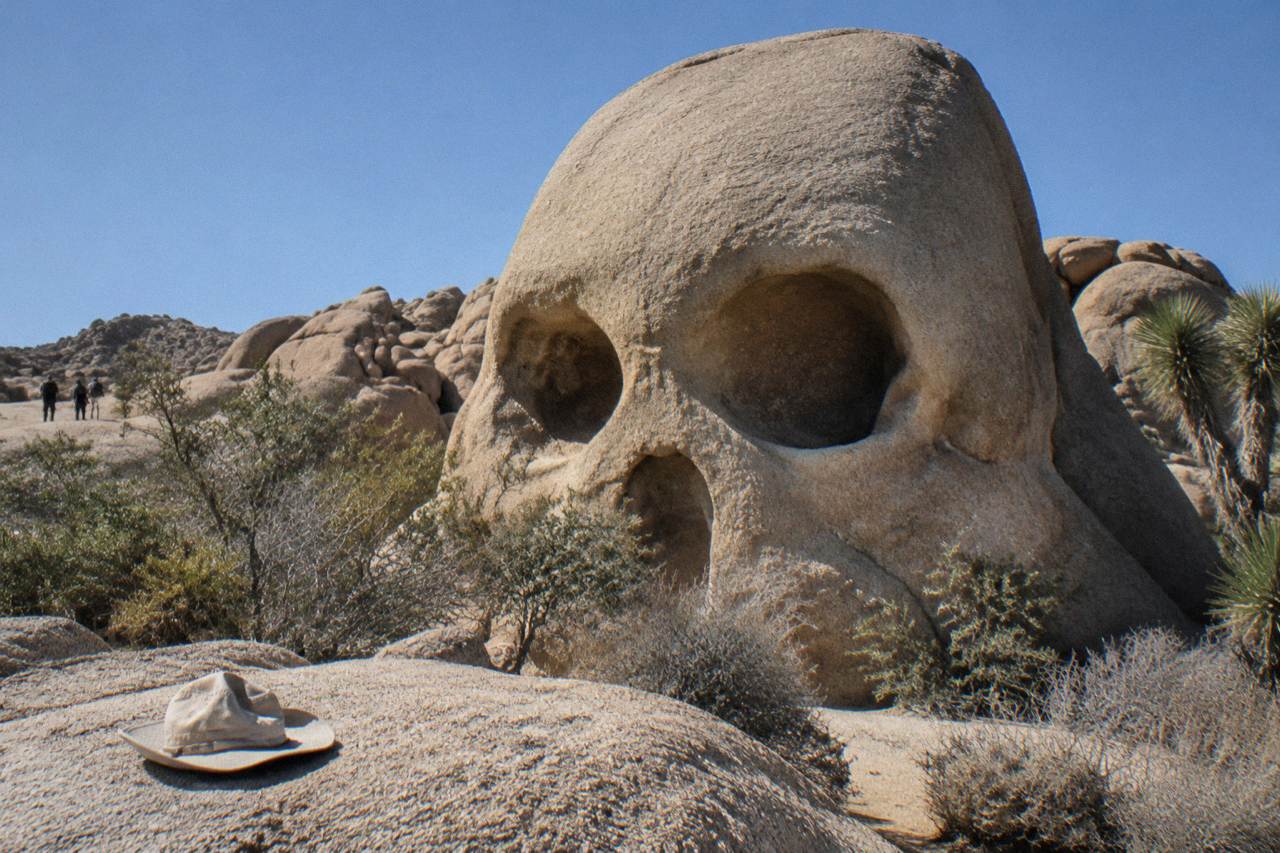
Skull Rock is a roadside granite boulder with two weathered hollows that read as eye sockets, Hidden Valley is a rock-enclosed clearing reached by a short walking loop among boulders, and Keys View is a roadside overlook above the Coachella Valley. None of the three requires a permit or a reservation beyond the park's standard entrance fee, and all three sit on or just off paved park roads.
Skull Rock sits beside the road, which is the whole point. You can see it from the shoulder, walk up to it in under a minute, and be back in your vehicle within ten. The formation is granite, like nearly everything in the park's high country, and its hollows are the result of long weathering rather than any carving. Visitors who expect a hike are sometimes surprised at how quick the stop is; visitors with limited mobility or tight schedules tend to appreciate exactly that.
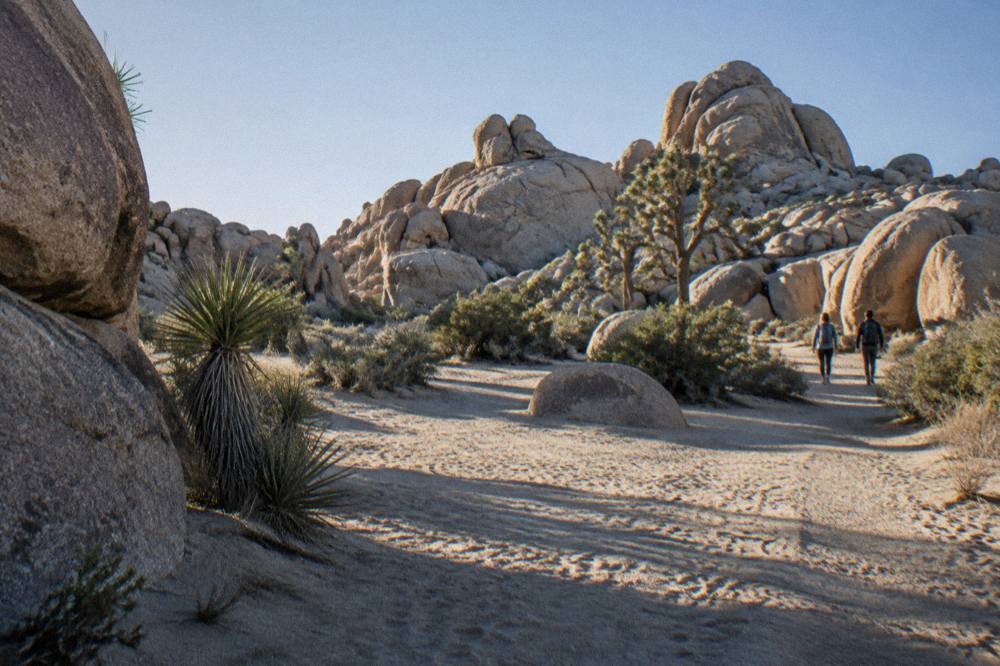
Hidden Valley asks slightly more of you. It is a shallow valley walled in by heaped boulders, with a short walking loop inside, and it earns its place on itineraries because the loop concentrates everything people picture when they hear "Joshua Tree": heaped rock, sandy ground, and the namesake trees packed into a compact space. The valley is also one of the park's designated stargazing areas, a detail we come back to below, and it contains a small first-come, first-served campground.
Keys View is the panorama stop. From the overlook you look out over the Coachella Valley and the ridge lines beyond it, and on clear days the spread is the widest single view most visitors get in the park. It is a drive-up viewpoint with a short paved path, so it functions as the emotional high point of a loop drive: you save it for late afternoon light, take it in, and head back.
Why Do So Many Guided Routes Hit The Same Three Stops?
Because the park's sightseeing geography funnels through one paved corridor, and tour operators design routes around reliable, accessible, road-adjacent highlights. Skull Rock and Keys View are both visible from the pavement, Hidden Valley sits just off it, and a loop connecting them passes most of the park's other headline scenery along the way. Guides build itineraries around what a half day can honestly cover.
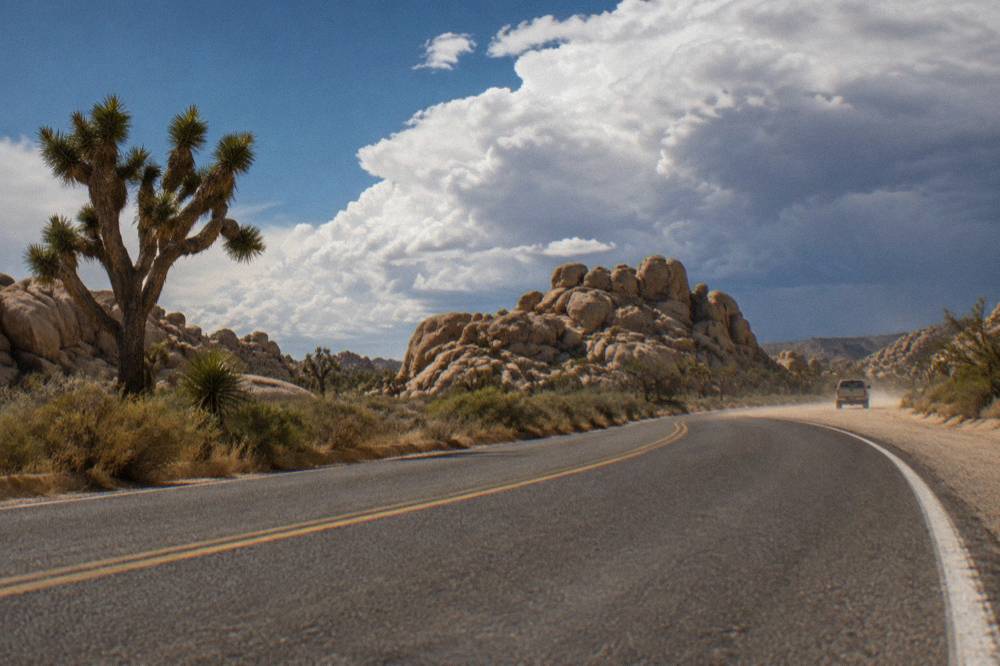
There is a practical logic at work. A guided drive that promises the park's signature sights in three to five hours has to choose stops where a whole vehicle of guests can get out, see something memorable, and reboard without eating the schedule. Roadside landmarks win that calculation every time. A stop that costs ten minutes serves a five-hour tour; a stop that costs an hour of hiking does not, unless hiking is the product.
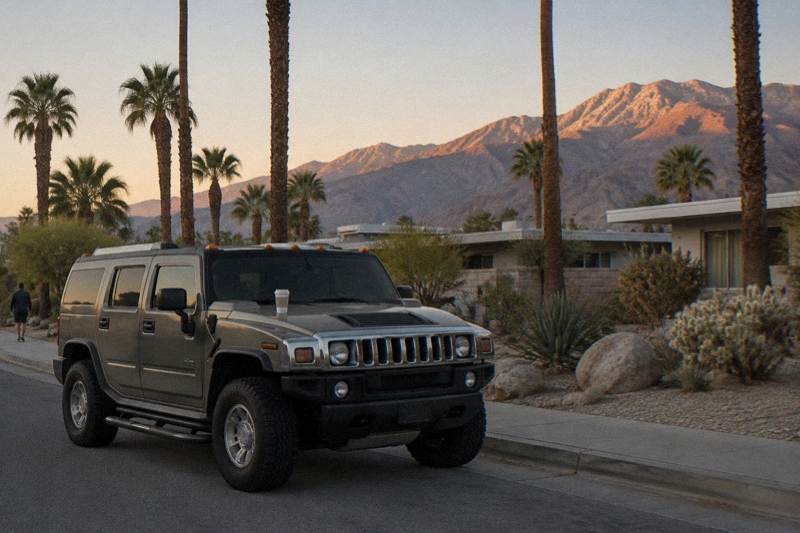
That is why the roster on this site splits the way it does. The vehicle-based tours, the Hummer options, the 4x4 tour and the van tours, all lean on road-adjacent stops. The hiking products, like the Half-Day Guided Hike at from $335 per person, trade breadth for depth and spend their hours on trail instead. Neither approach is wrong; they answer different questions. If your priority is seeing the park's spread in one pass, the shared-stops routes are the efficient answer.
It also matters that these three stops photograph well at different times of day, which lets a guide sequence a route deliberately. Morning light suits the boulder valleys, late afternoon and sunset suit Keys View, and after dark Hidden Valley turns into a stargazing draw. A well-run route is not a list of places but a timed sequence, and the landmarks along the paved corridor give an operator enough material to build one.
Which Joshua Tree Tours Cover These Shared Stops?
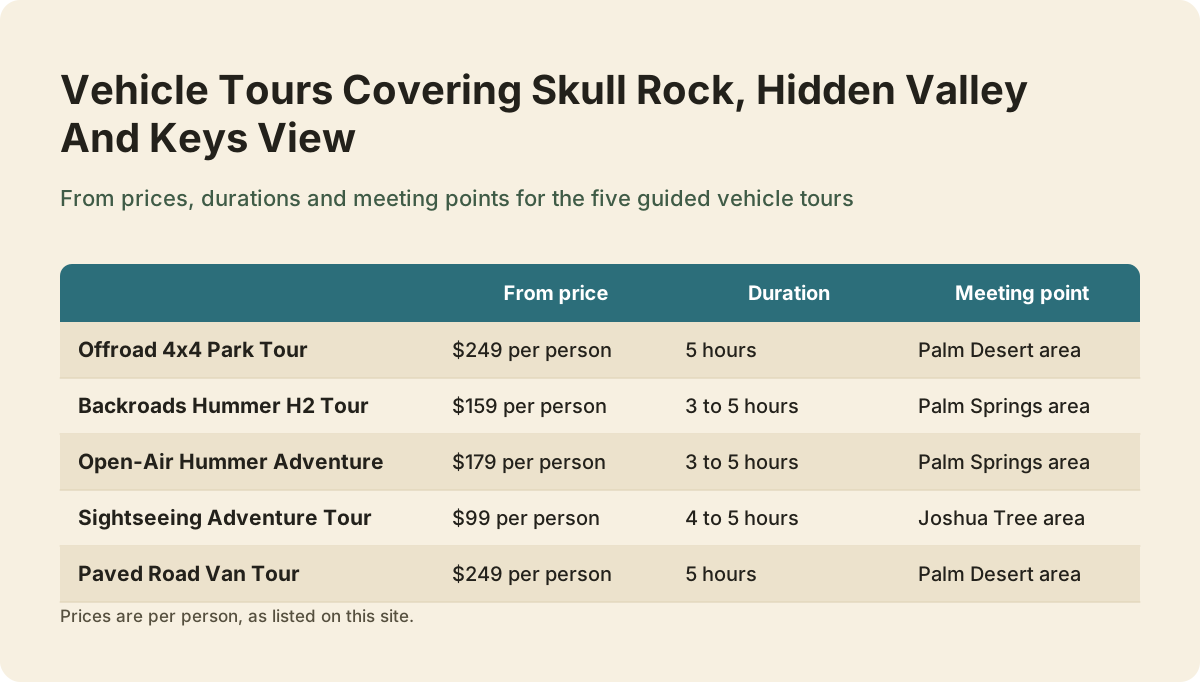
The vehicle-based tours on this site are the ones built around the shared stops: the Offroad 4x4 Park Tour from $249 per person, the Backroads Hummer H2 Tour from $159, the Open-Air Hummer Adventure from $179, the Sightseeing Adventure Tour from $99, and the Paved Road Van Tour from $249. All are guided vehicle tours lasting roughly three to five hours, with departures from the Palm Springs or Palm Desert area or from towns bordering the park.
The table below pulls the vehicle-based options from this site's roster, with prices and ratings exactly as the listings state them. Itineraries vary by operator and by day, so treat the stop coverage as typical rather than guaranteed, and confirm the route on the operator's live listing before booking.
| Tour | From price | Duration | Meeting point | Rating |
|---|---|---|---|---|
| Offroad 4x4 Park Tour | $249 per person | 5 hours | Palm Desert area | 4.9 across 471 reviews |
| Backroads Hummer H2 Tour | $159 per person | 3 to 5 hours | Palm Springs area | 4.7 across 595 reviews |
| Open-Air Hummer Adventure | $179 per person | 3 to 5 hours | Palm Springs area | 4.8 across 471 reviews |
| Sightseeing Adventure Tour | $99 per person | 4 to 5 hours | Joshua Tree area | 4.9 across 178 reviews |
| Paved Road Van Tour | $249 per person | 5 hours | Palm Desert area | 4.9 across 302 reviews |
The Offroad 4x4 Park Tour is the five-hour, go-deeper option. It includes a professional guide, driver, live commentary, bottled water and snacks, and it lists the park entrance fee as excluded, which matches the park's own rule for guided-tour guests: a $15 per person entrance fee or your own valid pass, as the park publishes on its commercial use authorization page. Kelly, a guest on the tour, described the experience plainly: "Our tour guide, Will, was EXCELLENT. Fun and knowledgeable, he taught us a lot through the tour along with some good laughs. Highly recommend this tour to anyone unfamiliar with Joshua Tree, like us, who want to make the most of limited time inside the park."
The Sightseeing Adventure Tour is the value entry point at from $99 per person, meeting in the Joshua Tree area and running four to five hours with private transportation, a guide, water and an air-conditioned vehicle. Jack, a guest on that tour, noted the practical touches: "He had water bottles and granola bars for us in the van. He had knowledge of the park and the terrain, flora and fauna and geographic features." The listing notes that a national park pass covers four people, otherwise the entrance fee is paid at the gate.
For a fuller survey of the format differences, the Joshua Tree jeep and 4x4 tours hub lays out the off-road options side by side, and the Joshua Tree guided hikes and park tours hub covers the walking and sightseeing products. Between them they hold every vehicle and foot format on this site.
What Is Hidden Valley Like After Dark?
Hidden Valley is one of the park's four designated stargazing areas, alongside Quail Springs, Cap Rock and Ryan Mountain, and the park asks night visitors to stay within 20 feet of their vehicle, use red light only and give eyes 20 to 30 minutes to adapt. The valley's boulder walls sit far from the main road's headlights, which is precisely why the park designates it for night use.
The park is an International Dark Sky Park, designated by DarkSky International, and its stargazing page sets out the etiquette that makes a night stop work: red lights only, no bright white flashlights, headlamps or phone screens, because eyes take a good stretch of darkness to adjust. The park also notes that bright moonlight reduces the stars you see, so night-sky quality depends heavily on the moon. Bring layers and a chair, the park advises, because desert nights drop cool even after warm days.
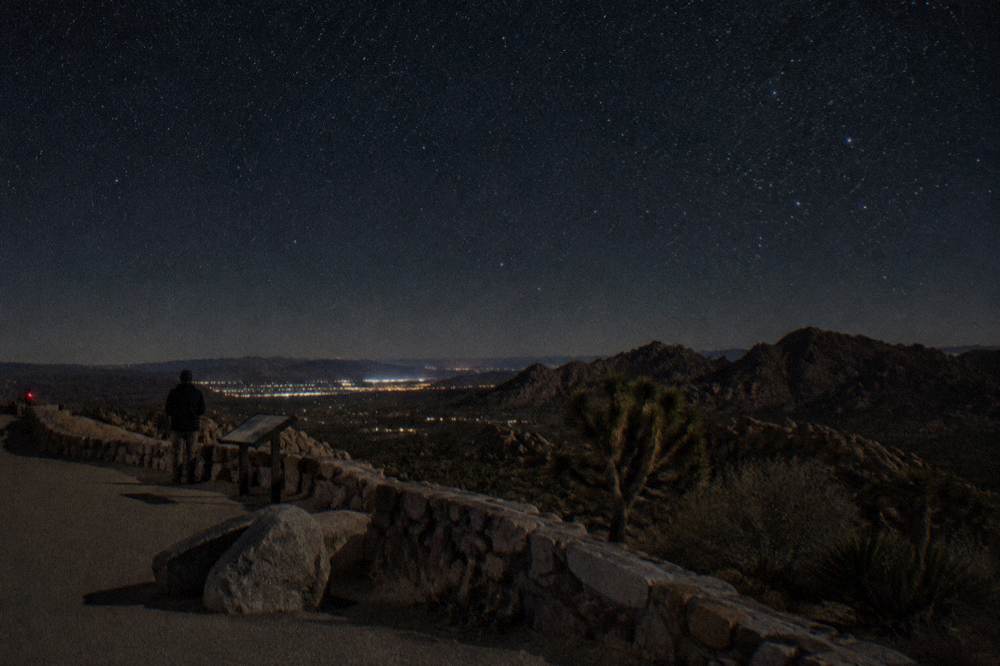
The designated areas are parking lots, which matters for planning: this is car-based stargazing, not a night hike. The park's darkest campground is Cottonwood, and the stretch of Pinto Basin Road between the Cholla Cactus Garden and Cottonwood is called out for having the least traffic and darkest skies. One quirk worth knowing: the park does not permit "paint with light" techniques for night photography, so anyone planning long-exposure shots should leave the flashlight tricks at home.
If you would rather have an astronomer and a telescope than a blanket and a parking lot, the tour roster includes guided options. The Professional Stargazing Night at from $200 per person, rated 4.9 across 179 reviews, runs on private land just outside the park in Yucca Valley, not inside the national park, and includes telescopes, binoculars, blankets and hot drinks. The Starlight Hike at from $95 per person does enter the park, with access to a trailhead inside it.
Can You Camp At Hidden Valley Or Near These Stops?
Yes, Hidden Valley itself has a small first-come, first-served campground at $25 per night, paid within one hour of setup, with no reservation possible. Nearby Jumbo Rocks and Ryan take reservations at $30 per night, while Belle and White Tank are also first-come at $25. Most park campgrounds book through recreation.gov, same day up to six months ahead.
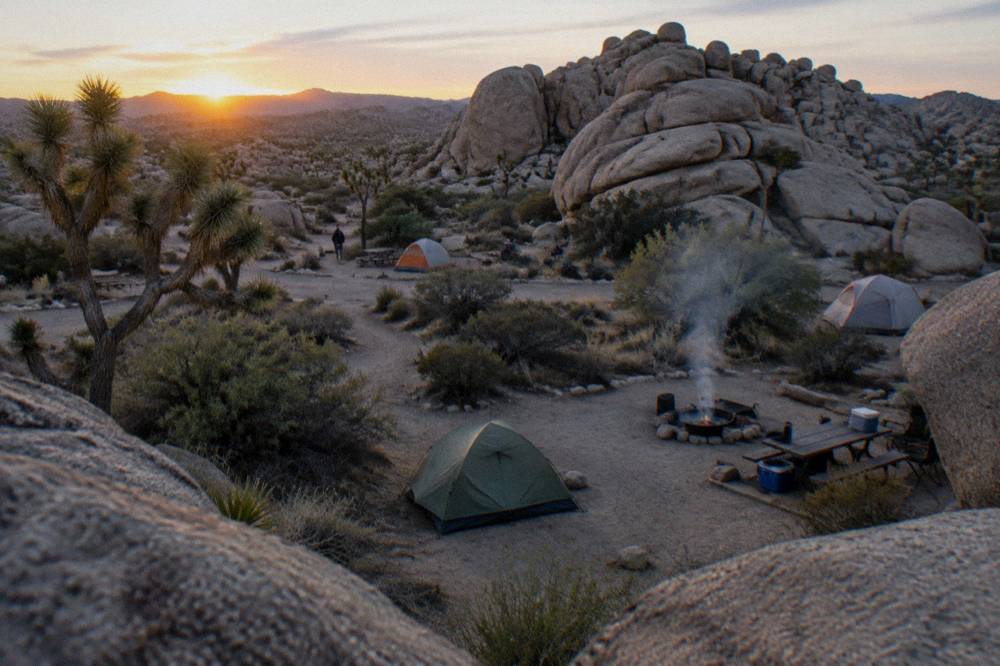
Camping at or near the shared stops is one of the better ways to see them without the day-visitor crowds, because the first-come sites empty and fill with the sun. The trade-off is uncertainty: first-come means first-come, and the busy season runs October through May, per the park's campgrounds page. Arrive early or have a backup.
| Campground | Nightly fee | Booking | Notes |
|---|---|---|---|
| Hidden Valley | $25 | First-come, first-served | One of the four designated stargazing areas |
| Belle | $25 | First-come, first-served | Pay within one hour of setup |
| White Tank | $25 | First-come, first-served | Pay within one hour of setup |
| Jumbo Rocks | $30 | Reservation, recreation.gov | 124 sites |
| Ryan | $30 | Reservation, recreation.gov | 31 sites |
Two rules shape any camping plan here. Campfires are allowed only in park-provided fire rings, and the park bans campfires annually from June 15 to October 1 under its summer restrictions. Pets are not allowed on trails, in the backcountry or in park buildings, and must stay within 100 feet of roads, parking areas and campgrounds on a leash of six feet or less. Both rules are published by the park and enforced. Everything else covered here is indexed on Joshua Tree Park Tours.
What Does Keys View Actually Show You?
Keys View is a drive-up overlook above the Coachella Valley, reached by a short spur road, with a paved viewing area and a panorama that takes in the valley floor and the mountains beyond it. It costs nothing beyond park entrance, needs no reservation, and is the stop most guides time for late afternoon, when the low sun widens the shadows across the valley.
The overlook earns its slot on nearly every route for a simple reason: it is the one stop where the park opens outward instead of inward. Everywhere else on the loop you are among boulders and trees; at Keys View the desert floor spreads below you. Guides use it as the emotional close of a route, and independent drivers should steal the same trick, because the light in the last two hours of the day is when the view earns its reputation.
It is also an easy stop to combine with the others. The spur road adds only a short drive to a loop that already includes Skull Rock and Hidden Valley, and the viewing area requires minimal walking, which makes it the most accessible of the three shared stops. On crowded weekends from October through May, arrive with patience; the pull-through fills with everyone else who had the same idea.
Do You Need A Tour To See Skull Rock And Keys View?
No. All three shared stops are reachable by private vehicle on paved park roads, with no reservation needed to enter the park and no permit needed to visit them. A tour buys you a driver, commentary, route timing and someone else handling the planning, plus on some listings the entrance fee. A self-driving audio tour at from $16.99 per person splits the difference, with GPS-triggered commentary and no live guide.
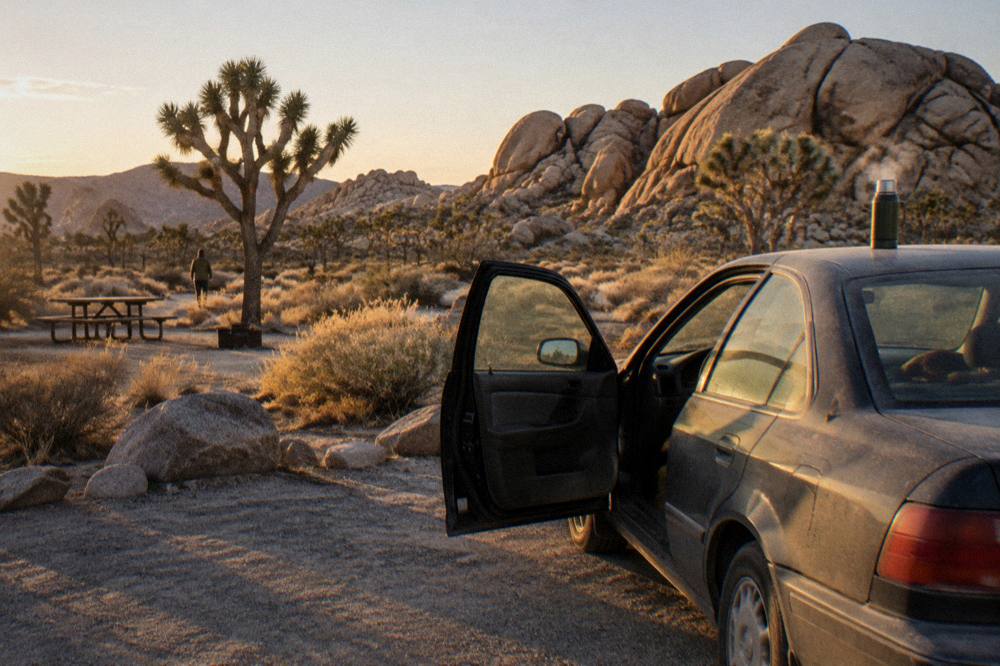
The honest comparison comes down to what you value. Driving yourself is cheaper and fully flexible: park entrance is $30 per private vehicle for seven days, per the park's fees page, and the park requires no timed entry or advance reservation. What you give up is the interpretation. A guide who knows which pullout to skip, when the light hits a given rock face and what the plants around you are doing turns the same road into a different experience, and guests consistently say so in reviews.
The Self-Driving Audio Tour, rated 4.5 across 806 reviews, is the middle path: you bring your own car and phone, the app plays automatic audio stories keyed to GPS position, and you can start, stop and pause at will. April, a guest, called it "fun and easy to do at our own pace." It excludes the entrance fee, parking and food, and there is no live guide.
The guided-tour guest rule on entrance deserves one clear statement, because it surprises people: on guided tours, the park publishes a $15 per person entrance fee for tour guests, or you may use your own valid pass. Whether the tour price bundles that fee varies by listing. The Hummer tours on this roster include general admission, while the 4x4, van and sightseeing tours list the entrance fee as excluded, so check the listing's includes and excludes lines before you budget.
What Should You Know Before Visiting These Stops?
Bring more water than feels reasonable, check the forecast before you go, and know the seasonal rules: the park bans campfires from June 15 to October 1, closes the 49 Palms Oasis Trail from June 1 to September 30, and summer highs typically run around 100 F or more with lows near 75 F. Spring and fall highs usually sit around 70 to 85 F with lows near 50 F.
The shared stops are forgiving in format but not in season. All three involve only short walks, which makes them usable year round, but summer changes the calculus entirely: a roadside stop at Skull Rock in July heat is a different activity from the same stop in November. The park publishes its heat safety guidance and current conditions on its own pages, and it is the right source for the day you actually go, since trail, road and weather status changes constantly.
For the same reason, treat any itinerary, guided or self-driven, as a plan rather than a promise. The park's alerts and conditions pages are the live truth on closures and restrictions; everything else, including this guide, describes how the park usually works.
Which Stop Should You Prioritize With Limited Time?
If you have one or two hours, do Skull Rock and Keys View, both drive-up stops on the paved loop, and skip the Hidden Valley walk. With a half day, do all three in a loop timed so Keys View falls in late afternoon light. With a full day, add a guided walk or a stargazing session after dark, since Hidden Valley doubles as a designated night-sky area and the park stays open 24 hours.
| Time available | Suggested stops | Why this order |
|---|---|---|
| 1 to 2 hours | Skull Rock, Keys View | Both are roadside, minimal walking, on the same paved corridor |
| Half day | All three, loop route | Hidden Valley walk in cooler hours, Keys View at late-day light |
| Full day | All three, plus a hike or climb | Guided climbing runs 4 hours from $200 per person on this roster |
| Overnight | All three, plus stargazing | Camp at Hidden Valley or nearby, use a designated stargazing area after dark |
The sequencing logic is heat and light. Walking stops belong to the cooler hours, so Hidden Valley goes early or late in the day. Panoramic stops belong to the golden hours, so Keys View goes late. Skull Rock is the flexible one, quick enough to slot anywhere. A guide running a five-hour route is applying exactly this arithmetic, which is part of what the ticket buys.
For a slower-paced alternative, the Electric Motorbike Tour at from $169 per person, rated 4.8 across a small pool of 19 reviews, covers the park in two and a half hours on guided electric motorbikes, meeting in the Twentynine Palms area with bike use, water and a snack included. Joanne, a guest, said the bikes "were easy to operate" and praised the guide's knowledge of the park's plants and geology.
Whatever the format, the underlying route is the same shared geography, and that is the quiet advantage of booking a tour at this park: the landmarks are fixed, the light is predictable, and the difference between a good day and a great one is mostly timing. More on fitting the stops into a single day is in the one day in the park itinerary, and the wider set of options is in the things to do in Joshua Tree guide.
Common Questions About Skull Rock, Hidden Valley And Keys View
Do I need a reservation to see Skull Rock, Hidden Valley or Keys View?
No. The park requires no timed entry or advance reservation to enter, and none of the three stops needs a permit or booking beyond the standard entrance fee. The park is open 24 hours a day, year round.
How much does it cost to visit the three shared stops?
Park entrance is $30 per private vehicle for seven days, $25 per motorcycle, or $15 per person on foot or bicycle, with children under 16 free. On a guided tour, the park publishes a $15 per person entrance fee for tour guests or your own valid pass; whether the tour price bundles it varies by listing.
Which tours visit all three stops?
The vehicle-based tours on this site are built around the shared stops: the Offroad 4x4 Park Tour, the Backroads Hummer H2 Tour, the Open-Air Hummer Adventure, the Sightseeing Adventure Tour and the Paved Road Van Tour. Exact itineraries vary, so confirm the route on the operator's live listing.
Can I see Skull Rock without hiking?
Yes. Skull Rock sits beside the road and is visible from the shoulder, so it involves essentially no walking. Keys View is also a drive-up stop with a short paved path. Hidden Valley is the only one of the three that involves a walking loop.
Is Hidden Valley good for stargazing?
Yes. Hidden Valley is one of the park's four designated stargazing areas, along with Quail Springs, Cap Rock and Ryan Mountain. The park asks night visitors to use red light only, stay within 20 feet of their vehicle, and give eyes 20 to 30 minutes to adapt.
Can I camp at Hidden Valley?
Yes. Hidden Valley has a small first-come, first-served campground at $25 per night, paid within one hour of setup. Nearby Jumbo Rocks and Ryan take reservations at $30 per night, while Belle and White Tank are also first-come at $25.